BACK

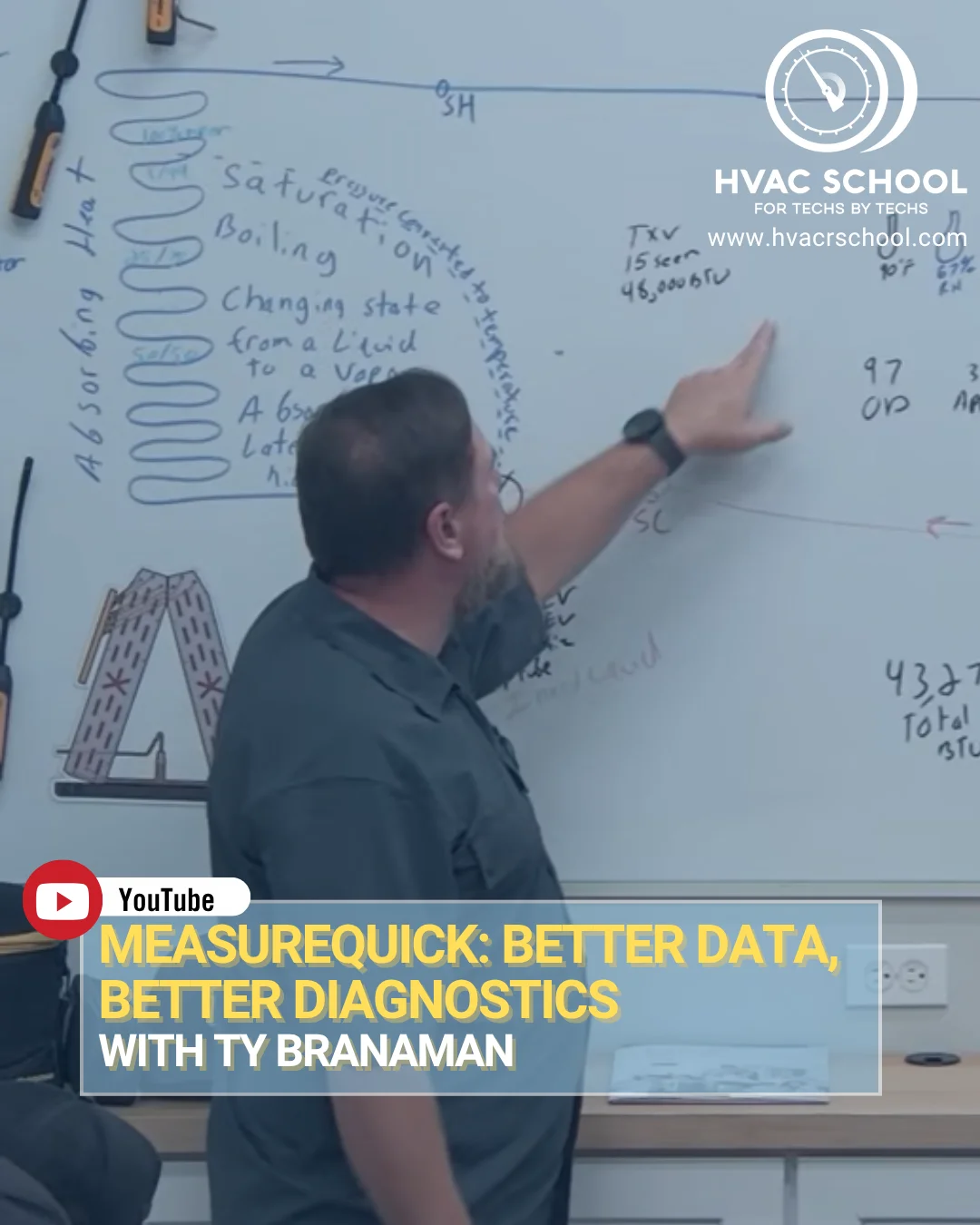
measureQuick: Better Data, Better Diagnostics w/ Ty Branaman

Ty Branaman joins us to break down how to get more out of measureQuick by feeding it better data. The core idea is simple: the more accurate information you enter into the app, the better and more precise the answers you get back, especially once you have your workflow dialed in and know where to look for shortcuts.
youtube placeholder image

We dig into commonly skipped inputs that quietly wreck your diagnostics, including outdoor ambient temperature taken in the shade (not sun-soaked or from a weather app), discharge line temperature, voltage and amperage, and total external static pressure. Ty explains why entering the refrigerant metering device type and even model/serial info sharpens the app’s calculations, and how a system can look “all green” on paper while still hiding a real airflow or capacity issue underneath.

You’ll also hear a great analogy comparing the red/green/yellow flagging system to getting your blood work done at the doctor. You don’t need to understand every number to know something’s off, and that same simplicity is exactly what makes it easier to build trust with customers who don’t know a superheat from a subcooling reading.

Other topics covered:

  • Why ECM and PSC blower motors read differently on amp draw, and how power factor plays into calculating true wattage
  • How outdoor and indoor temperature swings affect a system’s real-world capacity versus its rated tonnage
  • The “wet condenser trick” some techs use to fake better readings, and why you should always take your data before hosing anything down
  • Checking attic relative humidity as a lead for building science issues like condensation and duct leakage
  • Which handful of readings actually matter most on every call: static pressure, wet bulb, two clamps, and two pressure probes


Whether you’re brand new to the platform or have been using it for years, this conversation is packed with practical ways to make your diagnostics faster, more accurate, and easier to explain to the customer standing next to you.

Using Power Factor to Check Capacitors Under Load: https://www.hvacrschool.com/use-power-factor-to-check-capacitors-under-load/

Comments

Most popular videos

view all

The HVAC School site, podcast, and tech tips are
made possible by generous support from