
Combustion Analysis w/ Jim Bergmann (Podcast)
Make & share a podcast clip
Keep the exact passage and a link to the full episode. Choose up to three minutes, with enough context to be fair to the speaker.
Preview uses this episode’s audio. Browser audio export, when supported, takes the length of the selected clip. Nothing plays until you choose Preview.
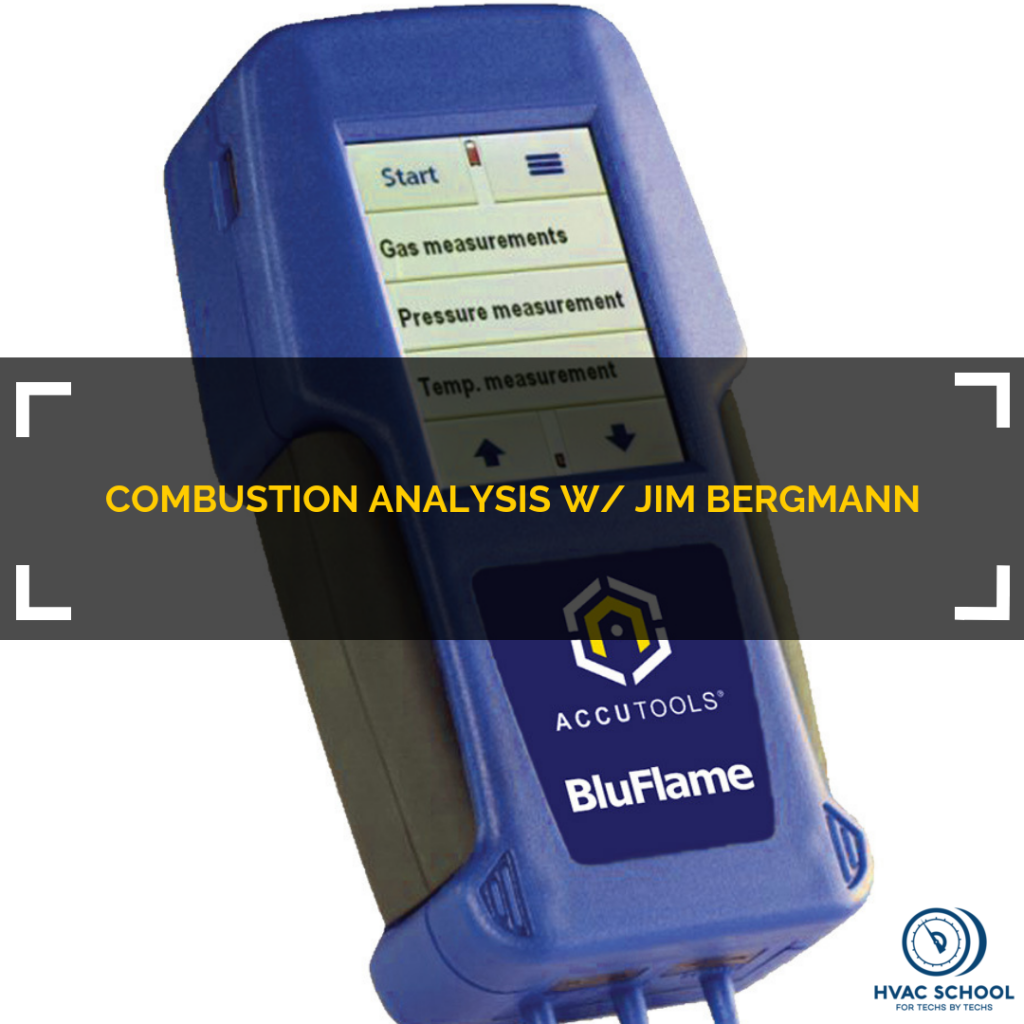
In this episode, Jim Bergmann does a deep dive into combustion analysis. He covers everything you need to know to keep a furnace running safely and efficiently.
When you go into a home, one of the first things you should do is perform an ambient CO test to check how much carbon monoxide is in the home. Combustion analyzers can typically measure CO, or you could use a dedicated CO meter. When it comes to checking for spillage, you’ll want to make sure you check anything that is connected to an atmospheric draft appliance; these appliances, including water heaters, can create a pathway for CO.
First, you want to make sure everything is working properly before the combustion analysis. Set the fuel pressure according to the manufacturer’s specs. Then, you go outside and clock the meter. When you do that, you merely verify that you have the correct gas input to the appliance; figure out how long it takes the one-foot dial to do a single revolution. After you verify the fuel and air, you want to see if you have an adequate amount of draft. Then, you set your temperature rise and verify that your CAZ zone is within the allowable limits.
When we do a combustion analysis, we measure the efficiency of the combustion process, not the overall furnace efficiency (AFUE). Combustion analyzers also help us account for stack losses. When doing the test, you must measure undiluted flue gas and take readings on fuel pressure, excess air, and stack temperature.
Jim and Bryan also discuss:
- Fuel pressure and fuel orifice sizing
- Fuel heat content
- Excess air and condensing
- Carbon monoxide thresholds
- Stand-by losses
- Contaminants
- Temperature rise ranges
- Net vs. gross stack temperature
- Combustion efficiency
- Duct leakage
- Positive vs. negative pressure exhaust
- Cracked heat exchangers
- What to do when CO levels are high
- AccuTools
Learn more about Refrigeration Technologies HERE.
Highlight a short passage, or bring a question about a specific moment into HVAC No Bull Forum.
Discuss this reference → Related forum discussionsAuthor:












Comments
To leave a comment, you need to log in.
Log In