
Furnace Commissioning Part 2 w/ Jim Bergmann (Podcast)
Make & share a podcast clip
Keep the exact passage and a link to the full episode. Choose up to three minutes, with enough context to be fair to the speaker.
Preview uses this episode’s audio. Browser audio export, when supported, takes the length of the selected clip. Nothing plays until you choose Preview.
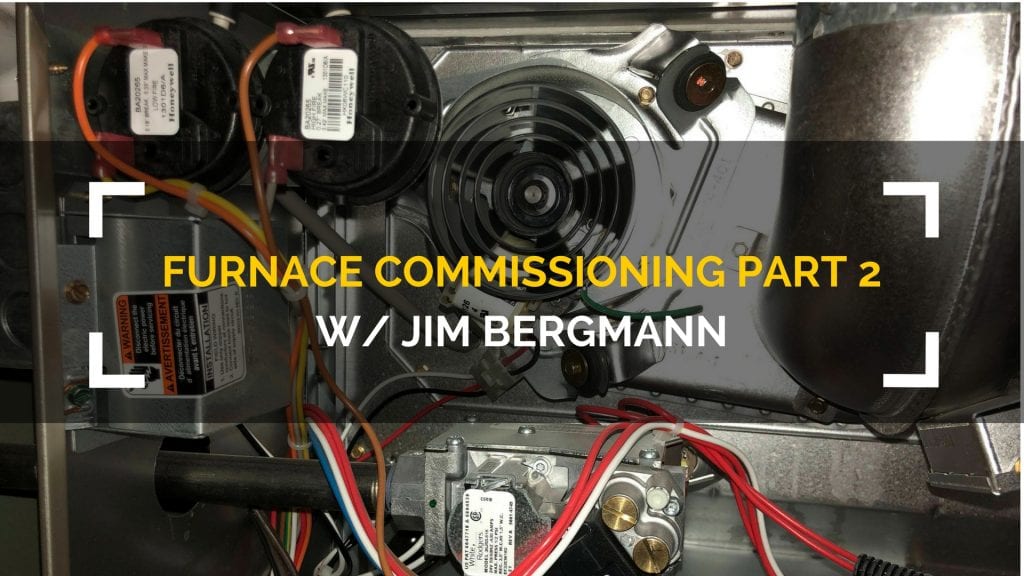
In the second part of this podcast series, Jim covers the basics of furnace commissioning in more detail with some common-sense practices. (Listen to Part 1 HERE.) Even though installers set up a furnace system, the technicians help with the equipment startup and commissioning. That way, two parties can ensure that the installation is proper.
The technician is perhaps better equipped to check the electrical connections. As technicians, we can also check the polarity of the power supplies (ensuring that the sine waves are in sync). If the polarity is backward, sometimes the hot wire has been switched with another wire, or you may have to switch the primary or secondary on the transformer. Flame rectification also ties directly into the electric components of a furnace.
Inspection is also a critical component of furnace commissioning. As such, our eyes and ears will be our most important tools during the commissioning process. During the inspection, we should check over the original factory parts to ensure that everything is in order and that the furnace will operate safely.
After we’ve calculated the temperature rise and set the blower speed, we must evaluate our static pressures. The static pressures let us know how our motors and ductwork are doing. The goal is to get our static pressures as close to 0.5″ wc as possible.
Be sure to perform a flame disruption test to ensure that the flame does not starve. Many technicians also fail to check the high limit cutout. When techs fail to check that cutout, the heat exchangers can break from stress. To check that high limit cutout, we can use a piece of cardboard to block the filter; that blockage raises the temperature, and it’s our job to make sure that the limit cuts out and shuts the burners down.
Jim also discusses:
- Grounding screws
- ECM motors
- Home insulation and furnace/ductwork sizing
- Furnace switches/safeties
- Flame rod microamps
Highlight a short passage, or bring a question about a specific moment into HVAC No Bull Forum.
Discuss this reference → Related forum discussionsAuthor:












Comments
I was wondering how critical it is to have the low voltage polarity correct because after listening to the podcast I started checking this on new systems and I had one that the high voltage was fine but when reading from R to L1 it read more then 90 volts. Everything worked fine with it wrong.
Will this cause a problem down the road if left? Would you suggest changing it even if the it comes from factory that way or might change the diagram?
Thank you for all you do
Report comment
I was wondering how critical it is to have the low voltage polarity correct because after listening to the podcast I started checking this on new systems and I had one that the high voltage was fine but when reading from R to L1 it read more then 90 volts. Everything worked fine with it wrong.
Will this cause a problem down the road if left? Would you suggest changing it even if the it comes from factory that way or might change the diagram?
Thank you for all you do
Report comment
To leave a comment, you need to log in.
Log In