
Going Deep on IAQ Sensors and Instruments
Make & share a podcast clip
Keep the exact passage and a link to the full episode. Choose up to three minutes, with enough context to be fair to the speaker.
Preview uses this episode’s audio. Browser audio export, when supported, takes the length of the selected clip. Nothing plays until you choose Preview.
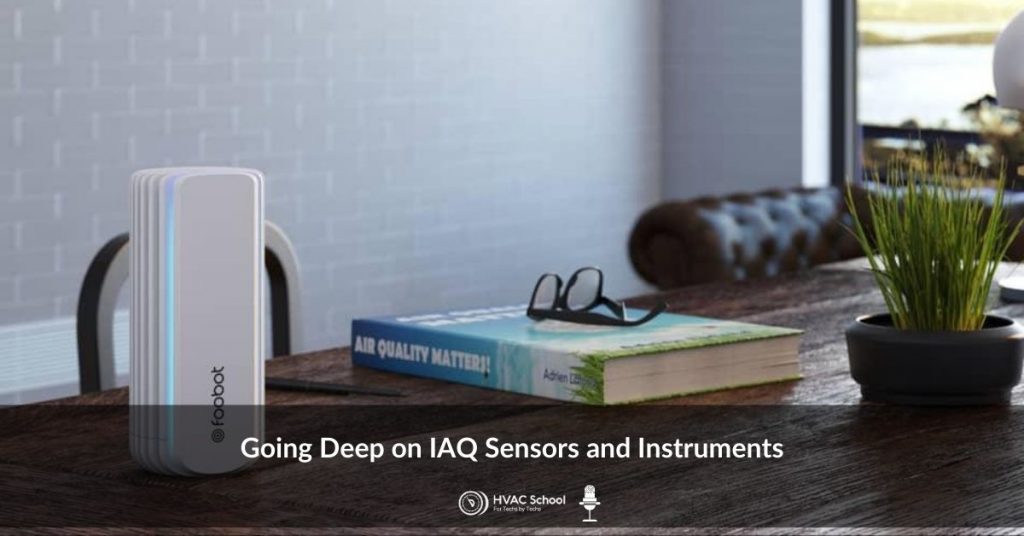
Bernadette Shahin of Aeroqual joins Bryan and Kaleb as they all dig very deep into indoor air quality (IAQ) sensors and instruments. They also cover the certainty and uncertainty of measurements.
Reference method instruments generally have to operate within a set of parameters, notably a temperature range. Gas laws make the gases act differently, so you want the temperatures and pressures to stay within a range that allows you to measure the air conditions effectively.
While we can use reference methods for full-scale instruments, there are no reference methods for IAQ sensors. The only way to make something close to a reference method on IAQ sensors is to use the near reference method. We measure humidity and temperature, and we do an atmospheric chamber and calibration. You have to pair sensors within an instrument to have a product that properly senses conditions.
Measuring indoor air quality is important because we spend 90% of our time breathing indoor air with very little fresh air. Air pollutants build up in indoor spaces, and you could spend time in environments with harmful VOCs, allergens, and bacteria. Most people don’t have the means of using HEPA filters or fresh air mixing in their homes; so, we need to focus on other solutions to control indoor air quality.
Those solutions include air purifiers, but they also include sensors that monitor the air quality. One such sensor is the photoionization detection (PID) VOC monitor. With sensors, we must also think about sensitivity; we want the sensor to measure what it’s supposed to measure in the amounts it’s supposed to measure.
Bernadette, Bryan, and Kaleb also discuss:
- Barometric pressure instrument calibration
- Algorithmic adjustments
- Sick building syndrome
- Formaldehyde off-gassing, ozone, and CO
- Aeroqual’s solutions for BTEX
- Automatic baseline correction
- R2 factor
- AQI
- Automating IAQ strategies
- Pricing
Learn more about Refrigeration Technologies HERE.
If you have an iPhone, subscribe to the podcast HERE, and if you have an Android phone, subscribe HERE.
Highlight a short passage, or bring a question about a specific moment into HVAC No Bull Forum.
Discuss this reference → Related forum discussions










Comments
To leave a comment, you need to log in.
Log In