
Is Ultrasonic Leak Detection Best?
Make & share a podcast clip
Keep the exact passage and a link to the full episode. Choose up to three minutes, with enough context to be fair to the speaker.
Preview uses this episode’s audio. Browser audio export, when supported, takes the length of the selected clip. Nothing plays until you choose Preview.
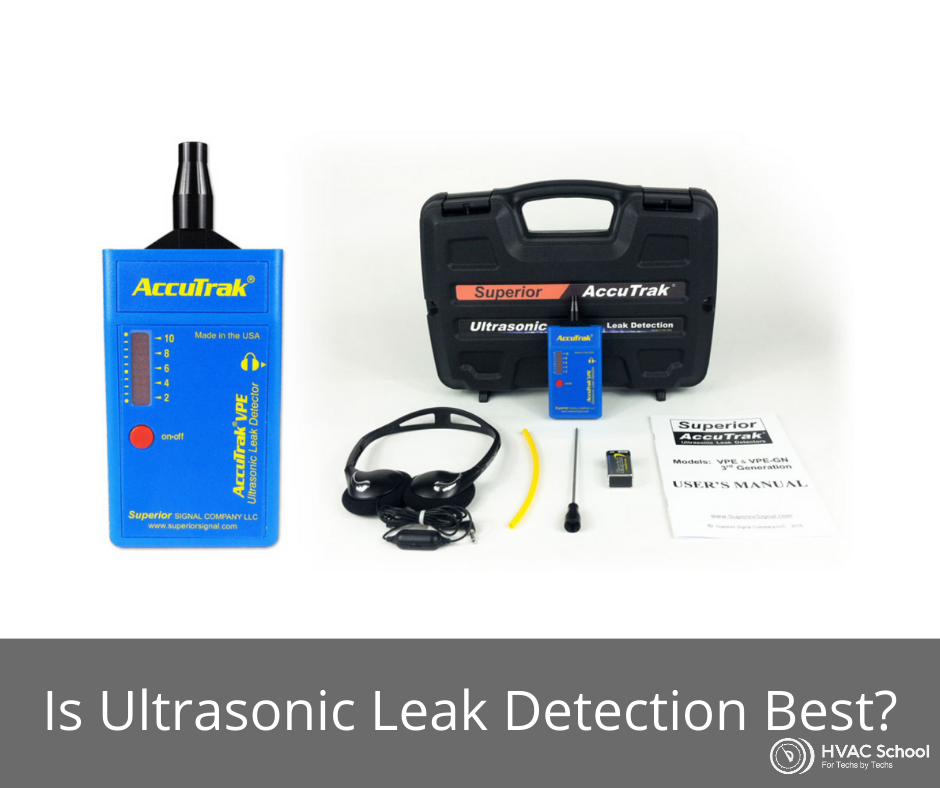
In this podcast episode, Bryan and Craig Migliaccio, AC Service Tech, talk about ultrasonic leak detection. They discuss its effectiveness and if it’s worth the hype.
Ultrasonic leak detection works best when there’s oil on the inside of the tubing; it works best when the system is equalizing after shutoff. Oil or moisture can create a squealing noise, which is an indicator of a leak. Ultimately, lack of success with ultrasonic leak detection comes down to user discomfort and a lack of proficiency. Bubbles alone won’t be enough, so it’s good to use an ultrasonic detector, even if you need to use a heated-diode or infrared detector as a backup if you lack confidence.
You can use nitrogen to assist with leak detection BEFORE refrigerant goes into the system; nitrogen is great because it is an inert gas. However, you must be careful with pressurization, as overpressurization may lead to leaks. You must also keep in mind that nitrogen is the dominant element in our atmosphere, so no leak detector would be able to sample nitrogen alone.
If refrigerant is in the system, we can use heated-diode leak detection with relative ease. However, heated-diode leak detectors require a lot of maintenance. In any case, sensors must be matched to the refrigerant you’re looking for. Infrared detectors generally work well, but they can be confusing and lead to errors. You must usually keep moving infrared thermometers to catch a leak accurately.
Craig and Bryan also discuss:
- Various types of leak detectors
- Having confidence in your tools
- Pressure test vs. leak detection
- Using your senses first
- Sensor placement
- Stratus leak detector
- Reading the manual
- Servicing leak detectors
- Leak reactant (soap bubbles) limitations
- Relying on guesswork
Check out Craig’s site at acservicetech.com.
Learn more about Refrigeration Technologies HERE.
If you have an iPhone, subscribe to the podcast HERE, and if you have an Android phone, subscribe HERE.
Highlight a short passage, or bring a question about a specific moment into HVAC No Bull Forum.
Discuss this reference → Related forum discussionsAuthor:












Comments
To leave a comment, you need to log in.
Log In