
Refrigerant Myth Busting w/ Dr. Chuck
Make & share a podcast clip
Keep the exact passage and a link to the full episode. Choose up to three minutes, with enough context to be fair to the speaker.
Preview uses this episode’s audio. Browser audio export, when supported, takes the length of the selected clip. Nothing plays until you choose Preview.
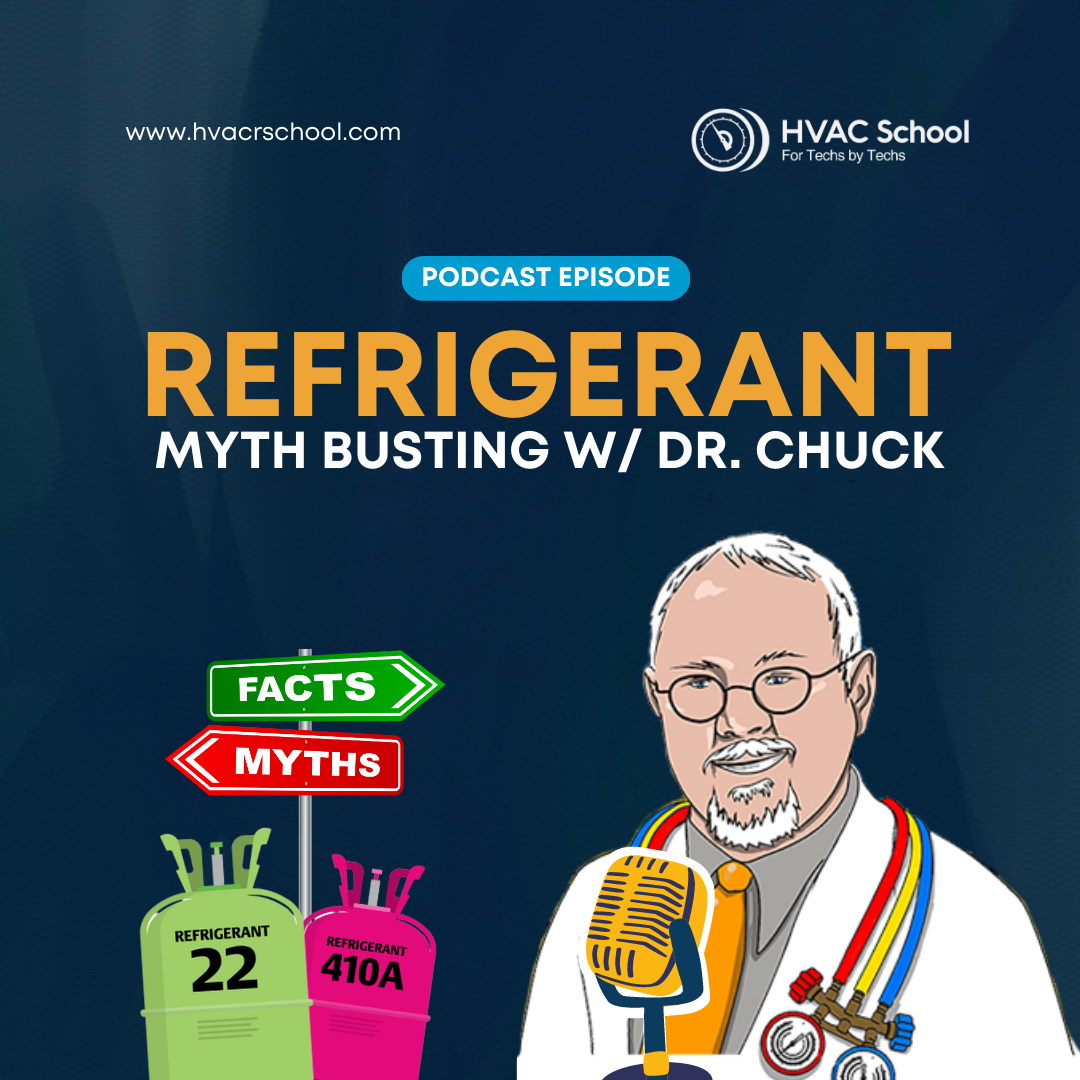
Dr. Chuck Allgood from Chemours returns to the podcast to do some refrigerant myth-busting.
Many people don’t understand why high-GWP HFCs can impact the atmosphere if the refrigerant is heavier than air. High-GWP HFCs exist for a long time, and they last long enough for natural mixing and the wind to distribute their molecules throughout the atmosphere. HFOs, by comparison, are more reactive in the atmosphere and have relatively short lifespans, meaning they have less of an effect on the environment.
Even though refrigerants with lower GWPs are entering the market, it’s always been our job to keep refrigerants inside the system where they can’t harm the environment. However, when leaks occur, these lower-GWP refrigerants break down quickly outside the system but not inside it. Contractors and manufacturers should still work together to reduce leak rates as much as possible, even as we keep innovating.
Another common myth is around “natural refrigerants,” which are common in some forms of refrigeration, but “natural refrigerants” may be a misleading term; although you find them in nature, they undergo heavy manufacturing and processing before being used in HVAC/R systems. Even “non-toxic” and “non-flammable” labels for A1 refrigerants may be misleading, as they don’t capture the full picture of their risks.
There are also some myths around oil miscibility; oil still needs the help of refrigerant velocity and volume to move it through a system. POE and PVE oil are great in terms of miscibility and also get entrained in the refrigerant to ensure good oil return to the compressor.
Dr. Chuck and Bryan also discuss:
- Dr. Chuck’s recent work and research
- “Heat rises” and buoyancy
- Pseudoscience
- HFO stability and reactivity
- Trifluoroacetate (TFA), toxicity, “forever chemicals”
- Education and change in the industry
- “Future-proof” vs. innovation
- Phosgene
Learn more about Chemours and their A2L training at opteon.com. You can also check out the Chemours/Opteon YouTube channel at https://www.youtube.com/@OpteonProducts/videos.
If you have an iPhone, subscribe to the podcast HERE, and if you have an Android phone, subscribe HERE.
Check out our handy calculators HERE.
Highlight a short passage, or bring a question about a specific moment into HVAC No Bull Forum.
Discuss this reference → Related forum discussions








Comments
To leave a comment, you need to log in.
Log In