
Short #30 – Braze or Solder Anything (Podcast)
Make & share a podcast clip
Keep the exact passage and a link to the full episode. Choose up to three minutes, with enough context to be fair to the speaker.
Preview uses this episode’s audio. Browser audio export, when supported, takes the length of the selected clip. Nothing plays until you choose Preview.
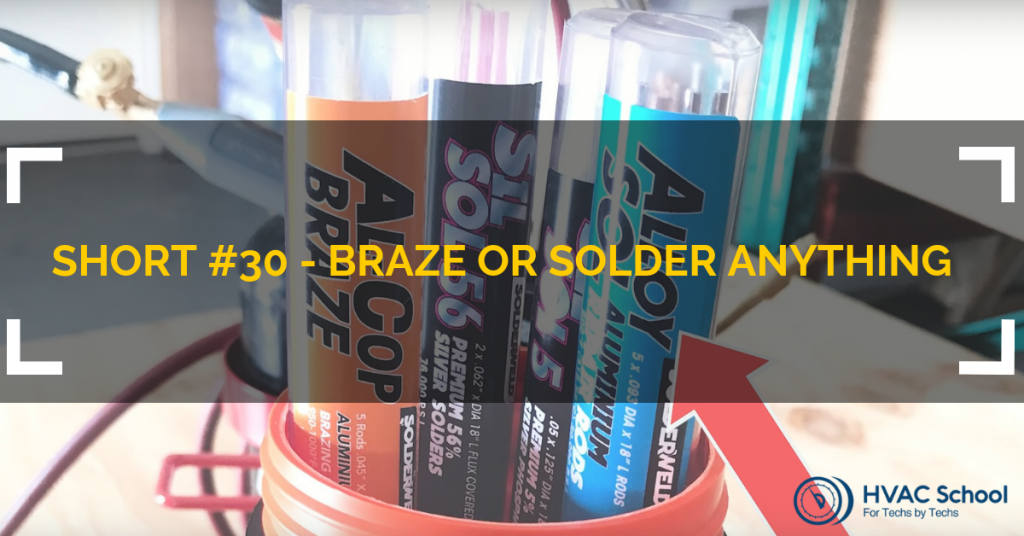
In this short podcast episode, we cover what you need to consider before you solder or braze any type of joint in HVAC/R work. We want to give special thanks to Solderweld; you can learn more about their products at solderweld.us.
When you braze or solder anything, you need to know your base metal. The base metal’s temperature and composition will determine which type of flux you will use. For example, if you are working with steel, you can’t use fluxing agents with phosphorus. Instead, you will need to use high silver rods and a separate flux. Copper rods with phosphorus don’t require a separate flux.
The main difference between brazing and soldering is the temperature. When you work with temperatures above 840 degrees Fahrenheit, you’re brazing. Anything below 840 degrees counts as soldering. In both cases, you use an alloy that differs from the base metals.
Copper is highly conductive and is one of the most common metals we use for brazing and soldering. So, it is pretty easy to draw the alloy into a copper-to-copper joint because the copper heats easily and evenly. Steel is nowhere near as conductive as copper, so it can be challenging to work with because the heat localizes. So, on copper-to-steel joints, you need to understand the different behaviors of the metals. It’s also a good idea to know the melting point of your base metals to prevent overheating.
As we heat base metals, they change color. When those metals get to a cherry red, that’s a great range for brazing; don’t let the temperature rise or fall much below that.
We also discuss:
- Soft solder
- Metal expansion and contraction
- Copper-to-aluminum brazing challenges and practices
- Flux usage and best practices
- Alloy-Sol and bonding
- Preventing leaks
Learn more about Refrigeration Technologies HERE.
If you have an iPhone, subscribe to the podcast HERE, and if you have an Android phone, subscribe HERE.
Highlight a short passage, or bring a question about a specific moment into HVAC No Bull Forum.
Discuss this reference → Related forum discussionsAuthor:











Comments
To leave a comment, you need to log in.
Log In