
Short #39 – Tricky Amperages (Podcast)
Make & share a podcast clip
Keep the exact passage and a link to the full episode. Choose up to three minutes, with enough context to be fair to the speaker.
Preview uses this episode’s audio. Browser audio export, when supported, takes the length of the selected clip. Nothing plays until you choose Preview.
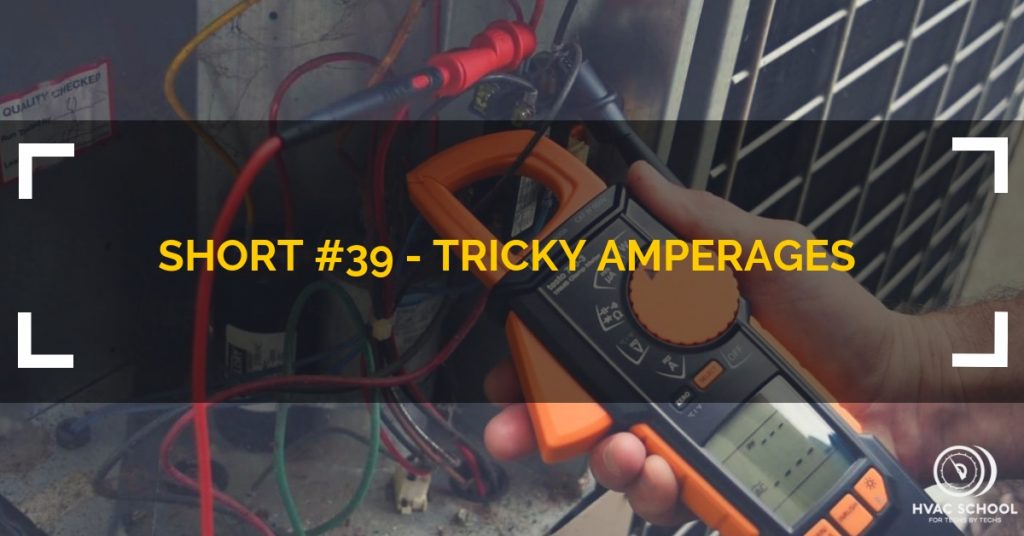
We talk about measuring tricky amperage on a blower and condensing fan motor. We also cover why you may be measuring inaccurately, resulting in a misdiagnosis.
When measuring amperage on a PSC blower motor, you may have noticed that amperage on the common is higher when the panel is off. Conversely, on ECM or X13 motors, the amperage is generally lower with the panel off. When measuring amperage, we recommend using a Bluetooth ammeter to take readings without letting the panels interfere with your measurements.
Anytime the amperage is low, the more difficulty the ammeter will have in measuring an accurate value. In cases where you’re dealing with a very low amperage, you will need a higher-resolution ammeter for accurate measurements. One old-school way that you can increase your resolution is by using the 10-wrap method and putting that in series. Then, you take the amperage measurement and divide it by 10.
We don’t recommend doing the under-load test on a blower; a bench test is much safer. However, the compressor and condenser fan motor capacitance can be measured under load. Outdoor tests can be a bit challenging because there is a greater possibility for interference. Current drawn outside of the clamps can indeed affect the reading, and several other nearby conductors draw current inside condensing units.
Sometimes, technicians replace perfectly fine run capacitors because the amperage seemed too high on an under-load test. To avoid interference, perform a bench test and check the actual microfarads. Tricky amperage interference also leads techs to condemn condenser fan motors when they really just picked up amperage outside the clamp. So, keep in mind that your meter could be running high or picking up interference. Any possible fail parts should undergo further testing to confirm that there’s something wrong.
Learn more about Refrigeration Technologies HERE.
Highlight a short passage, or bring a question about a specific moment into HVAC No Bull Forum.
Discuss this reference → Related forum discussionsAuthor:











Comments
To leave a comment, you need to log in.
Log In