
Short #40 – Specifically Relative (Podcast)
Make & share a podcast clip
Keep the exact passage and a link to the full episode. Choose up to three minutes, with enough context to be fair to the speaker.
Preview uses this episode’s audio. Browser audio export, when supported, takes the length of the selected clip. Nothing plays until you choose Preview.
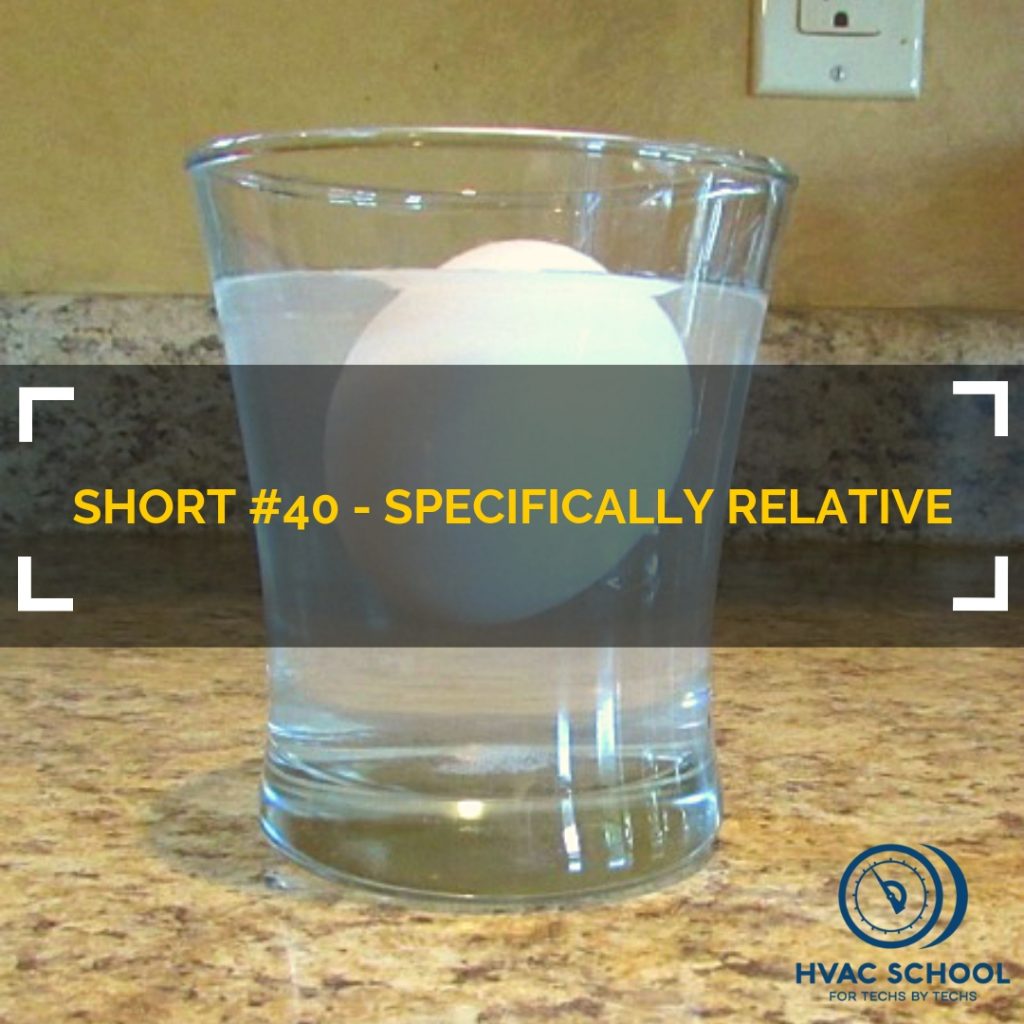
In today’s short podcast episode, we talk about specific gravity, also known as relative density. We explain why it matters to technicians.
When we talk about specific gravity, we’re actually talking about density. We’re actually using that value to assess how a vapor or liquid’s density compares to air or water, respectively. Regardless, we are working with the pressure conditions of 14.7 PSIA, or atmospheric pressure.
In the case of liquids, we’re relating them to water is at its densest, which is 39.2 degrees Fahrenheit. You may have noticed that ice cubes float in water. That’s because water becomes less dense as it gets colder than 39.2 degrees and when it freezes. Ice is less dense and more buoyant than water.
So, specific gravity requires a reference. Because it requires a reference, it is also a relative measurement, so “relative density” is another appropriate term for specific gravity. Regardless of units, we are still comparing one thing to a constant in the form of a ratio. (For example, a liquid with a specific gravity of 0.85 is equal to 85% of the density of water at 39.2 degrees Fahrenheit.) The relative density also explains why some liquids sink and others float when mixed together.
Gases can also rise or sink based on how much lighter or heavier that gas is when compared to air. If the specific gravity of a vapor is less than one, it will rise to the ceiling. Natural gas is an example of that. If the specific gravity of a gas is greater than one, it will sink. LP is heavier than air and will sink. Therefore, LP is a bit more dangerous than natural gas because of how it takes up space due to its interaction with the air.
Learn more about Refrigeration Technologies HERE.
Highlight a short passage, or bring a question about a specific moment into HVAC No Bull Forum.
Discuss this reference → Related forum discussionsAuthor:











Comments
To leave a comment, you need to log in.
Log In