
Short #82 – Brazing Temperature
Make & share a podcast clip
Keep the exact passage and a link to the full episode. Choose up to three minutes, with enough context to be fair to the speaker.
Preview uses this episode’s audio. Browser audio export, when supported, takes the length of the selected clip. Nothing plays until you choose Preview.
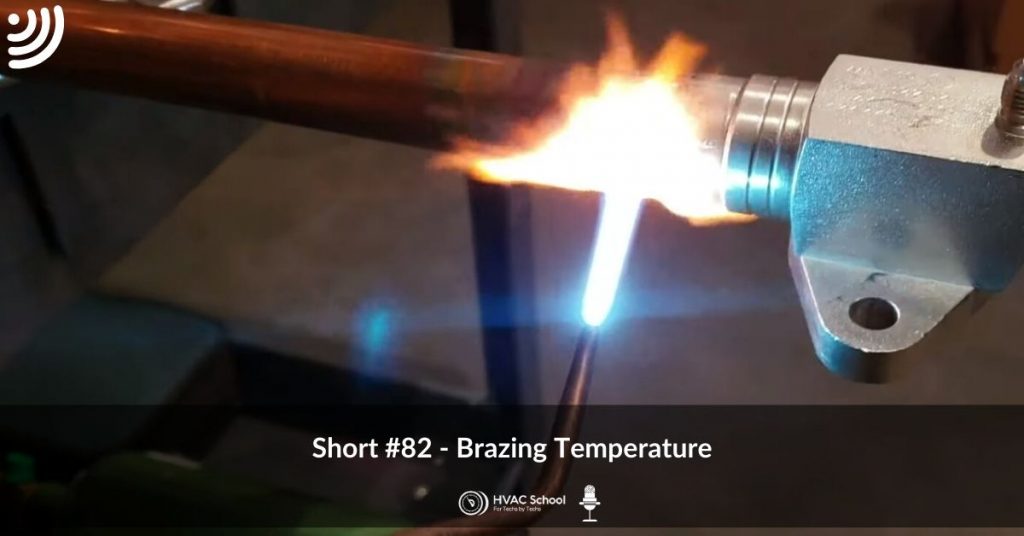
In this short podcast episode, Bryan talks a bit about brazing temperature. He also covers how to heat your copper to the proper temperature. You can use torches with oxyacetylene or air-acetylene tips.
Joining two metals with an alloy above 840 degrees classifies as brazing; anything that uses an alloy to join two metals below 840 degrees is technically soldering. When you join two similar metals by melting the base material (not using an alloy), that’s welding.
Another temperature of interest is 500 degrees; oxygen rapidly bonds to copper at temperatures above 500 degrees, so we will want to flow nitrogen while brazing to prevent cupric oxide (black scale) from forming on the copper. (We always recommend flowing nitrogen even if you are soldering below 500 degrees.)
When brazing with a 15% silver alloy (with a phosphorus fluxing agent), you will want to reach a temperature of 1100-1200 degrees. Solidus is when the rod gets a putty-like consistency. However, we want liquidus, which is when the alloy can flow freely into the joint. The color of the copper will be either dark or medium cherry. To be clear, you DO want to see redness when brazing; the color shouldn’t be very bright red or orange, but a dark or medium red is ideal. The brazing indicators hold true for copper-to-steel and copper-to-grass brazing as well.
Aluminum brazing should stay below 1200 degrees; aluminum also doesn’t have the same color indicators as copper, steel, and brass. Steel is complicated because it has a lower melting temperature, but it has much lower thermal conductivity than steel, so it will take longer to heat up and may heat unevenly.
You also CANNOT use an alloy with a phosphorus fluxing agent when brazing steel or brass; you need a silver alloy with a separate flux.
Learn more about Refrigeration Technologies HERE.
If you have an iPhone, subscribe to the podcast HERE, and if you have an Android phone, subscribe HERE.
Highlight a short passage, or bring a question about a specific moment into HVAC No Bull Forum.
Discuss this reference → Related forum discussionsAuthor:











Comments
To leave a comment, you need to log in.
Log In