
Short 16 – Air Velocity is Useful (Podcast)
Make & share a podcast clip
Keep the exact passage and a link to the full episode. Choose up to three minutes, with enough context to be fair to the speaker.
Preview uses this episode’s audio. Browser audio export, when supported, takes the length of the selected clip. Nothing plays until you choose Preview.
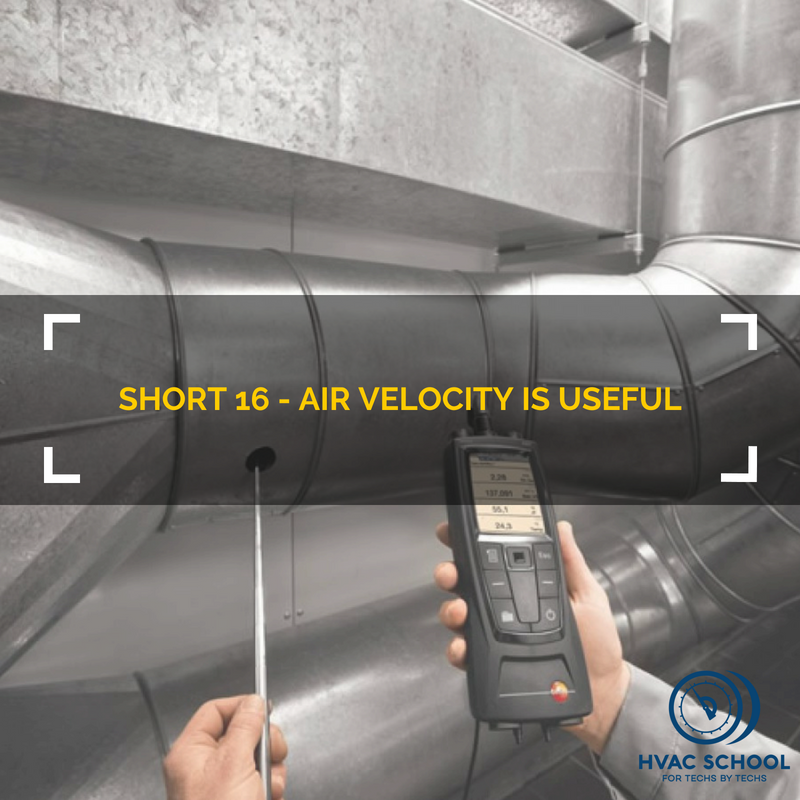
In this short podcast episode, Bryan covers how to measure air velocity directly at a return or supply and what those readings tell you.
Since many techs like to focus on CFM and static pressure readings, they can neglect air velocity in their measurements. Air velocity is the speed at which the air is moving. Conversely, static pressure is the force of the air against the sides of the ducts, and CFM is the air volume. We measure air mass in pounds (in the USA); when air is denser, you will have more pounds, but the volume will stay the same.
We primarily measure air velocity with a vane anemometer. Air moves through the vane and spins it, which informs the anemometer. That anemometer then gives you the reading. While airflow is the ultimate measurement, it is much better to take velocity measurements than none at all. Velocity can help you determine the CFM, but that requires knowledge that some techs don’t have or are simply unwilling to apply. You need to know the size of the intake and have knowledge of the open/free area of the vent.
Velocity can help you determine how much throw you need to reach a certain distance. Velocity is a measure of feet per minute and can be applied to distance variables like throw. However, register sizing needs to come before measuring velocity. Velocity helps you figure out your throw and register sizing without relying on CFM measurements. Velocity can also help you identify noise issues, with higher velocities indicating noisier ductwork.
To reduce air velocity in cases where you have too much, you may need to use a balancing damper to throttle it back.
Learn more about Refrigeration Technologies HERE.
If you have an iPhone, subscribe to the podcast HERE, and if you have an Android phone, subscribe HERE.
Highlight a short passage, or bring a question about a specific moment into HVAC No Bull Forum.
Discuss this reference → Related forum discussions









Comments
To leave a comment, you need to log in.
Log In