
Short #79 – Circuit Breaker Facts
Make & share a podcast clip
Keep the exact passage and a link to the full episode. Choose up to three minutes, with enough context to be fair to the speaker.
Preview uses this episode’s audio. Browser audio export, when supported, takes the length of the selected clip. Nothing plays until you choose Preview.
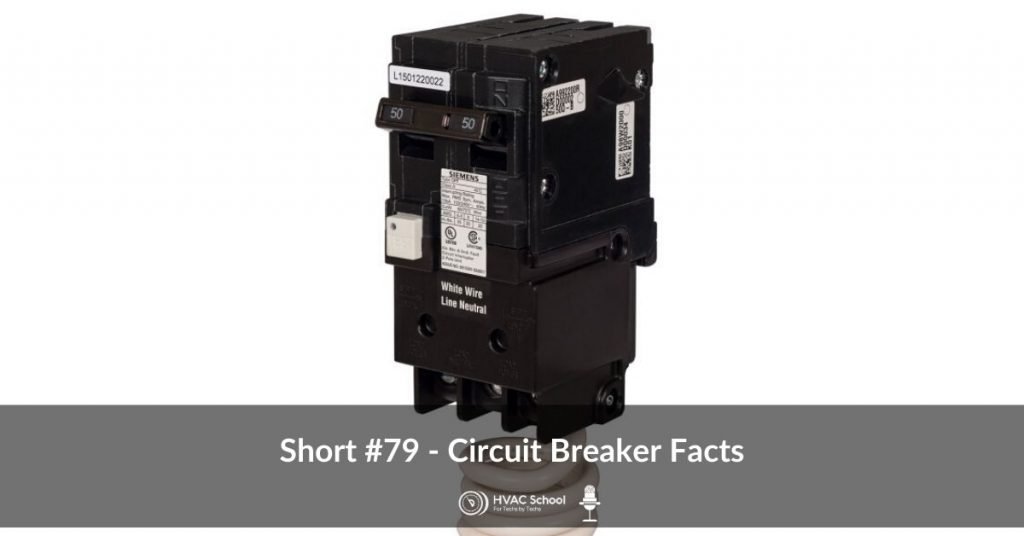
In this short podcast episode, Bryan talks about circuit breaker facts. He also explains why they trip, what they do, and some different types and considerations.
Circuit breakers break the circuit during an overcurrent situation. These do NOT handle all overloads, such as locked rotor amps (LRA); these handle significant overloads, such as shorts (when current takes undesigned paths). In air conditioning, we can size our fuses and circuit breakers a bit larger than usual, which prevents tripping from small spikes instead of truly dangerous or prolonged overload conditions.
There are thermal and inductive circuit breakers. A thermal circuit breaker uses heat to determine when to trip; these are common breakers but are prone to nuisance trips from poor connections or on days with high ambient temperature. Inductive trip breakers are magnetic and trip at a certain point of inductance; these are not easily affected by ambient temperature but can be expensive.
A breaker’s temperature can tell you a bit about its condition. Hotter breakers may be closer to tripping. However, arc fault breakers, a type of thermal breaker, can also run hot but work fine, which may confuse technicians. You can use thermal imaging cameras or infrared thermometers to compare breaker temperature.
Dielectric grease is a good tool but requires plenty of attention. You need to have the right connectors before you even reach for the grease. The dielectric grease protects the connectors from corrosion (from the outside), and it should NOT go directly on the connectors. Some people also use anti-seize grease; no matter which grease you use, you must be careful and avoid adding resistance.
Bryan also discusses:
- Proper torque settings
- Measuring voltage drop across the device
- Using breakers as switches
- Double-lugging
- Arc fault vs. GFCI
Learn more about Refrigeration Technologies HERE.
Highlight a short passage, or bring a question about a specific moment into HVAC No Bull Forum.
Discuss this reference → Related forum discussionsAuthor:











Comments
To leave a comment, you need to log in.
Log In