
Floating Head w/ Jamie Kitchen
Make & share a podcast clip
Keep the exact passage and a link to the full episode. Choose up to three minutes, with enough context to be fair to the speaker.
Preview uses this episode’s audio. Browser audio export, when supported, takes the length of the selected clip. Nothing plays until you choose Preview.
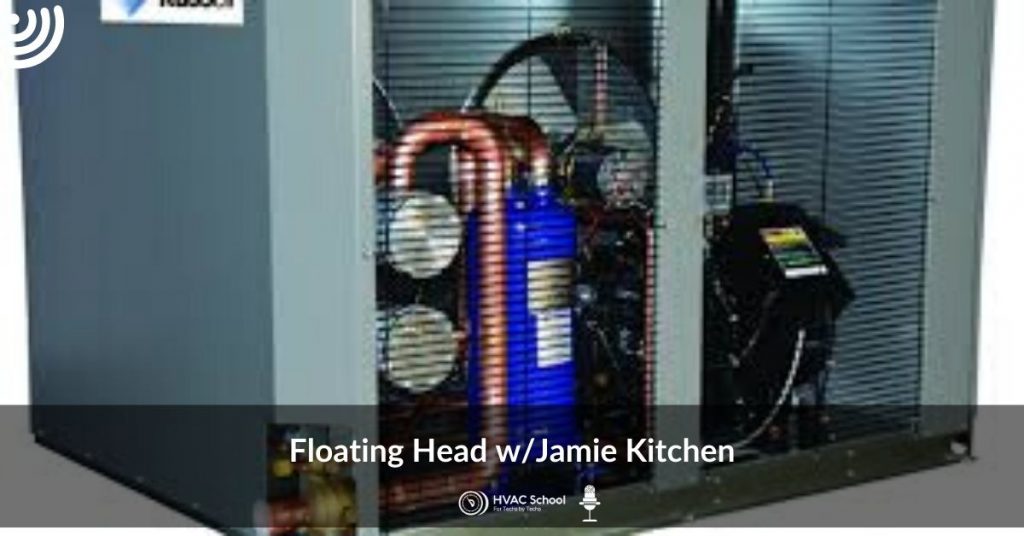
Jamie is back on the podcast. This time, he talks about the merits and pitfalls of floating head pressure and why you might care.
There is a relationship between floating head and floating suction, though the latter is easier to understand. You can stage fans to come on at certain temperatures, but you’ll always be running fans above a certain temperature. When temperatures are below that temperature, you can save energy by not running the fans. However, you still have to worry about feeding the evaporator coil sufficiently. Floating head pressure refers to dropping the pressure differential across the metering device while letting it feed the evaporator coil properly.
Allowing the head pressure and temperature to float is beneficial in applications that use large amounts of electricity and have low profit margins, such as grocery refrigeration. This practice is also great for energy savings in mild climates that stay below 80 degrees for most of the year.
To use floating head, you first have to look at your metering device capacity. The metering device must have enough capacity to feed the evaporator coil and compressor adequately for the load conditions. Then, you must look at your other components’ capacity balance, namely your evaporator and compressor. Sometimes, you also have to use floating suction to combat dehumidification issues that may result when you use floating head pressure.
Jamie and Bryan also discuss:
- Energy efficiency benefits of floating the head pressure
- Compression ratio
- Fan staging and variable-speed fans
- Metering device sizing for load demands
- Electronic expansion valves (EEVs) vs. TXVs
- Evaporator and compressor sizing in relation to each other
- Evaporator pressure controls
- Oversized condensing units
- Temporary fixes to save product vs. permanent fixes
- Ease of locating and purchasing replacement parts
Learn more about Refrigeration Technologies HERE.
If you have an iPhone, subscribe to the podcast HERE, and if you have an Android phone, subscribe HERE.
Highlight a short passage, or bring a question about a specific moment into HVAC No Bull Forum.
Discuss this reference → Related forum discussionsAuthor:











Comments
To leave a comment, you need to log in.
Log In