
Combustion Basics w/ Benoit Mongeau
Make & share a podcast clip
Keep the exact passage and a link to the full episode. Choose up to three minutes, with enough context to be fair to the speaker.
Preview uses this episode’s audio. Browser audio export, when supported, takes the length of the selected clip. Nothing plays until you choose Preview.
In this episode with BENOÎT MONGEAU, we talk about the components of combustion and what to consider when testing it on a fuel-burning appliance.
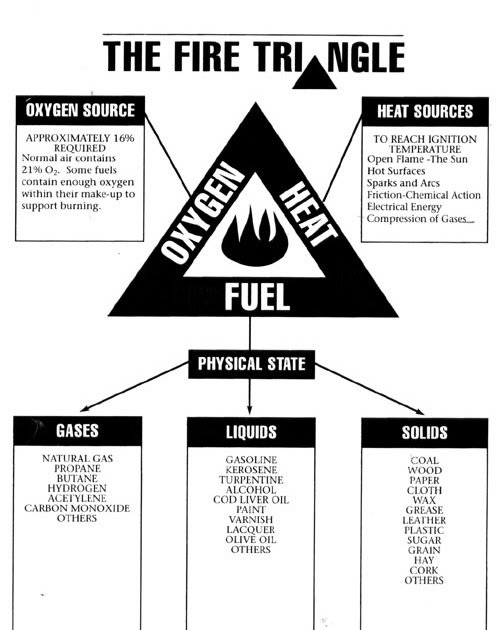
Combustion requires fuel, oxygen, and a heat source in a correct balance. We call that series of requirements the “combustion triangle.” Once combustion occurs, it is self-sustaining. However, removing one element of the triangle will end combustion. (For example, you could suffocate a flame by removing the oxygen content.) Undesirable consequences of incomplete combustion include the production of carbon monoxide, a potentially fatal gas. Flash point is the temperature at which vapors can ignite.
Excess air is the air that you’re inputting into flue gas that doesn’t get used for burning. It contains nitrogen and oxygen and doesn’t contribute to the burning. However, it does expand the volume of the flue gas and absorbs heat. Excess air indicates a loss of efficiency and colder gas. (Note: Perfect efficiency is theoretically possible but impractical.) High-efficiency furnaces have longer run times, which may confuse customers; customers may think that the longer run times mean that there is something wrong with their heating system.
Natural gas is mostly methane, so it is easy to burn with the right amount of oxygen. Propane (liquid petroleum) is a larger molecule with three carbons. Propane requires more time and more mixing for proper burning. The larger the molecule, the more time you have to spend waiting for combustion, and it’s harder to burn the molecule completely and properly.
Benoit uses Testo combustion analyzers and TPI digital manometers when working with furnaces. He uses heat-rise calculations whenever he wants to calculate CFM on a furnace. CFM tables are in the manufacturer’s manual.
As always, if you have an iPhone, subscribe to the podcast HERE, and if you have an Android phone, subscribe HERE.
Highlight a short passage, or bring a question about a specific moment into HVAC No Bull Forum.
Discuss this reference → Related forum discussionsAuthor:











Comments
Great info. Thanks Ben and Bryan.
Report comment
Great info. Thanks Ben and Bryan.
Report comment
To leave a comment, you need to log in.
Log In