
HVAC School Admin Discussion – Moderating a Successful Community
Make & share a podcast clip
Keep the exact passage and a link to the full episode. Choose up to three minutes, with enough context to be fair to the speaker.
Preview uses this episode’s audio. Browser audio export, when supported, takes the length of the selected clip. Nothing plays until you choose Preview.
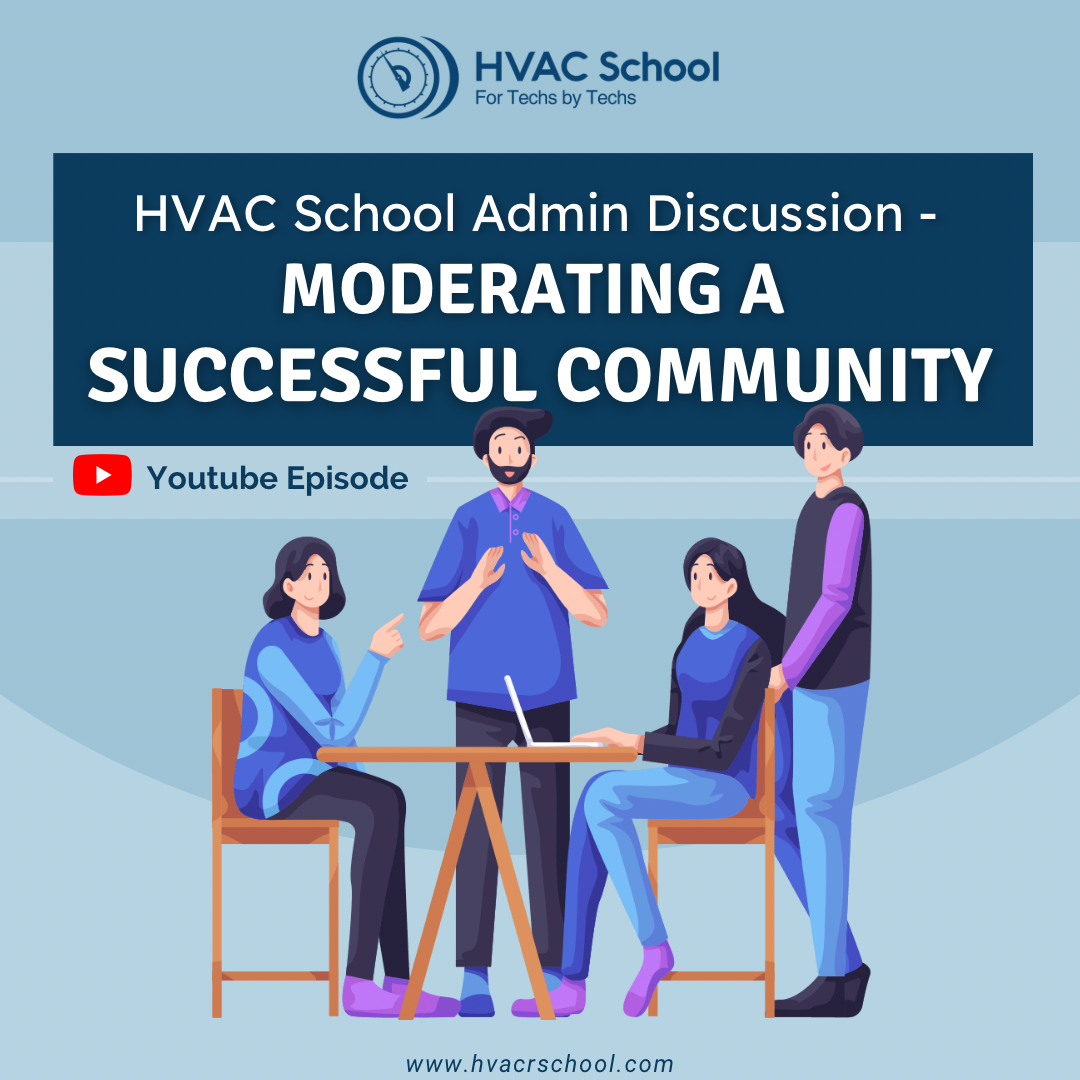
Some admins from the HVAC School Facebook group join the podcast to discuss the art of moderating a successful community. Bryan is joined by Eric Kaiser, Ty Branaman, Michael Housh, and Neil Comparetto. You can also watch the video version of this podcast HERE.
A community based on a skilled trade gives people an inviting space to share information and ask questions. It’s also a space that allows people to practice how they present information. Groups also connect people across geographical locations, and we can get regional perspectives that change the way we think about things.
However, community standards are necessary to keep groups professional and on-topic. Swearing is a slippery slope that may lead to personal attacks, which make the community hostile and unhelpful. The main goal is to keep a respectful atmosphere, and moderators have to draw the line somewhere, but there’s a difference between cultivating a productive atmosphere and being dogmatic.
People who interact in those communities need to do it for altruistic reasons, not to satisfy their egos. Giving detailed, accurate answers (ideally with a source to back up the information) is the best way to contribute meaningfully. Engaging in rigorous debates with an open mind is also a great way to see many different viewpoints.
Debates in HVAC communities are great, but they require boundaries and mutual respect between debaters. Namecalling, blaming others, or dragging politics into the discussion is unproductive. Overall, it’s best to stay positive and try to keep things helpful, and admins try to maintain an atmosphere that can be both serious and lighthearted but is always helpful and respectful.
HVAC communities and groups are not places to share other groups, content, or job postings. These groups are not marketing centers; they are forums for learning and discussing the work we do every day.
Ty, Neil, Michael, Eric, and Bryan also talk about:
- How they got started in online HVAC communities
- Unproductive arguments about codes
- Banning and muting members
- Receiving feedback
- Avoiding logical fallacies in debates
- How egos hold people back
- Trite and unproductive catchphrases, slogans, and jokes
- Responding to disagreements productively
- Communicating with people appropriately
- Admitting fault and refraining from judging others who are incorrect
- Moderating posts for quality and shareability
If you have an iPhone, subscribe to the podcast HERE, and if you have an Android phone, subscribe HERE.
Check out our handy calculators HERE.
Highlight a short passage, or bring a question about a specific moment into HVAC No Bull Forum.
Discuss this reference → Related forum discussionsAuthor:









Comments
To leave a comment, you need to log in.
Log In