
Uncovering the Root Causes of Commercial Refrigeration Failures
Make & share a podcast clip
Keep the exact passage and a link to the full episode. Choose up to three minutes, with enough context to be fair to the speaker.
Preview uses this episode’s audio. Browser audio export, when supported, takes the length of the selected clip. Nothing plays until you choose Preview.

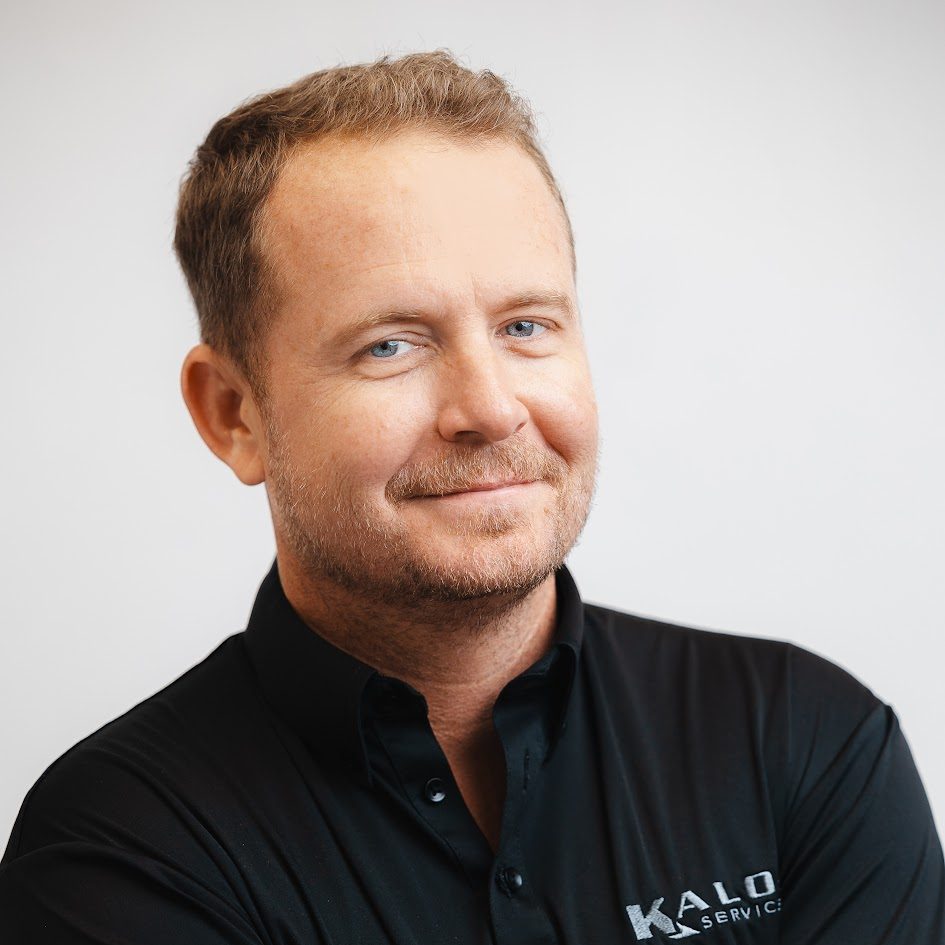
In this live stream, co-branded with Kalos, Bryan Orr sits down with Kalos refrigeration team members Christian Maitland and Alex Orr to talk about the realities of working on market refrigeration systems. The conversation starts with the rapid arrival of new equipment in grocery stores, especially transcritical CO2 racks, and why even well-trained techs are running into problems nobody has seen before. Because these are engineered, built-up systems rather than mass-produced units, the first real stress test often happens in the field, during installation and startup.
The group digs into where those problems actually come from. Some are classic installation errors, like skipping nitrogen purges while brazing, leaving burrs in pipe, or forgetting that ACR copper plugs sit on the inside of the pipe. Others trace back to the manufacturer: sensors landed on the wrong terminals, swapped sensors that left a condenser fan unable to run, controllers that overheat and reset, and programming that was tested in a different climate than the one the equipment ends up in. With multiple manufacturers supplying the rack, controller, and condenser, nobody owns the interface between the pieces, so startup techs end up tuning parameters store by store.
Bryan, Christian, and Alex also walk through the root cause process they rely on, which is essentially the scientific method: observe the complaint, form a hypothesis, test it, and then keep digging until you know why it happened and can confirm the fix on the next job. They discuss store dew point and airflow as the most common causes of iced-up and sweating cases, a humbling misdiagnosis involving a transducer and a redundant controller, and the pain of 19-week lead times and wrong parts arriving seven times in a row.
The episode closes with practical advice for techs. Walk into every store and use your senses, check behind your install team, pull your vacuums, and document conversations with customers when expectations don’t match the equipment specs. Christian encourages techs to share what they learn with peers, Alex reminds listeners that solving ridiculous problems is the job and a chance to be the hero, and Chad’s late addition is a reminder that equipment should be designed for worst-case conditions rather than a design day.
Topics Covered
- Transcritical CO2 coming to the U.S. market, and why it behaves differently above roughly 86°F
- Challenges of high ambient temperature and humidity in Florida, including limits of adiabatic cooling
- Controllers that overheat and reset, and how quickly a CO2 system can lose its charge when that happens
- Safety and mindset for techs moving from traditional DX to high-pressure CO2 systems
- Why built-up systems get their first real field test at installation and startup
- Clean piping practices: nitrogen purging, burrs, carbon buildup, and tiny orifices in ejectors and microchannel coils
- The pipe plug in the EPR story and other lessons from early grocery work
- Manufacturer errors caught at startup, including miswired harnesses and swapped sensors
- Interconnected controls from different manufacturers and the need for site-specific programming
- Setting customer expectations on case placement, shelving, and spec limits, and documenting those conversations
- Store dew point, dehumidifiers, and ceiling fans disrupting open-case air curtains
- Using building science tools like smoke pens and vane anemometers on refrigeration cases
- The root cause process: observe, hypothesize, test, find the real cause, and verify the fix
- A transducer misdiagnosis and why to rule out everything before ordering long-lead-time parts
- Parts lead times, wrong parts, and the hidden labor cost of learning new equipment alongside manufacturers
- Commissioning during live-store case swaps, and the gap in manufacturer training for new equipment
- What techs look for on a first walkthrough, plus startup checks like line sizing, case assembly, and pulling vacuums
- Gaps in tools, such as digital gauges built for transcritical systems
- Closing takeaways: share knowledge with peers, own the problem, and design equipment for worst-case conditions
This episode contains embedded sponsor messages from Refrigeration Technologies, Carrier, Copeland, Santa Fe Dehumidifiers, and TruTech Tools.
Resources
- Matthew Taylor’s Rack Refrigeration Series (YouTube playlist)
- Intro to CO2 w/ Don Gillis (podcast)
- CO2 Refrigeration Rack Overview (video)
- Ramping Your Team Up for CO2 (tech tip)
- How Do You Ramp Up Your Team to Effectively Service and Support CO2 Applications? (podcast)
- HVAC School calculators
- Submit a podcast question
- Learn about the GRIT Foundation
Purchase your tickets or learn more about the 8th Annual HVACR Training Symposium at https://hvacrschool.com/symposium.
Highlight a short passage, or bring a question about a specific moment into HVAC No Bull Forum.
Discuss this reference → Related forum discussionsAuthor:







Comments
To leave a comment, you need to log in.
Log In