
Planning and Layout of HVAC Projects
Make & share a podcast clip
Keep the exact passage and a link to the full episode. Choose up to three minutes, with enough context to be fair to the speaker.
Preview uses this episode’s audio. Browser audio export, when supported, takes the length of the selected clip. Nothing plays until you choose Preview.
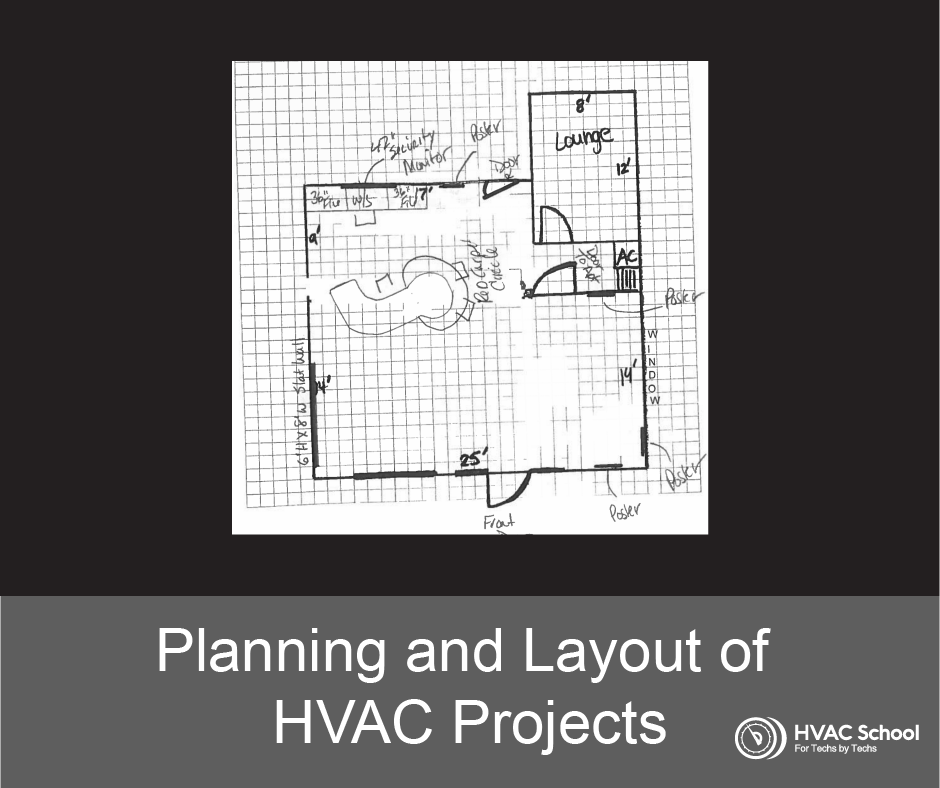
In today’s podcast, Eric Mele and Bryan explain the planning, layout, and execution of HVAC projects. They mostly cover commercial ductwork but also touch on piping and some residential projects.
Planning
The first step is to review the construction plan WITH a site visit. It is best to see how a plan works within the space; plans may be feasible on paper but may not work out as planned in the actual space.
During the site visit, you also want to establish solid communication with everyone else on the project. As such, it is best practice to have a coordination meeting with the general contractor and other trades (such as drywallers) to communicate potential areas of conflict. (When building ducts in commercial structures, you will want to watch out for conflicts with trusses, joists, fire sprinklers, and plumbing/drains. In residential structures, you will have to watch out for ventilation paths, such as dryer vents and kitchen exhaust vents.)
Before deciding to alter the design, be sure to communicate any possible alterations to the GC and other trades.
Layout
If possible, the next step is to lay out your construction plans on the floor. Constantly referring back to paper or digital plans is not productive. You can usually chalk up or spray paint the concrete at a construction site to draw your layout and plan the construction accurately within the space. The floor is also likely to be your best reference.
You can also use string to plot the locations where the hangers would go, especially if you have long runs of ductwork.
Execution
The first step of executing a project is preparing for hanging. When preparing for hanging, it is best to perform as much of the work on the floor as possible. The duct board can be stapled, taped, or masticed on the floor. Then, the hangers go up. If you have multiple people working on a project, one person can assemble the ducts on the floor and wait for the mastic to dry while another person puts up hangers.
You can usually wrap the ducts on the floor, and it is usually easier to do so. However, it is best to check with your GC before you do it. You may need the ductwork to pass an inspection.
When it comes to fasteners, you can use screws, flat strapping, or even aircraft cable. If using screws as fasteners, try to make sure that all of the screws have the same heads. Having to switch out drillbits for all the different screws is very inefficient. (As always, make sure your tools are easy to reach and in locations that won’t hurt your back. It is a good idea to have a toolbelt or workstation.)
When working with flex duct, make the takeoffs as easy for yourself as possible. You can use mastic as a seal for the collar instead of tape, as it may be easier to seal. (Either way, watch out for leaks.)
No matter what you do, make sure you’re taking care of your body, doing as much work on the floor as possible, and adhering to all applicable building codes.
If you have an iPhone, subscribe to the podcast HERE, and if you have an Android phone, subscribe HERE.
Check out our handy calculators HERE.
Highlight a short passage, or bring a question about a specific moment into HVAC No Bull Forum.
Discuss this reference → Related forum discussions










Comments
Good and effecient
Report comment
Good and effecient
Report comment
To leave a comment, you need to log in.
Log In