
Setting Realistic Customer Expectations w/ Ed Janowiak
Make & share a podcast clip
Keep the exact passage and a link to the full episode. Choose up to three minutes, with enough context to be fair to the speaker.
Preview uses this episode’s audio. Browser audio export, when supported, takes the length of the selected clip. Nothing plays until you choose Preview.
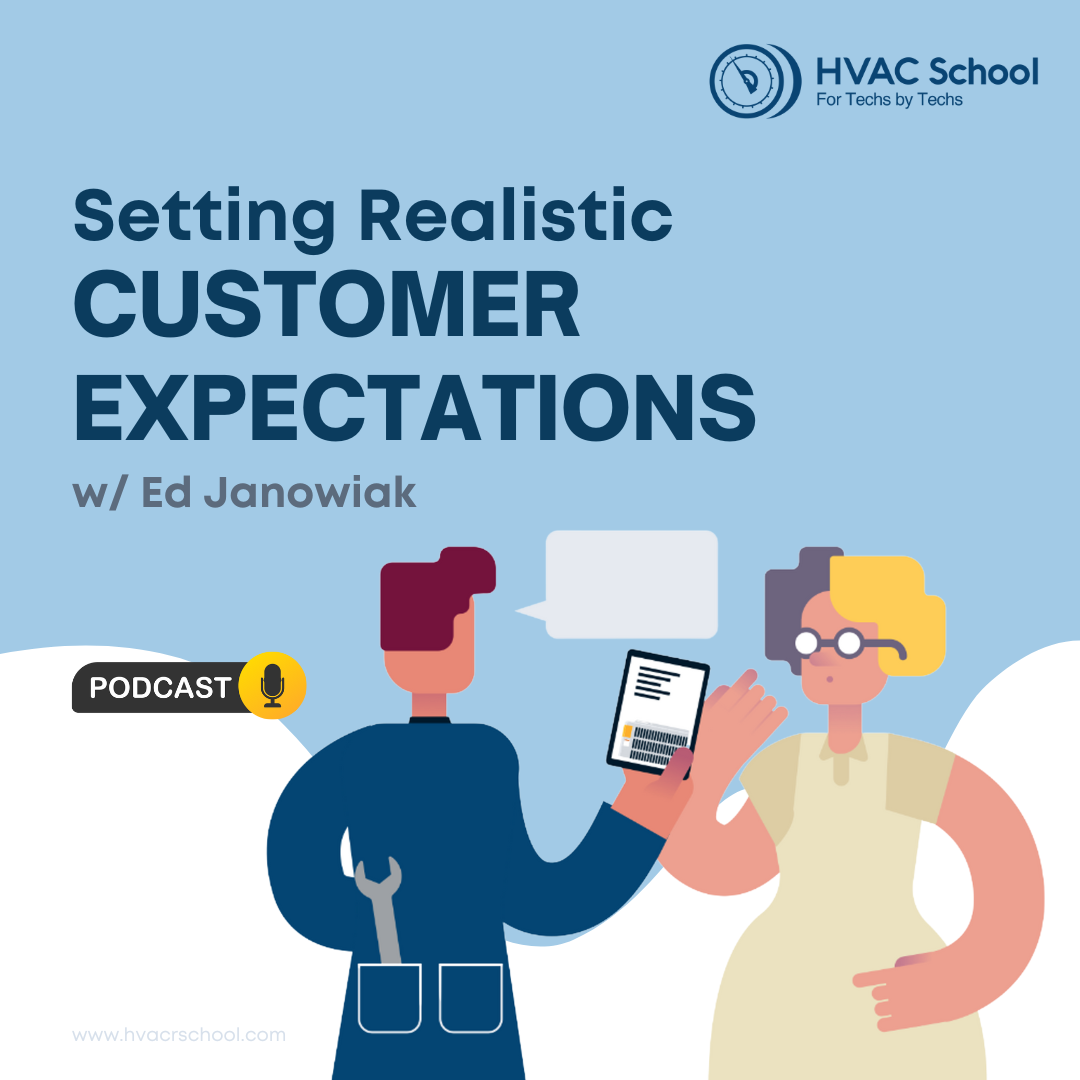
Ed Janowiak returns to the podcast to talk about setting realistic customer expectations when designing residential HVAC systems across climates, seasons, and load conditions.
Being honest and aggressive is one of the best ways to set realistic expectations, and our load calculations and equipment selection need to reflect that. Manual J calculations must consider non-design days, not just the design conditions, including partial load conditions. Partial load conditions that aren’t accounted for may make it more difficult for the HVAC system to control latent heat, potentially leading to moisture problems indoors.
We have to set expectations in the summer a bit differently than we set expectations in the winter, and we must account for the equipment type when we create expectations. Heat pumps perform differently than furnaces, and oversized furnaces typically present fewer problems than oversized heat pumps in areas with high latent loads.
Clients must also be willing to acknowledge that systems won’t perform exactly as designed during partial load conditions. You can put the information in writing and make clients sign the paperwork to ensure that they understand the expectations you’ve set. Laying out expectations and making clients read them is a good way to prevent conflict or identify clients that may not accept the expectations.
Ed and Bryan also discuss:
- Ed’s three “Hate Me” reasons
- Oversizing furnaces vs. straight-cool A/C units vs. heat pumps
- Electrification
- Heat pumps in cold climates
- Humid vs. arid climates
- Designing systems with ancillary dehumidification
- Not being responsible for clients’ lifestyle choices
- ACCA collaboration and industry support
Learn more about the training ACCA has to offer at https://www.acca.org.
Check out the HVACR Training Symposium and order your virtual tickets before, during, or after the symposium (Jan 19-21, 2023) at https://www.hvacrschool.com/symposium.
If you have an iPhone, subscribe to the podcast HERE, and if you have an Android phone, subscribe HERE.
Check out our handy calculators HERE.
Highlight a short passage, or bring a question about a specific moment into HVAC No Bull Forum.
Discuss this reference → Related forum discussions








Comments
To leave a comment, you need to log in.
Log In