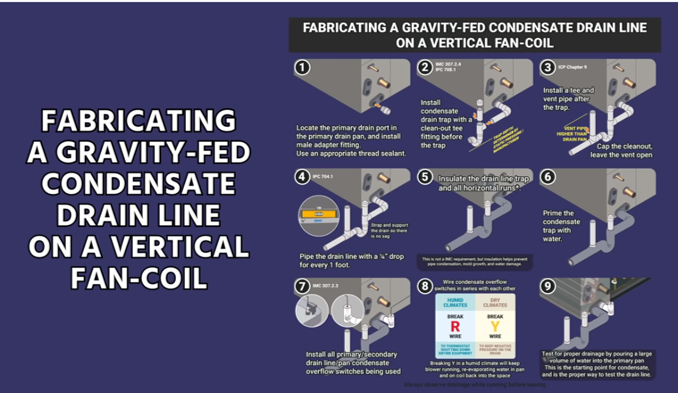
Drains come up the most. That means hooking up a shop vac outside, brushing and flushing the line, cleaning out the trap, and pulling unions where you can. The biggest rule is to never walk away from a system until you see water coming out of the drain. If there’s no clean-out, mention it to the customer, because adding unions, vents, and pre-made traps is a worthwhile upgrade. Every tech should carry a rebuild kit on the truck.
Next is evaporator coils and the air handler: what a standard PM coil cleaning covers versus a deep cleaning that gets quoted separately. On a PM, the inside of the cabinet gets sprayed with antimicrobial and wiped down, and the coil gets a self-rinse cleaner with a brush on the corners where lint and growth build up. Then the drain gets cleaned again so the debris you rinsed into the pan doesn’t cause the next clog. When growth on the coils goes past about 20%, it’s time to quote a deep cleaning.
The team also covers how to handle repairs found during a PM without falling behind. The 15-minute rule: if a fix takes about 15 minutes, take care of it. If it’ll take longer, like a leak search or a heavily packed coil, talk to the customer and quote it first. Repairs are best quoted once the PM is finished, so you know how long they’ll actually take. And the fact that matters more than any compressor swap: a sloppy PM says more about you as a technician than a perfect compressor job does, and it’s how customers get lost.
The video ends with the final step that prevents the most callbacks. Run the unit for the last 10–15 minutes, walk past every drain, and check that the caps are back on and the filters are in before you leave.
















Comments
To leave a comment, you need to log in.
Log In