
Condensing Furnace Drain Guidance w/ AC Service Tech
Make & share a podcast clip
Keep the exact passage and a link to the full episode. Choose up to three minutes, with enough context to be fair to the speaker.
Preview uses this episode’s audio. Browser audio export, when supported, takes the length of the selected clip. Nothing plays until you choose Preview.
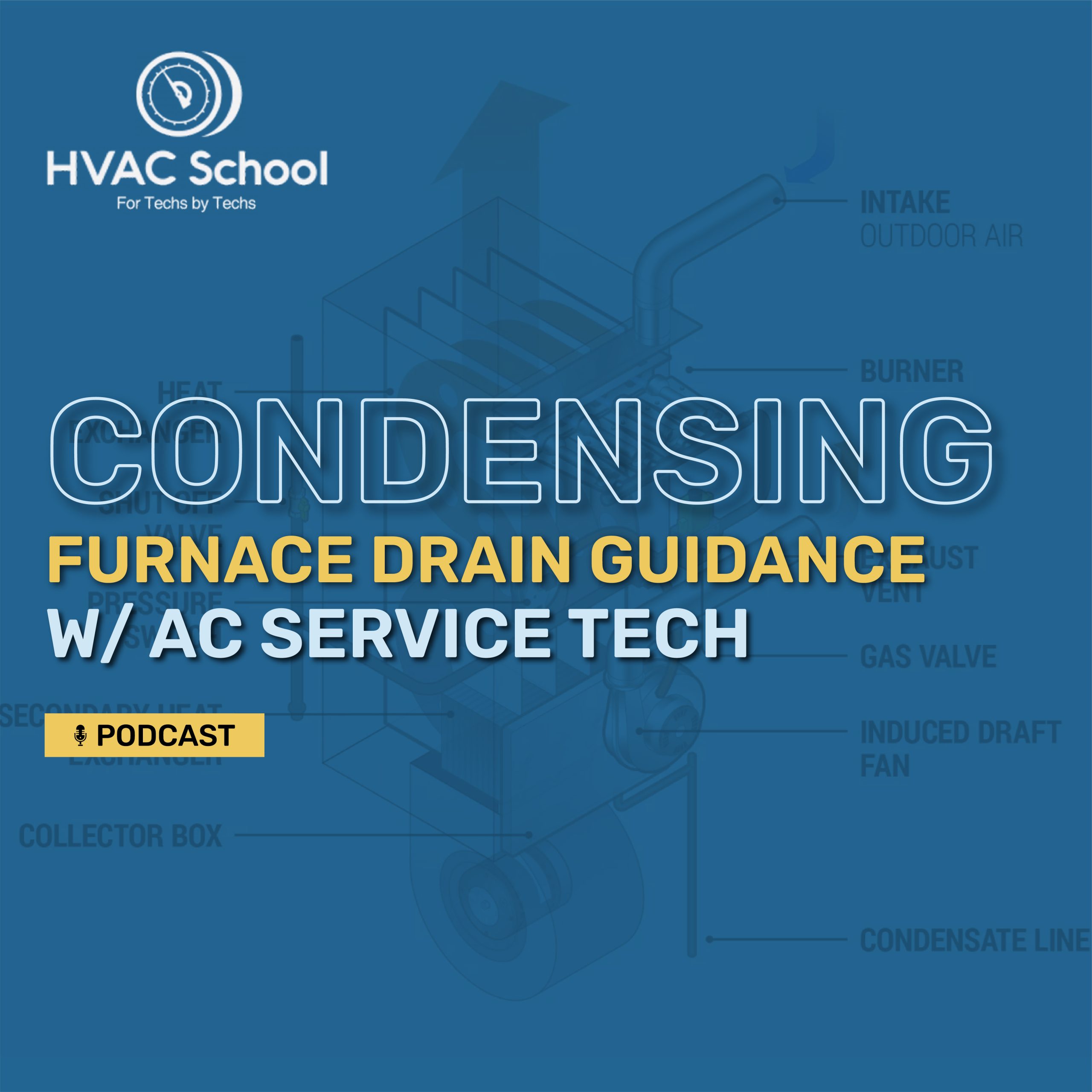
Bryan and Craig Migliaccio (AC Service Tech)dive deep into the complexities of managing condensate drainage in high-efficiency (90%+) gas furnaces. The conversation begins with a clear explanation of why these furnaces produce condensate in the first place – they have two heat exchangers that extract so much heat from the combustion gases that water vapor condenses out. This condensate is acidic (pH 3-5) and requires special consideration for drainage and disposal.
The discussion explores various challenges contractors face when installing these systems, particularly in cold climates where freezing is a concern. Craig shares practical solutions from his experience in New Jersey, including using larger diameter pipes for exterior drainage and creating air gaps to prevent complete freezing. They address the ongoing debate about whether to combine AC condensate lines with furnace condensate lines, noting that while it’s technically possible, there are potential risks and code considerations to keep in mind.
A significant portion of the conversation focuses on code compliance and best practices for condensate disposal. The International Mechanical Code (IMC) provides several acceptable options for drainage, including floor drains, utility sinks, and standpipes. However, as Craig points out, local interpretations and requirements can vary significantly, making it crucial for contractors to maintain good relationships with their local inspectors and understand their specific jurisdiction’s requirements.
Key Topics Covered:
- How 90% efficient furnaces produce condensate through their dual heat exchanger system
- The acidic nature of furnace condensate and its corrosion potential
- Solutions for preventing condensate line freezing in cold climates
- Pros and cons of combining AC and furnace condensate lines
- Code-compliant drainage options (IMC 307.2)
- Use of condensate pumps as a solution for difficult drainage situations
- Importance of proper trapping and venting in condensate systems
- Requirements for auxiliary drain pans under furnaces
- Role of condensate switches and safety controls
- Challenges with different installation locations (crawl spaces, basements, etc.)
- Considerations for neutralizer usage when draining into septic systems
- Best practices for maintaining professional relationships with code officials
Check out some of Craig’s great educational books at https://www.acservicetech.com/.
Have a question that you want us to answer on the podcast? Submit your questions at https://www.speakpipe.com/hvacschool.
Purchase your tickets or learn more about the 6th Annual HVACR Training Symposium at https://www.hvacrschool.com/symposium.
Subscribe to our podcast on your iPhone or Android.
Subscribe to our YouTube channel.
Check out our handy calculators here or on the HVAC School Mobile App for Apple and Android.
Highlight a short passage, or bring a question about a specific moment into HVAC No Bull Forum.
Discuss this reference → Related forum discussionsAuthor:












Comments
👍️
Report comment
👍️
Report comment
To leave a comment, you need to log in.
Log In