
ECM Types and Applications
Make & share a podcast clip
Keep the exact passage and a link to the full episode. Choose up to three minutes, with enough context to be fair to the speaker.
Preview uses this episode’s audio. Browser audio export, when supported, takes the length of the selected clip. Nothing plays until you choose Preview.
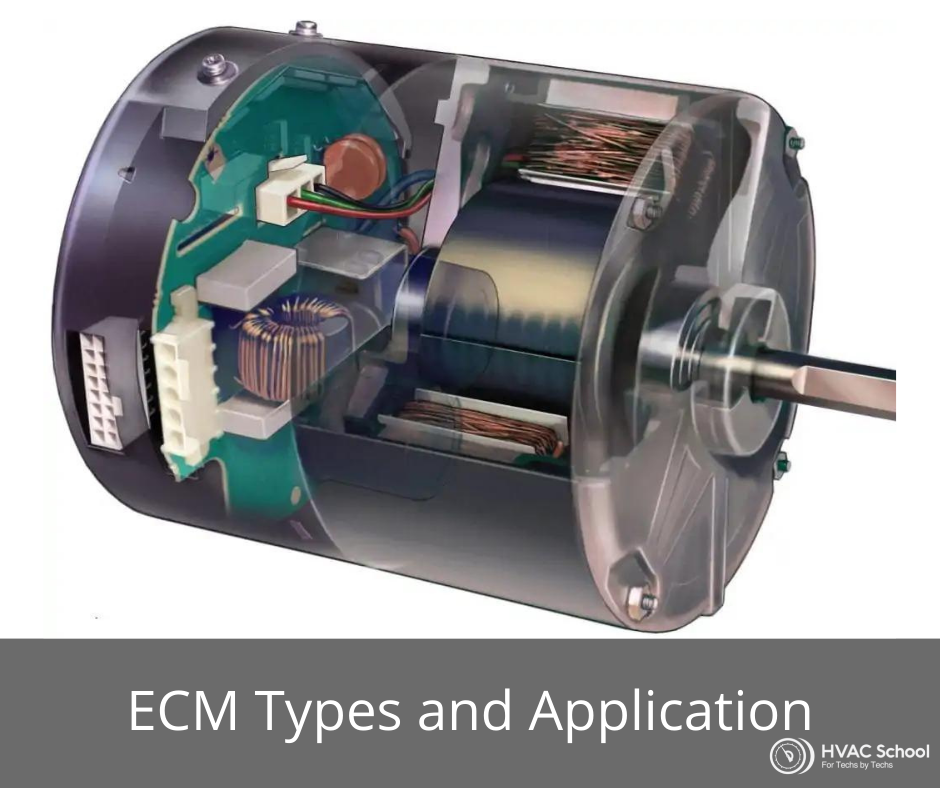
In this podcast episode, Bryan and Chris Mohalley of Regal Beloit discuss the different types of ECM. They also cover applications where you can expect to find ECMs.
In the HVAC industry, we typically use three types of motors: constant-torque, constant-airflow, and constant-speed. Every ECM works on electronic commutation, so constant-torque motors use that to maintain torque output (X13). The constant-airflow motor is also known as the variable-speed motor, and it is one of the first ECM types. We typically only use constant-speed motors in outdoor fan motor applications. Likewise, we generally use the first two motor types for indoor fan motors inside air handlers.
ECMs were NOT designed to address the static pressure problems of PSC motors and duct issues; variable-speed motors may attempt to compensate for duct problems, but that’s not its purpose. (Variable-speed motors work like cruise control in a car.) However, when motors compensate for poor duct systems, they could run higher RPM than desirable in order to hit the system targets and can generate excess heat.
Constant-torque motors maintain a certain torque value, which can get tricky when the loads begin to vary. When static pressure goes up, there’s less air in the system, which means that there’s less air for the wheel to move (a smaller load). Current and RPM can increase when static pressure goes up, but the torque would stay the same.
Chris and Bryan also discuss:
- What is a variable-speed motor?
- Permanent split capacitor (PSC) motors
- Duct sizing and design
- Static pressure and motor life expectancy
- Reactive power and power factor
- Torque vs. speed taps
- Blower performance curves
- Different series of motors
- PWM (pulse-width modulation) and inputs
- Setting DIP switches
- Evergreen VS
- Why should you read the manual?
Check out some more ECM resources at regalmmu.com.
Learn more about Refrigeration Technologies HERE.
If you have an iPhone, subscribe to the podcast HERE, and if you have an Android phone, subscribe HERE.
Highlight a short passage, or bring a question about a specific moment into HVAC No Bull Forum.
Discuss this reference → Related forum discussionsAuthor:












Comments
hvac
Report comment
hvac
Report comment
I am very interested to know everything about HVAC field. Thank you for spending time for this
Report comment
I am very interested to know everything about HVAC field. Thank you for spending time for this
Report comment
To leave a comment, you need to log in.
Log In