
Furnaces – Introduction and History w/ Jim Bergmann (Podcast)
Make & share a podcast clip
Keep the exact passage and a link to the full episode. Choose up to three minutes, with enough context to be fair to the speaker.
Preview uses this episode’s audio. Browser audio export, when supported, takes the length of the selected clip. Nothing plays until you choose Preview.
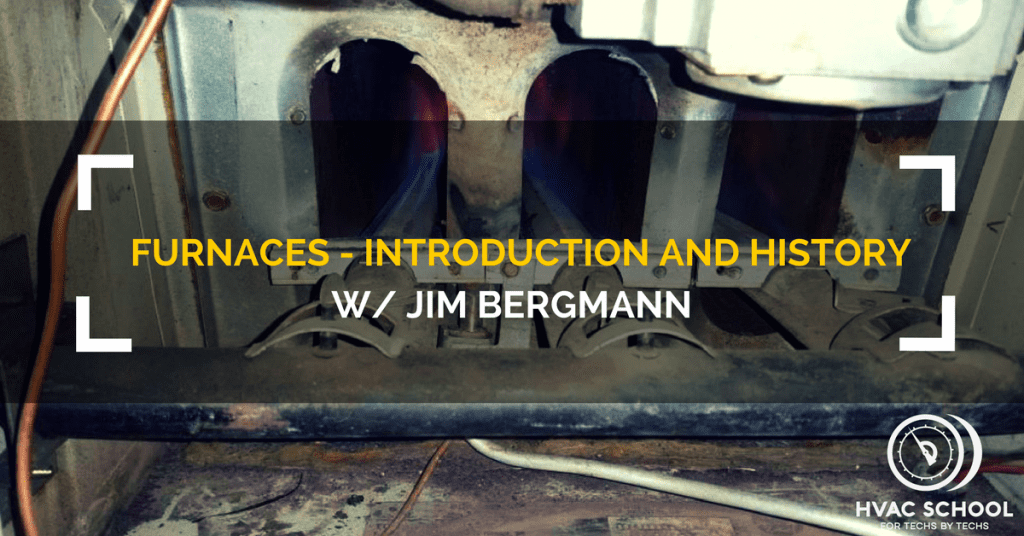
Jim takes us all the way through the history of furnaces, from the Stone Age when he was a child to modern modulating condensing types.
The goal of a furnace is to move heat, so a furnace uses heat exchangers to facilitate heat transfer. Furnaces have primary and secondary air. The primary air goes through the burner, and the secondary air goes around the flame and is pulled in around the heat exchanger inlet. So, the flame’s heat creates a draft that pulls air in.
Natural gas and oil (LP/propane) furnaces are common nowadays, but we initially burned wood and coal in furnaces. The first gas furnaces came into existence by modifying coal, not from the gas lines we see nowadays. Long ago, the flue gases were also exhausted to the basement; CO poisoning was less of a concern back then, as combustion was usually complete. Burning the building was a much more severe risk.
The first “gas crisis” in the 1970s forced us to focus on gas furnace efficiency. In that time, we developed spill switches and retrofit kits that converted furnaces over to spark ignition. In the 1980s, we came out with the draft-induced 80% furnaces we see nowadays. We also eliminated standing pilots and draft diverters. Even though the appliances became more efficient, we didn’t actually burn the gas any more efficiently.
So, despite the technological advancements we’ve made over the years, we don’t actually burn gas any more efficiently than we did in the 1930s. However, our modern furnace technology has eliminated standby losses, controlled ignition, and focused on the role of latent heat in combustion.
Jim also discusses:
- Flame color and types
- Draft hoods and diverters
- Products of complete combustion
- Excess air: a double-edged sword
- Natural ventilation
- Efficiency percentages
- Furnace testing and ratings
- Turbulators
- Modulation
Highlight a short passage, or bring a question about a specific moment into HVAC No Bull Forum.
Discuss this reference → Related forum discussionsAuthor:












Comments
I came into the industry in 1978 right in the middle of adding spark ignition kits and vent dampers to older furnaces. Seems like yesterday. Enjoyed the history lesson and the explanations of changes that have been made over the years to increase efficiency, comfort and safety. Great show!
Report comment
I came into the industry in 1978 right in the middle of adding spark ignition kits and vent dampers to older furnaces. Seems like yesterday. Enjoyed the history lesson and the explanations of changes that have been made over the years to increase efficiency, comfort and safety. Great show!
Report comment
What a history lesson on hot air heating. Like a steam / hot water heating lesson from Dan Holohan.
Report reply
What a history lesson on hot air heating. Like a steam / hot water heating lesson from Dan Holohan.
Report reply
To leave a comment, you need to log in.
Log In