
Short #26 – Temperature Mistakes (Podcast)
Make & share a podcast clip
Keep the exact passage and a link to the full episode. Choose up to three minutes, with enough context to be fair to the speaker.
Preview uses this episode’s audio. Browser audio export, when supported, takes the length of the selected clip. Nothing plays until you choose Preview.
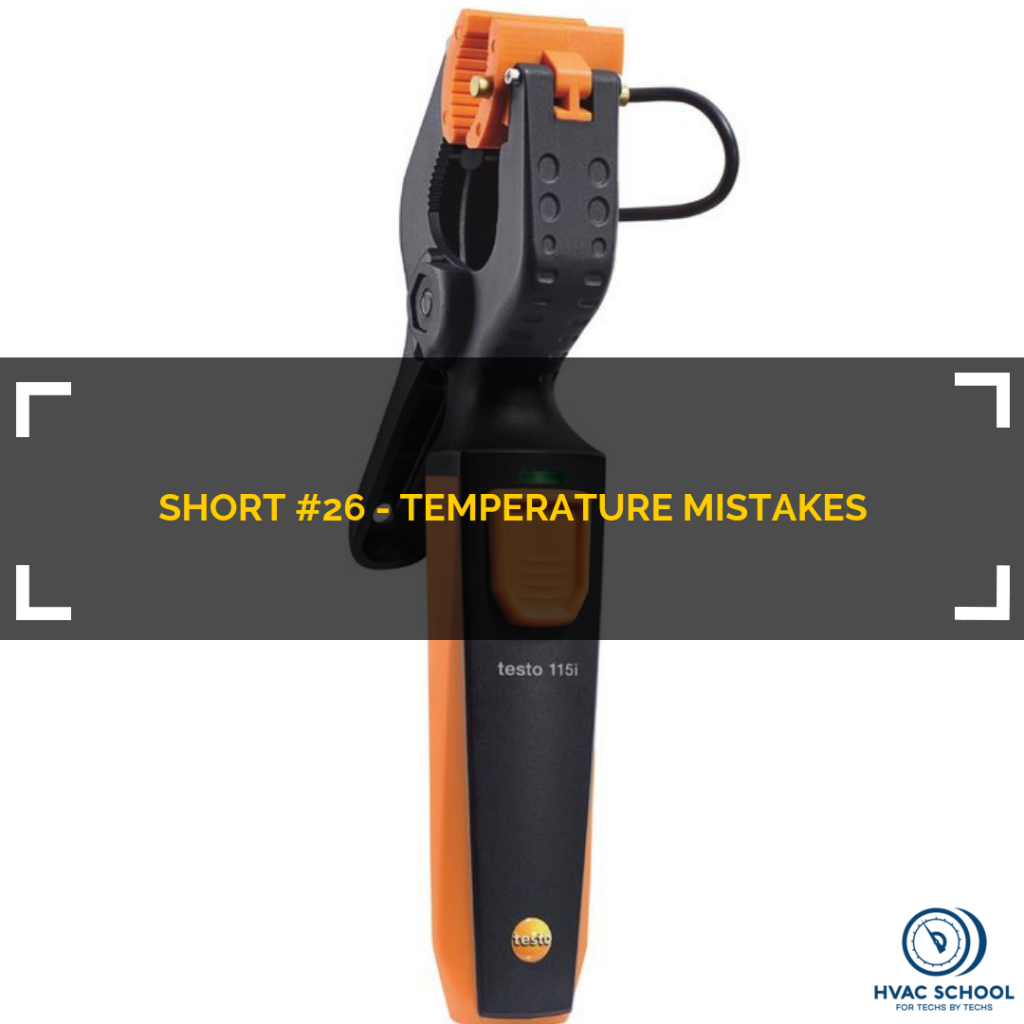
Can you really trust that temperature reading? In this short podcast episode, we talk about some common mistakes techs make when making temperature measurements and what to do about it.
Many heat pumps use heat strips as a source of auxiliary heat. However, it takes some time for the heat strips to integrate with the air. So, your superheat, subcooling, and pressures will look fine on a system that isn’t cooling well enough. When you take air temperature measurements in the ductwork, try to get as close to the center of the duct as possible or take a measurement farther down in the duct. Even so, you need to be careful with measurements in the center of the duct on gas furnace systems because radiant heat can give you an incorrect reading. You can also measure a few different points and average them out.
On gas furnaces with a coil on top, the coil can be in visual contact with your temperature probe. In those cases, the coil will absorb some of the heat from your probe via radiant heat transfer, so you could end up with a lower reading. Not accounting for small sources of heat transfer is one of the most common temperature mistakes that techs can make.
When measuring outdoor temperatures, you want to avoid using your probes in the sun. The sun can add radiant heat to your readings when you calculate CTOA, and you will get a high reading. Radiant heat gains also apply when you’re working very close to hot, active pool heaters. The thermostat should also avoid being exposed to very high or low temperatures for maximum accuracy.
We also discuss:
- Radiant heat gains
- Air mixing
- Line temperature clamps and copper cleanliness
Learn more about Refrigeration Technologies HERE.
If you have an iPhone, subscribe to the podcast HERE, and if you have an Android phone, subscribe HERE.
Highlight a short passage, or bring a question about a specific moment into HVAC No Bull Forum.
Discuss this reference → Related forum discussionsAuthor:











Comments
To leave a comment, you need to log in.
Log In