
What is Standard 310? w/ Eric Kaiser & Chris Hughes
Make & share a podcast clip
Keep the exact passage and a link to the full episode. Choose up to three minutes, with enough context to be fair to the speaker.
Preview uses this episode’s audio. Browser audio export, when supported, takes the length of the selected clip. Nothing plays until you choose Preview.
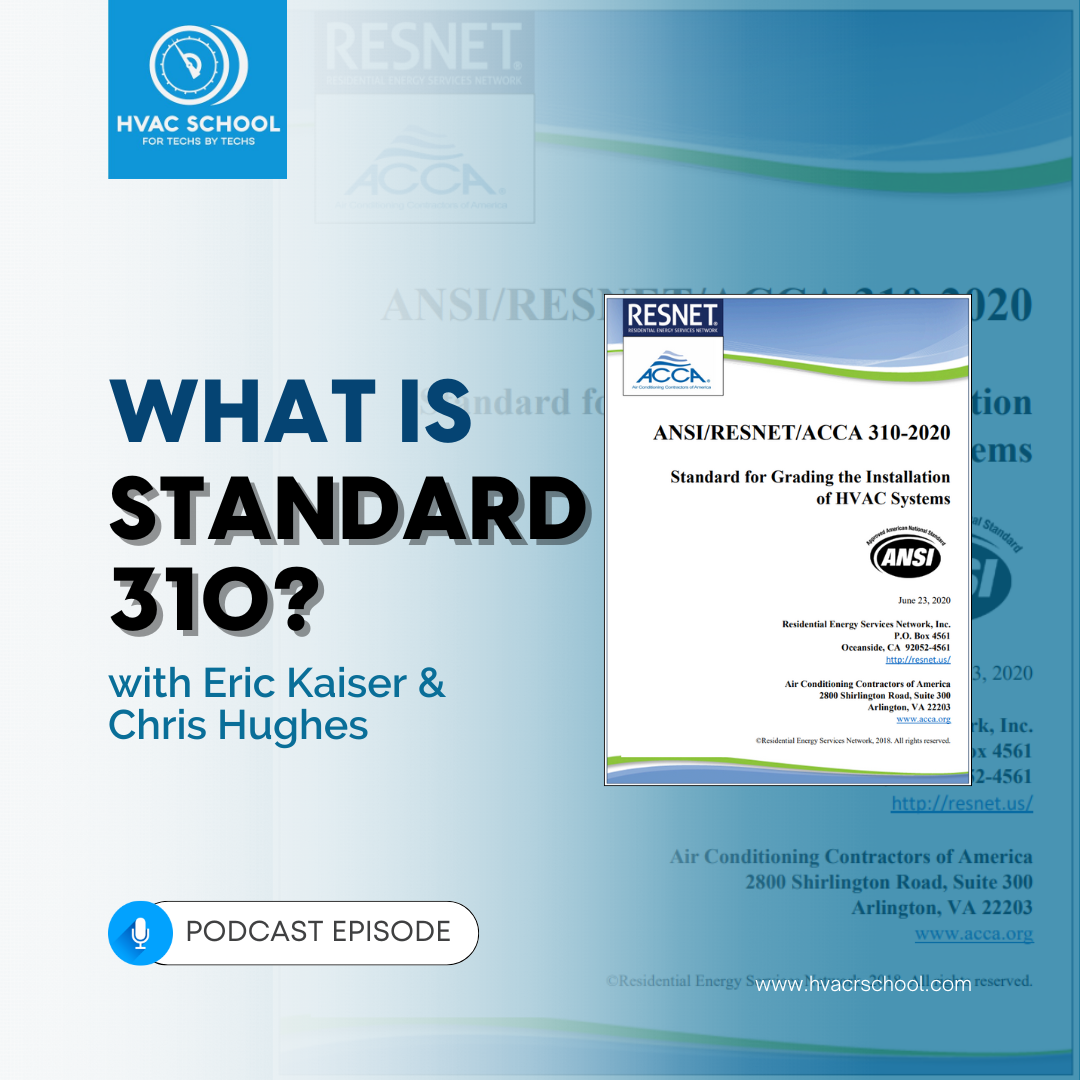
Standard 310 is a technical workflow created by ACCA, ResNet, and ANSI for grading the installation of HVAC systems, typically in new home construction. It plays a crucial role in obtaining Energy Star certification, which can qualify homeowners for tax credits under the Inflation Reduction Act. The five steps of Standard 310 are design review, duct leakage test, total system airflow, blower fan watt draw, and refrigerant charge verification.
In this podcast episode, host Bryan Orr is joined by guests Chris Hughes and Eric Kaiser to discuss Standard 310 and its implications for HVAC contractors.
The standard aims to ensure that HVAC systems are installed correctly and operate as designed. The process involves a third-party HERS rater conducting various tests and measurements, which contractors need to be prepared for. Proper duct sealing, airflow settings, and refrigerant charging are critical for passing the assessments.
One of the challenging aspects highlighted is the refrigerant charge verification step. The standard requires either non-invasive testing (which has temperature limitations) or weigh-in verification with geotagged photos. Chris Hughes suggests manufacturers could develop more consistent commissioning protocols to streamline this process.
Topics covered in the podcast:
Have a question that you want us to answer on the podcast? Submit your questions at https://www.speakpipe.com/hvacschool.
Purchase your virtual tickets for the 5th Annual HVACR Training Symposium at https://hvacrschool.com/Symposium24.
Subscribe to our podcast on your iPhone or Android.
Subscribe to our YouTube channel.
Check out our handy calculators here or on the HVAC School Mobile App for Apple and Android.
Highlight a short passage, or bring a question about a specific moment into HVAC No Bull Forum.
Discuss this reference → Related forum discussionsAuthor:













Comments
To leave a comment, you need to log in.
Log In