
The MERV 15 Filtration Physics – Short #300
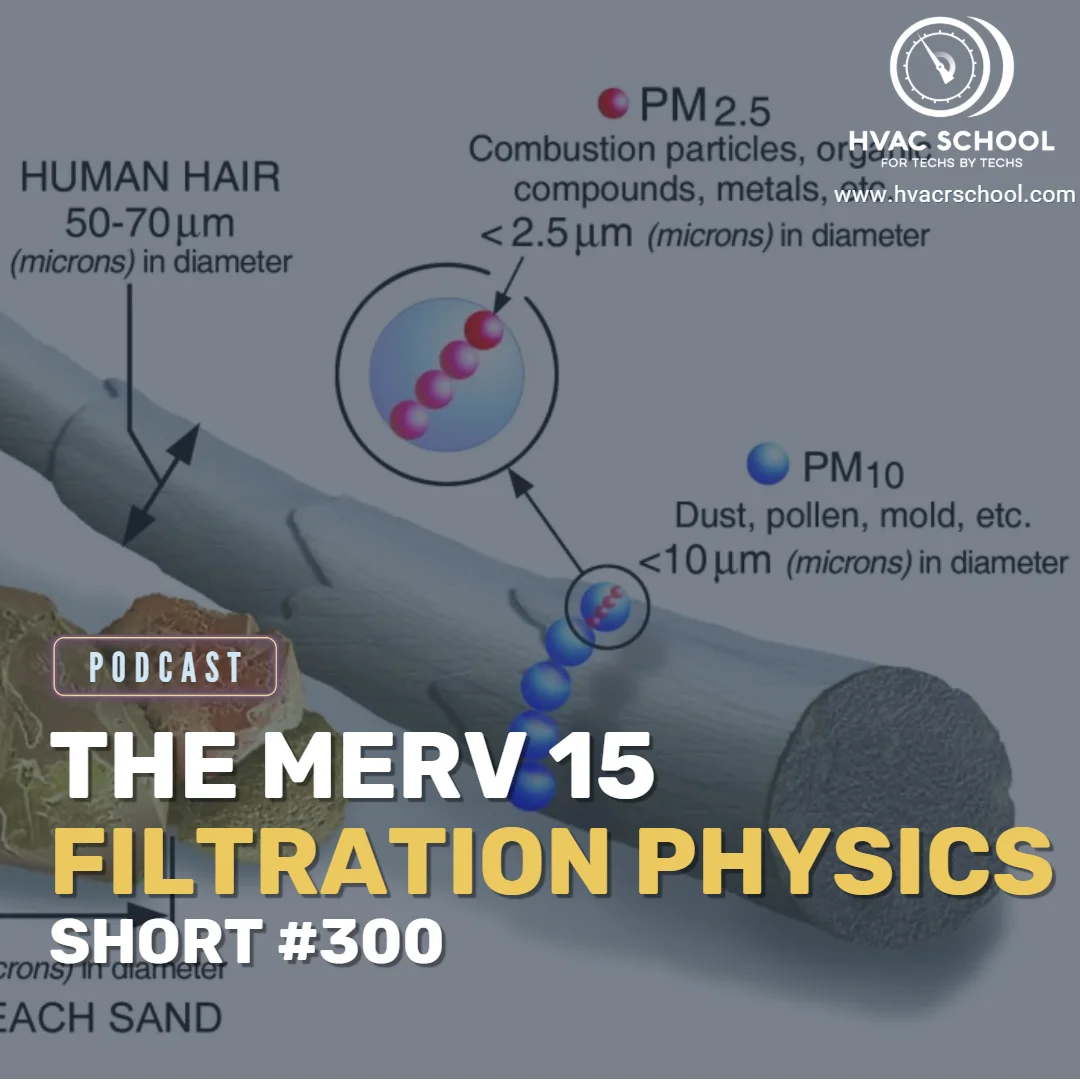
In this short podcast episode, Bryan and Roman Baugh talk about indoor air quality and microbial control, specifically MERV 15 filter physics and how it all works when bringing in outdoor air.
We filter indoor air to keep dust and particles off the equipment and keep them from circulating through the air. However, we also need to filter fresh air. While indoor air has several pollutants, including dust and VOCs, that make outdoor air dilution a sensible solution, outdoor air also has spores and other pollutants we want to filter out, and its quality can be hard to evaluate. Roman had an ERV that fed his VRF system, and it had significant microbial growth inside; he had some MERV 6 filtration on it, but that didn’t capture particles effectively enough. MERV ratings measure the ability to filter particles out, and we use a unit called microns to measure particle size; higher ratings indicate a greater filter surface area and a better ability to filter out smaller particles.
ASHRAE 52.2 divides particles into three categories: E1 (ultra-fine particles between 0.3 and 1 micron in diameter), E2 (fine particles between 1 and 3 microns), and E3 (coarse particles between 3 and 10 microns in diameter). MERV 15 filters have a 90% capture rate of E2 particles and a 90%+ capture rate of E3 particles. Fungal spores tend to fall in the E2 or E3 category, and filtration can keep those from coming into the home with fresh air; bringing in fresh air to dilute indoor pollutants is good, but we need a nuanced approach, and good filtration (without bypass) is part of that equation. Filters can also capture much smaller particles due to the way those particles move. Smaller particles move via Brownian motion, which makes them move erratically and more likely to collide with filter media.
However, filter use and design, as well as fresh air intake location, can also affect filter efficacy. Filters that don’t fit well in the slot enable bypass, and some filters might be restrictive. Exhaust ventilation outlets also play a role, as wind can bring those pollutants back to fresh air intakes.
Have a question that you want us to answer on the podcast? Submit your questions at https://www.speakpipe.com/hvacschool
Purchase your tickets or learn more about the 8th Annual HVACR Training Symposium at https://hvacrschool.com/symposium.
Subscribe to our podcast on your iPhone or Android.
Subscribe to our YouTube channel.
Check out our handy calculators here or on the HVAC School Mobile App for Apple and Android.
Author:










Comments
To leave a comment, you need to log in.
Log In