
2019

Every piece of air conditioning equipment can move a certain amount of heat BTUs (British Thermal Units) at set conditions. In most cases, during the cooling mode, a portion of those BTUs will go toward changing the temperature of the air, and a part will go toward changing vapor water in the air into water […]
Read more
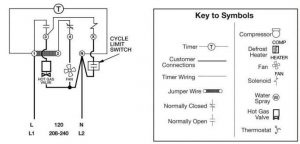
The most common method to defrost appropriately in refrigeration involves both time for initiation and a combination of time and temperature for defrost termination (ending defrost). But why can’t we just use temperature or time alone? (You may wonder.) Imagine a common freezer with a designed box temperature of -10°F and a coil temperature of […]
Read more
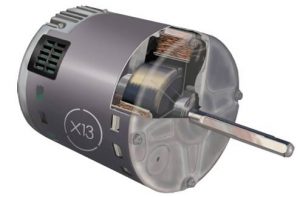
In residential and light commercial HVAC, we work primarily with PSC (permanent split capacitor) motors. However, it is good to be aware of some other types. PSC (Permanent Split Capacitor) A common medium torque single phase motor with a run capacitor always in the circuit. This type makes up the majority of HVAC motors (condenser […]
Read more

Steve Rogers from the Energy Conservatory joins us to talk residential air balancing and flow hood accuracy
Read more

We’ve been getting many questions on micron gauges that are ”going haywire” or reading in the micron range, even at atmospheric pressure. First, micron gauges measure absolute pressure, so you can’t ”zero” them out. They use tiny, very sensitive sensors that are calibrated to air, not refrigerant, so anytime refrigerant gets into the gauge, it’s […]
Read more
John Pastorello from Refrigeration Technologies is back on the podcast to talk leak detection procedures from start to finish.
Read more
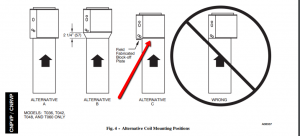
On occasion you will either find a furnace or be tasked with installing a furnace where the coil overlaps the edge of the furnace because the coil is wider. In the case of a Carrier CNPVP coil you need to ensure that you align the coil according to manufactures specs or you risk cutting off […]
Read more