Tech Tips

You likely already know a bit about radiant heating from your education and work in the HVAC industry. Science textbooks like to use the sun and campfires as classic examples of radiant heat transfer. We also have plenty of heating devices with radiation right in the name, such as water radiator heaters and radiant space […]
Read more

Simply stated, a compressor’s volumetric efficiency (VE) is its ability to pump the most pounds of refrigerant over time. The compressor’s function is right in the name: it compresses vapor refrigerant. After compression, the gas moves to the condenser via the discharge line. From there, the refrigeration cycle continues. However, some of the refrigerant vapor […]
Read more

Heat is a byproduct of mechanical energy that presents itself as a temperature increase. French physicist James Prescott Joule aimed to equate heat to mechanical energy. Early experiments used paddle-like structures to stir water within a container and raise its temperature. The paddles would move and agitate the water whenever a mass on a pulley […]
Read more

We’ve all been in the unenviable position of unsweating a compressor and getting blasted in the eyes with a waft of gas that smells like burning sulfur from the pits of Hades. As we stagger back, covering our noses and holding our breaths, memories of the phrase “phosphene gas” from trade school or World War […]
Read more

Pioneers of refrigeration The modern world is impossible to imagine without refrigeration. The Internet, food transportation, medical imaging, and vaccine research all rely on refrigeration to function. Even the sprawl of cities across the American south in the 1950s was inconceivable without refrigeration and air conditioning. So, if you like vacationing in Vegas or taking […]
Read more
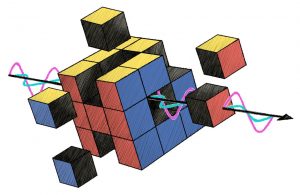
In the trade, we talk a lot about changes in enthalpy, especially when we are looking at total heat exchange over an evaporator. Sometimes, you will bump into the word entropy, and I wanted to take a stab at making it more understandable. Many people understand entropy as the condition in which molecules become more […]
Read more
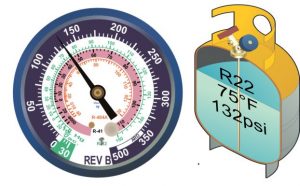
In HVAC systems, liquid and vapor will exist at the same time and place. We call that condition saturation, or we say that the refrigerant is “at saturation.” Phase changes occur in the evaporator and condenser, so these are spots where liquid and vapor coexist while the system is running. Saturated conditions occur whenever liquid […]
Read more
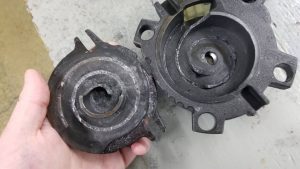
Compressibility is the ability of a substance to be squeezed into a smaller volume. It is the change in volume and increase in density that results from an increase in pressure. The subject of compression should be familiar to HVAC techs. After the return air passes over the boiling refrigerant in the evaporator coils, the […]
Read more

Ductless systems didn’t gain popularity in North America until relatively recently. However, it’s no surprise that they’re becoming quite common. They are quiet, efficient, and well worth the price in the long run. Highwall ductless systems have their downsides, though. When they get dirty, they can spread gunk beneath them and make a room smell […]
Read more