
Psychrometrics, Humidity & IAQ

You may have heard about “swamp coolers” before. Surprisingly, we don’t see too many of them in Florida—even though the state is famous for its swamps. Contrary to their name, swamp coolers are common in arid (dry) climates. They’re also called evaporative coolers because they use the evaporation process to cool the air. This article […]
Read more
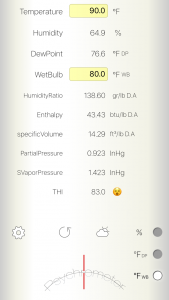
This is the second article in a three-part series where we explore advanced psychrometrics. The source material for each of the articles in this series is ACCA Manual P Sections 3, 4, and 5. This article is based on information found in Section 4. If you followed the previous advanced psychrometrics article, you now know […]
Read more
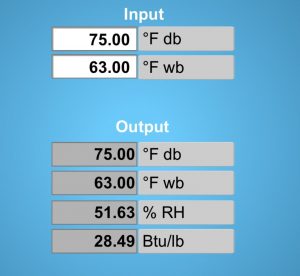
This is the first of a three-part series of articles that will dive deep into advanced psychrometrics. The source material for each of these articles may be found in ACCA Manual P Sections 3, 4, and 5. This article is based on information found in Section 3. Psychrometrics is the study of the physical and […]
Read more

I am like most contractors and techs. I’ve heard about HEPA for a long time, but I never looked into how it could be integrated into an A/C IAQ strategy until now. First, here’s what HEPA is: HEPA (High-Efficiency Particle Arrestance) is an ASME, U.S. DOE standard that specifies a capture rate of 99.97% of […]
Read more
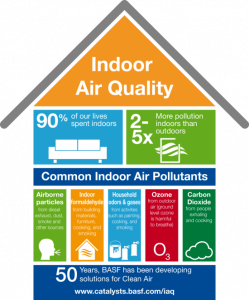
At the time of the publication of this article, COVID-19 (coronavirus) is spreading across the world at an alarming rate, and many people have self-quarantined to help slow or stop the spread of the virus. These precautionary measures are prudent and responsible. However, with the increased amount of time people spend inside their homes, there […]
Read more

Oxidation is the loss of electrons, reduction is the gain of electrons, and the reaction is what occurs between the two. When we talk about chemistry or chemical reactions, we are really talking about an electrical interaction between molecules seeking equilibrium. In other the words, the old “high voltage goes to low voltage” rule applies […]
Read more

This article was written by my good friend Neil Comparetto, a contractor and industry influencer who is helping shape IAQ for the HVAC industry in the US for the better. Thanks, Neil! Indoor air quality (IAQ) monitors can tell you a lot about the air you are breathing. We find that the information is valuable […]
Read more

The Four Ps of IAQ I’m not the first, second, or probably even the thirty-second person to write about improving indoor air quality problems using the four Ps approach. It’s a well-known thought process in the building science community—not sure if that’s the case in HVAC circles. The first P is for pollutants. In this […]
Read more

This quick tip was written by Daniel Andersen in the HVAC School Group. Daniel was one of my early encouragements to make the podcast, even though he refuses to come on himself. Thanks, Daniel! ERV – What is it? An energy recovery ventilator allows fresh air from outside to be introduced into the conditioned space […]
Read more