
Do you even CAZ test? w/ Jim Bergmann (Podcast)
Make & share a podcast clip
Keep the exact passage and a link to the full episode. Choose up to three minutes, with enough context to be fair to the speaker.
Preview uses this episode’s audio. Browser audio export, when supported, takes the length of the selected clip. Nothing plays until you choose Preview.
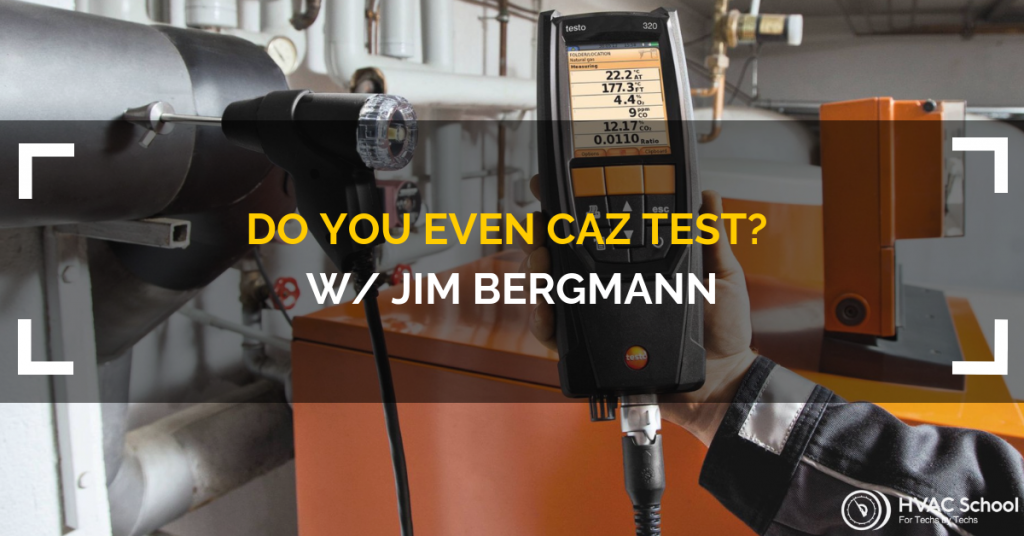
In this first part of the two-part combustion analysis series, Jim Bergmann covers CAZ testing or worst-case draft pressure testing in detail. He also explains why it matters to techs and customers. Once again, MeasureQuick will come in handy if you do CAZ testing in the field; Jim Bergmann is working on automating the testing process in his app.
CAZ (combustion air zone) testing will benefit the customer in both safety and efficiency. A proper CAZ test will also likely increase the furnace system’s longevity. This test identifies if there is a high potential for flue gas spillage. We want to check if the appliance is installed in a space where it can easily and safely vent combustion gases. Other appliances can potentially give off exhaust, and they may impede a combustion appliance’s ability to vent properly.
Worst-case draft pressure testing is a way of making sure that we have enough combustion air in a room for an appliance to operate safely. Some sealed combustion appliances can potentially suffer negative impacts of depressurization, which is dangerous despite the sealed combustion.
First, you want to measure the CAZ pressure with respect to the outdoors. Then, you turn the air handler on and measure that pressure again to identify possible duct leakage. After that, you close the interior doors and measure the CAZ again. Redo all three of these steps to produce the highest negative pressure. You can measure your pressures with a good manometer or the draft gauge on your combustion analyzer; ideally, your tool’s resolution will read tenths of Pascals.
Jim and Bryan also discuss:
- Pressurization and pathways
- Radiant heaters and other appliances
- Disconnected supply
- Sealed and unsealed base pans
- Exhaust pipe ventilation
- Temperature-draft relationship
- Water heaters
- Resolution, accuracy, and precision
- Measurement tools
Learn more about Refrigeration Technologies HERE.
Highlight a short passage, or bring a question about a specific moment into HVAC No Bull Forum.
Discuss this reference → Related forum discussionsAuthor:












Comments
To leave a comment, you need to log in.
Log In