
Filter Drier Basics w/ Chris Reeves
Make & share a podcast clip
Keep the exact passage and a link to the full episode. Choose up to three minutes, with enough context to be fair to the speaker.
Preview uses this episode’s audio. Browser audio export, when supported, takes the length of the selected clip. Nothing plays until you choose Preview.
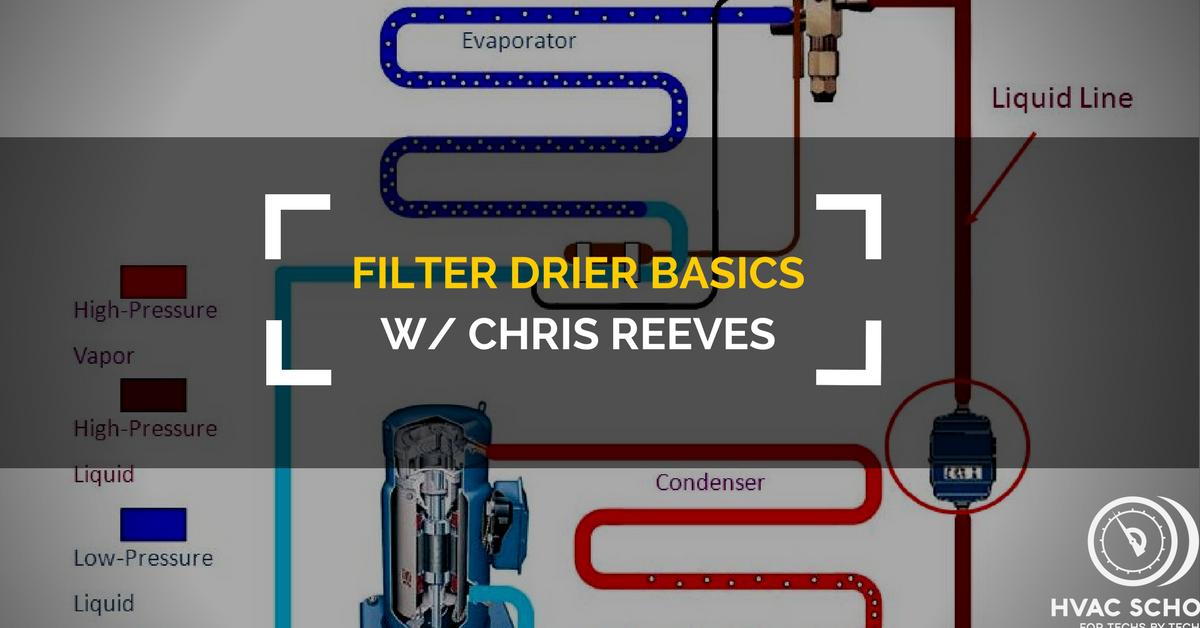
In today’s podcast, Chris Reeves joins Bryan to discuss filter driers, including suction driers, liquid driers, core driers, different media, and basic applications. Filter driers are simple components, but they have plenty of room for misunderstanding within our trade. We refer to Parker-Sporlan Bulletin 40-10 throughout the podcast, and you can read that bulletin HERE.
Above all, filter driers act as filters that prevent debris from reaching the expansion valves and destroying them. As such, the best place to install a liquid filter line drier is as close to the expansion valve as possible. These filter driers also catch and hold water from the system; they minimize moisture to keep HVAC systems functioning properly. Filter driers also catch and remove acids from the refrigerant circuit. A filter drier and its desiccants CANNOT remove non-condensable gases.
However, filter driers should NOT be the primary method of removing moisture. Proper evacuations with deep vacuums should be the main method, as filter-driers are limited in their moisture removal capacity. You also don’t want to use a filter drier that has been exposed to atmosphere any longer than a few minutes; the drier has had time to collect moisture and will be less effective. Each time you open up a system, removing the filter drier is the best practice.
We use biflow filter driers on heat pumps. The refrigerant can flow in both directions; a check valve directs the flow, so the flow always goes through the core and filter pad the same way, regardless of operation mode.
Suction line filter driers are for older HVAC systems with issues. You’ll want to install them close to the compressor for maximum protection and watch the pressure drop across the drier.
We also discuss:
- Temperature control
- Overheating driers and exposing them to heat
- HH-style filter driers (with activated carbon)
- System sizing as a consideration
- Burnout and contamination
If you have an iPhone, subscribe to the podcast HERE, and if you have an Android phone, subscribe HERE.
Highlight a short passage, or bring a question about a specific moment into HVAC No Bull Forum.
Discuss this reference → Related forum discussions










Comments
To leave a comment, you need to log in.
Log In