
Fire Sprinklers – Short #239
Make & share a podcast clip
Keep the exact passage and a link to the full episode. Choose up to three minutes, with enough context to be fair to the speaker.
Preview uses this episode’s audio. Browser audio export, when supported, takes the length of the selected clip. Nothing plays until you choose Preview.
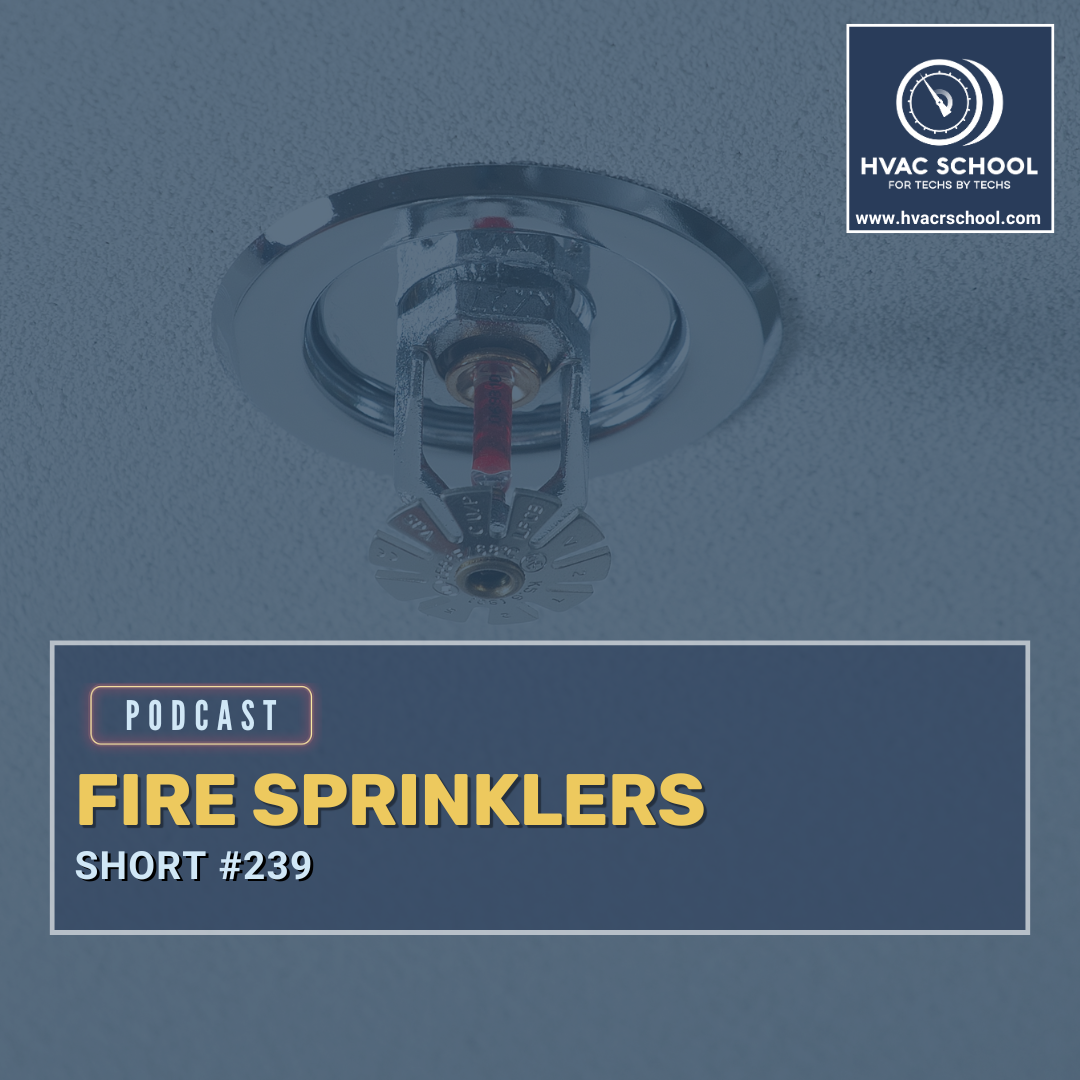
In this short podcast episode, Bryan talks about fire sprinklers and how to avoid setting them off on job sites.
Fire sprinklers have an element in the center that expands when exposed to heat (like a TXV sensing bulb) and breaks the glass. When the glass breaks, the fire sprinkler starts pouring out water. In some cases, fire sprinklers are linked to a larger fire suppression system in which several may go off at once, but most of the time, only a single fire sprinkler will go off if bumped or exposed to heat.
If you’re using torches or doing any form of hot work in a closet or other location with a fire sprinkler, make sure to keep torches away from the heat-sensitive bulb or at least cover the sprinkler with a wet rag (and follow your company’s guidelines). Blunt force is another possible issue, so we want to avoid hitting the sprinklers with lifts, ladders, or building materials like studs. Keep clearances in mind, and watch out for your colleagues.
You can get some specialty-built cages to protect the sprinklers, but awareness is one of the best ways to protect fire sprinklers. If possible, make sure signage is posted or that you alert other people in the area about the fire sprinklers.
If the fire sprinkler does go off, make sure you can quickly reach the person(s) who can access the fire shutoff or direct you to the fire shutoff. While fire sprinklers won’t pose much of a personal safety hazard, property damage is a major concern. Training and awareness are the keys to preventing property damage due to fire sprinklers.
Have a question that you want us to answer on the podcast? Submit your questions at https://www.speakpipe.com/hvacschool.
Purchase your tickets or learn more about the 6th Annual HVACR Training Symposium at https://www.hvacrschool.com/symposium.
Subscribe to our podcast on your iPhone or Android.
Subscribe to our YouTube channel.
Check out our handy calculators here or on the HVAC School Mobile App for Apple and Android
Highlight a short passage, or bring a question about a specific moment into HVAC No Bull Forum.
Discuss this reference → Related forum discussionsAuthor:











Comments
To leave a comment, you need to log in.
Log In