BACK
 Under Pressure
 Refrigerant Recovery Practices
 Common Causes of Compressor Failure
 Training: Processes or Apprentices?
 Sales: Techniques or Values?
 Troubleshooting with DTD
 Improving Humidity Control on the Cheap
 Equivalent Length Merry-Go-Round
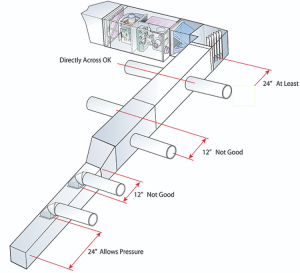 Plenum Takeoffs Best Practices
 What is the Best Brand? – Short #233
 Helping Small Owners Succeed w/ WorkHero
 MeasureQuick Talks with Bert
 Leak Detection Tech w/ Inficon
 Live from AHR with Kalos Team Dre & Elliot
A Conversation with NAVAC at AHR 2025
Live from AHR with Kalos Team Dre & Elliot
A Conversation with NAVAC at AHR 2025
 VRF Tech Talk Takeover Podcast
 UEI at AHR: Carbon Monoxide Safety and Combustion Analysis
 What’s New With Copeland at AHR
#hvac
Tech Tips:
A few weeks ago, I was hired to consult on a multi-family new construction project. The building was already framed, and the ducts were roughed in. The owner of the building was concerned with the quality of the ductwork. He noticed that the HVAC company was not following the mechanical engineer’s plans. This was my […]
Read more
Recovery is the removal of refrigerant from a system. From there, you can either store it and send it in for recycling or reintroduce it back into the same system. Here are some top tips: Make sure your tank is empty and evacuated to 300 microns if you plan to return the refrigerant to the […]
Read more
This article was written by Don Gillis, the technical training manager at Chemours. Thanks, Don! Refrigerant compressors are essential components of air conditioning and refrigeration systems, as we all know. They work by compressing refrigerant vapor, which then flows through the system and changes state as pressure and temperature conditions rise and fall. Unfortunately, these […]
Read more
“It is only through the enforced standardization of methods, enforced adoption of the best implements and working conditions, and enforced cooperation that this faster work can be assured. And the duty of enforcing the adoption of standards and enforcing this cooperation rests with management alone.” —Frederick Taylor “The objective of education is not to fit […]
Read more
“The very substance of our existing which has made us leaders in technique, stands as a barrier to any thinking which might be able to comprehend technique from beyond its own dynamism.” -George Grant The odd quote above takes some time to understand but has been rattling around in my brain for weeks now. George […]
Read more
The temperature of the refrigerant in the evaporator coil can really help us with diagnostics, but we need to know the targets we’re aiming for if we want to get the most out of it as a troubleshooting tool. If we take the return air temperature and subtract 35 degrees from that number, we get […]
Read more
This tech tip was submitted by Steve Rogers, the current president of The Energy Conservatory (TEC). Steve has been on the podcast several times in the past and is a valued contributor to HVAC School. Thanks, Steve! As summer approaches, HVAC technicians all over the US are preparing for those difficult conversations with occupants about […]
Read more
I recently read a tech tip by Matt Bruner about using the Manual D process. In the article, he designed a duct system for a small job using a ducted mini-split. One thing I noticed about his design was that the supply and return duct velocity was fairly low compared to the arbitrary 900-feet-per-minute supply […]
Read more
In my second year in HVAC, I went out with a senior technician to install a supply duct for a bathroom in a house. While he ran the duct, I cut a hole in the plenum and attached the collar. He crawled back across the attic and very nicely told me that people don’t typically […]
Read more
Videos:




Podcasts:
In this short podcast episode, Bryan answers a listener-submitted question: what is the best brand of equipment for residential new construction? A lot of people have their own personal preferences when it comes to brands, whether that’s with equipment, tools, or even cars. However, when it comes to HVAC equipment, there are a lot […]
Read more
Join Bryan Orr and Furman Haynes from WorkHero for a great discussion about how to keep HVAC local and help more small owners succeed. Live from AHR Expo 2025, we get to hear from one of the founders of an exciting new company that is offering expert office management that small HVAC business owners […]
Read more
In this livestream MeasureQuick Talks with Bert. This is an impromptu Talk with industry leaders, including Shelby Breger from Conduit and Joe Medosch from MeasureQuick, about how mobile technology is revolutionizing HVAC diagnostics and training. Featuring special guests discussing how modern tools like MeasureQuick and other diagnostic apps are making it easier for technicians […]
Read more
Join us as we sit down with Nick from Inficon at AHR Expo 2025 to discuss the latest innovations in Leak Detection Tech. We explore the evolution from halide torches to modern infrared sensors, and get an exclusive look at their newest product – the D-TEK Pro. Key topics covered: The transition from heated […]
Read more
Join Bryan Orr as he goes Live from the AHR Expo 2025 at the Orange County Convention Center with Kalos Services team members Dre and Elliot! They share their first impressions of the massive HVAC industry expo, discuss interesting booth displays, and chat about the latest tools and technology they’ve spotted on the show […]
Read more
In this engaging episode of the HVAC School Podcast, host Bryan sits down with Jesse from NAVAC to dive deep into the evolving landscape of refrigeration technology, focusing primarily on the transition to A2L refrigerants. The conversation offers a refreshingly pragmatic approach to addressing industry concerns about these new, mildly flammable refrigerants, dispelling myths […]
Read more
Roman Baugh and Donald Falese from VRF Tech Talk podcast takeover the HVAC School booth at AHR EXPO 2025. Join them as they talk about the new VRF products being unveiled, water-cooled VRF ups and downs, and why VRF is such a difficult trade to work in. You will not want to miss this […]
Read more
In this informative podcast episode, Bryan from HVAC School is joined by Louise Keller, the National Training Manager for UEI Test Instruments, to discuss the critical importance of carbon monoxide safety and proper combustion analysis. The conversation begins with lighthearted banter about the previous night’s Tactical Awards ceremony before diving into the serious topic […]
Read more
In this episode of the HVAC School podcast, Bryan sits down with James and Jeff from Copeland to discuss the evolution and capabilities of Copeland’s mobile applications, particularly focusing on the Copeland Mobile app and the new Scout feature. James, who has been with Copeland for 28 years, and Jeff, who works as a […]
Read more