
How to Use a Combustion Analyzer w/ Jim Bergmann
Make & share a podcast clip
Keep the exact passage and a link to the full episode. Choose up to three minutes, with enough context to be fair to the speaker.
Preview uses this episode’s audio. Browser audio export, when supported, takes the length of the selected clip. Nothing plays until you choose Preview.
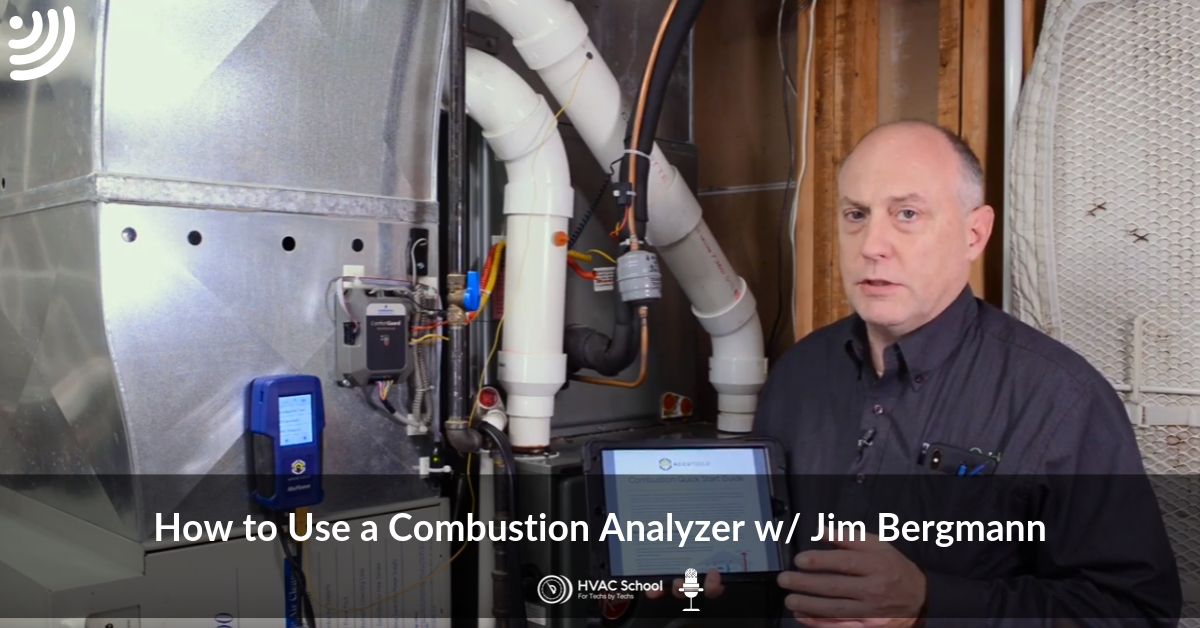
In this podcast, Jim explains how to use a combustion analyzer. He also talks through the process of combustion analysis using Accutools BluFlame.
The beauty of BluFlame is that it can do CAZ testing, help you set the inches of water column in your furnace, and measure static pressure drop. BluFlame is a tool you can use year-round, not just when you need to measure stack gas.
To learn how to use a combustion analyzer on a typical gas furnace, you have to understand why you’re doing it. Combustion analysis is necessary to monitor the health of a furnace system; it’s like a doctor measuring your blood pressure at each appointment. You must test for carbon monoxide to protect the homeowners from a potentially deadly situation; combustion analysis can save lives.
First, we have to test for ambient CO, which can be high in cities with lots of cars and air pollution. Then, we start deploying our tools and set them up to check our pressures. After that, we can start the furnace up to collect our readings all at once, which is easy with MeasureQuick. From there, we can use the readings to help us adjust the input settings. After that, we put our analyzer in the stack about 12-16 inches away from the draft inducer motor.
Jim and Bryan also discuss:
- Jim’s involvement in BluFlame
- Testo probes that do and don’t work with BluFlame
- Clocking the meter and checking input
- Manometer locations
- Drilling and sealing holes for testing
- CO air-free and excess air dilution
- Overexposing the analyzer to CO
- Oxygen (O2) content
- Vacuum in gas furnaces
- Draft direction
- Running gas furnaces with other gas appliances (stoves, fireplaces, pool heaters, etc.)
- Electronic gas leak detectors
- BluFlame on 80+ vs 90+ furnaces
- Other gas appliances that require testing
Learn more about Refrigeration Technologies HERE.
Highlight a short passage, or bring a question about a specific moment into HVAC No Bull Forum.
Discuss this reference → Related forum discussionsAuthor:











Comments
To leave a comment, you need to log in.
Log In