
Get Tech Tips
Subscribe to get free tech tips.
The 1/7 (or 1/10) Rule for Oxy-Acetylene Torch Tips

We already know that oxy-acetylene torches have a lot of safety considerations attached: don’t oil regulator threads, bubble-test your hoses, you get the picture. But there’s one more we haven’t really covered: the 1/7 rule (or 1/10 rule, based on the latest industry guidance).
This commonly cited rule reduces the likelihood of flammable acetone coming out of your torch, damaging your setup, and destabilizing your acetylene cylinder.
A Quick Look at Torch Tip Charts
Torch tip manufacturers publish charts with crucial information for using the tips safely and appropriately. That’s where you’ll find the oxygen and fuel (acetylene) pressures to help you set your regulator, but the chart has more to offer than just that. Here’s an example of a chart for the popular Uniweld Type17 torches, which also gives you the recommended copper tubing sizes for brazing with each tip:

The first data column, the acetylene consumption SCFH, refers to the fuel flow and consumption rate (in standard cubic feet per hour). Unsurprisingly, larger tips consume more fuel. This fuel rate is important for determining how many BTUs the torch can put out, as higher flow rates have higher BTU outputs. When you choose a tip that’s too big and have BTU outputs that are too high for the application, you could melt the copper and burn other nearby components, like brass valves.
Higher flow rates also deplete your acetylene cylinder more quickly. Acetylene isn’t cheap, so that’s enough reason to avoid choosing a bigger tip than what you need. However, if you’re brazing over sustained periods and continuously withdrawing acetylene from the cylinder, that’s also exactly where a safety problem could come up.
What’s Really In an Acetylene Cylinder?
Acetylene is a highly volatile gas that becomes increasingly unstable above 15 PSI and can detonate without a spark. That’s why many acetylene regulators won’t let you exceed 15 PSI during flow (or at least have a very clearly red danger zone past 15 PSI).

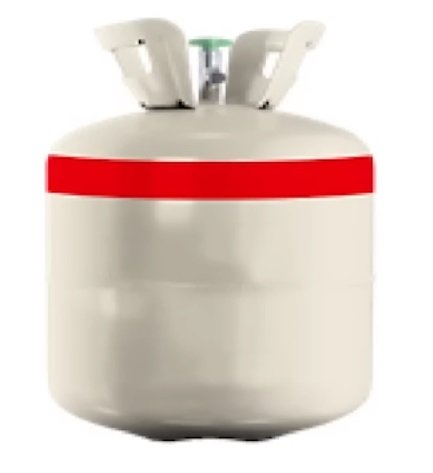
To keep acetylene stable in a cylinder, manufacturers make the tanks with a porous material inside and add liquid acetone. The acetone acts as a solvent that essentially holds that acetylene vapor in a stable state until it has to come out during torch work.
Caution with Acetone
Acetone is known for dissolving and removing coatings like paint, adhesives, and nail polish. Because it dissolves plastics, rubber, and synthetic materials, we don’t want it anywhere near our hoses or regulators. Storing acetylene tanks upright is a good start, but choosing appropriately sized torch tips also helps prevent acetone from getting into our hoses. That’s where the 1/7 rule comes in.
When the flow rate exceeds 1/7 of the total cylinder volume per hour, that acetone is more likely to be withdrawn from the cylinder with the acetylene. (The Harris Products Group explains the rule more thoroughly in their quick article.) When that acetone comes out, it goes through the hose and regulator. You’ve got a plastic-eating compound all over the insides of your hoses and regulator… and a flammable liquid coming out.
Plus, the flame will become starved and may look yellow, sputter or pop, and have an acrid smell. And with less acetone in the cylinder, the less stable the acetylene within it will be. Less stability equals a greater risk of detonation.
The moral of the story here is that acetone just needs to stay in the tank.
The 1/7 Rule (Or Lower) In Practice
To make sure you’re following the 1/7 rule, take your tank’s volume and divide it by 7. For a B tank (40 cubic feet), that math will give you a safe continuous flow rate of ~5.7 SCFH. That’s appropriate for the tips we’d mainly use in residential HVAC applications.
An MC tank (10 cubic feet) has a much lower maximum continuous SCFH: ~1.4. That’s really only going to work for intermittent use on small residential jobs or tasks like brazing capillary tubes.
Some more conservative safety guidelines by the Compressed Gas Association recommend the 1/10 rule instead of the 1/7 rule (and even 1/15 for continuous torch use). The 1/7 rule is still commonly cited, but the 1/10 rule is clearly better for safety reasons and is what we should ideally try to achieve. It also makes the math even easier. Just move a decimal point one space to the left. Again, for that same B tank mentioned before, the 1/10 rule is a SCFH of 4.
But My Cylinder Isn’t Big Enough for the 1/7 Rule
If you’re working on bigger pipes and refrigeration and need bigger tips (including rosebuds), you’ll either need a bigger cylinder or to manifold multiple smaller ones together. Keep in mind that manifolding cylinders will require special hardware, like flash arrestors and check valves, to prevent backflash.
To figure out the size you need, pay attention to those torch tip manufacturer charts. Multiply the SCFH of the tip you intend to use by AT LEAST 7 (even though 10 is better) to determine how much acetylene you will need. Compare that to your cylinder to see if it’s big enough for the job or if you need to go bigger or bring another one into the equation.
Just RTFM and Use Common Sense
As with so many things in our trade, safety comes down to the simple rule of RTFM. The acetylene consumption data cells are not just there as fun facts; they have a real impact on BTU delivery and safety.
Most residential techs probably won’t need to worry about this rule. But when you’re brazing 2” pipes (or bigger), the 1/7 & 1/10 rule could save your life (or at least your torch rig).
Start by determining the SMALLEST tip you need and then use that acetylene consumption data to see if your cylinder is big enough for the job. If so, happy brazing. If not, go bigger or grab another one and manifold the cylinders properly. Safety is always the top priority.
P.S. — Roman Baugh recently taught our commercial HVAC team a class about torch tip selection and mentioned the 1/7 rule. It has some other great pieces of information about torch tip selection and is definitely worth a watch.
 Related Tech Tips










Comments
To leave a comment, you need to log in.
Log In