
Tech Tips
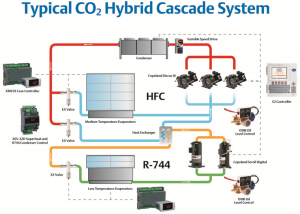
Photo Courtesy of Emerson What is Cascade refrigeration? “Cascade refrigeration” is a term you will hear more and more over the coming years, and while some of the systems may be very complex, the concept is actually pretty simple. Some refrigerants are well-suited for high and medium-temperature applications, and some are better suited for lower-temp […]
Read more

Connecting more than one wire on or under a single lug or connection point is called “double lugging,” and it is ONLY allowed in line voltage wiring under one condition, according to NEC 110.14: If the terminal, lug, or connector is specifically rated for more than one wire In the case of a conductor splice, […]
Read more

We all know (or should know) that venting refrigerant is a big no-no and can result in trouble from the EPA. There are many other potential violations, but two of them can easily occur if you aren’t thinking ahead at the disposal of mercury and oil. Mercury is found in fairly large quantities in the […]
Read more

There was a story that came out recently based on an ASHRAE study performed by David Yuill from the University of Nebraska. The study appeared to indicate that condenser coil cleanliness makes no difference on system performance and efficiency. Those of us who have worked in the field know that coil cleaning matters because most […]
Read more

Today’s tech tip is a video put out by my friend Brad Hicks from the HVAC in SC YouTube Channel. Thanks, Brad! Seal boots to prevent raccoon leaks. Ok, this has nothing to do with raccoons, but I like that photo. Whenever you are installing duct boxes (also called boots or cans) in an aftermarket […]
Read more

“Service factor” is an interesting motor rating that you will see on many motor data tags. It simply means how much additional “work” a motor can do or how much “load” it may be placed under for short periods of time without failure or overload. For example, the FLA or full load amps of the […]
Read more

There is a common belief in the trade that the higher the subcooling, the better the system efficiency because lower liquid line temperature means less flash gas. This statement is only partially true and can lead to some confusion among techs. Subcooling is a temperature decrease below the condensing temperature of the refrigerant that occurs […]
Read more

Suction pressure, head pressure, subcooling, superheat, delta T. Taking all five of these calculations into account on every service call is critical. Even if you must do further diagnostic tests to pinpoint the problem, these five factors are the groundwork before more effective diagnostics can be done. I would also add static pressure as an […]
Read more

Travel back in time with me to 2001. I was a young tech, proving my salt out there in the big world of commercial RTU maintenance. One of the steps in the Fall PM list was “test aux heat,” and by golly, that’s what I was going to do! I was on the roof of […]
Read more