
Tech Tips
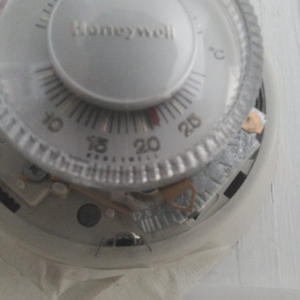
As a technician, you most likely know some customers who still have an oldie thermostat (you know, those old mercury bulb things, like the round Honeywell CT87 and such). Keep in mind that those usually have an adjustable heat anticipator. If you’re newer in the field, you may not have seen or worked with those […]
Read more

I know I’m gonna get some eye-rolling here, but it needs to be said. When we teach electricity to new techs, we use a lot of “water” metaphors. We talk about volts like PSI, amps like flow, and watts like GPM (speaking of GPM in HVAC, check out our article on hydronics HERE). Even the […]
Read more
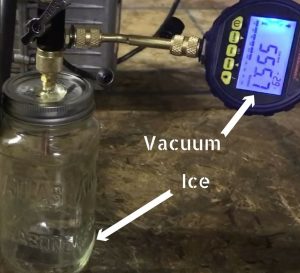
First, I want to give credit where credit is due. This post is made possible by the fantastic demonstration video by Neil Comparetto that I embedded below. Before you get bored and stop reading, I want to get the conclusion out in the air. Ice can form in a vacuum, but I still advise pulling a […]
Read more

The following is based on a true story. No product was harmed in the making of this tech tip, and some facts may have changed to protect the guilty and because I forgot some of them. We got a job installing a new 1-to-1 split refrigeration case with R448a, and it had a typical thermostatic […]
Read more

The Four Ps of IAQ I’m not the first, second, or probably even the thirty-second person to write about improving indoor air quality problems using the four Ps approach. It’s a well-known thought process in the building science community—not sure if that’s the case in HVAC circles. The first P is for pollutants. In this […]
Read more

Most of the laws we refer to in air conditioning and refrigeration are pretty obvious and practical. Dalton’s law of partial pressures is no exception. John Dalton observed that the air pressure was equal to the added pressures of each gas that make up air. That means that the pressure and density of air can […]
Read more

This tech tip is a quick one on the difference between wiring universal condenser fan motors and why brown + white is the same wire as white. This one seems to confuse even experienced technicians, but it’s actually very simple once you see it. Now, keep in mind that wire colors ACTUALLY MEAN NOTHING, but […]
Read more

For those of you who use the MeasureQuick app for system diagnosis and performance testing, you may have noticed the “fan efficacy” results and wondered what it is. It is simply the CFM output of the system divided by the wattage used by the blower. It is only for the blower motor and has nothing […]
Read more

I’ve been reading a book called Cool: How Air Conditioning Changed Everything, and it got me interested once again in the history of air conditioning and refrigeration. Like many things, the people who are credited with “inventing” are the ones dogged enough to make an idea commercially successful, not the idealists forever tucked away in the […]
Read more