This article was written by Genry Garcia of Comfort Dynamics, Inc. Thanks, Genry!
This is a piece about oversized air conditioners.
Though the symptoms and consequences of oversized heating equipment are similar to those of air conditioners, you’ll notice that the focus throughout the article will be on the cooling side—specifically from the perspective of climate zone 1 (hot and humid).
I’m going to skip right through the lecturing about proper equipment sizing, selection, and duct design. There are trained professionals for that, and I’m not one of them. Instead, we are going to riff from the perspective of a system that has already been installed and is doing damage.
We will go over some of the symptoms, their characteristics, and why making improvements to oversized HVAC is a slippery slope.
So, what does an oversized system looks like?
It looks like any other system you’ve worked on. However, you can expect one of these systems to have the following issues:
It can’t keep the occupants comfortable throughout various rooms in the house.
Comfort complaints are intensified at night.
It short cycles periodically, but it specifically does so when it’s less than 94° outside and still feels warm inside—even when the thermostat shows 67° as the room temperature.
The relative humidity is consistently high (over 55%) or, at best, goes through big swings throughout the day. These swings will normally track with the operation cycles.
Light films of condensation might be visible on supply vents.
Ductwork sweating.
Excessive noise from vents—returns, supplies, or both.
The temperature feels (notice that I said feels, not reads) significantly warmer around the perimeter areas of the space (larger exposure to exterior walls) than on the interior ones (hallways and such).
If you pull up to a service call, and any meaningful combination of these symptoms are the reason you’re there, put your gauges back in the truck. There is no need to worry about subcooling or superheat. I promise.
But why? What’s so wrong with oversized equipment anyway?
Runtime is the obvious place to start—the lack thereof, that is.
Oversized equipment will naturally result in larger and colder air volume being moved throughout the space. Invariably, the wall control will reach its setpoint faster, and the system will cycle off before it had the chance to do its job.
What is its job exactly?
Let’s start with the mean radiant temperature. This linked article explains it very well, but in short, the temperature of the surfaces around us has as much to do with human comfort as the temperature displayed by the thermostat. (Here's another article specifically about mean radiant temperature.)
Our body temperature is normally 98 degrees; our skin is closer to 94. So, if we were to stand by a wall with a surface temperature of 75 degrees, our bodies will cool off by radiating heat to it at a more comfortable rate than if we were to stand by a wall at 85 degrees. The same goes for couches, beds, kitchen counters, etc.
An A/C system must run long enough to keep a cooler and consistent temperature on all the surfaces of a home. If the outdoor temperature it’s in the 90s, but the system runs for only 10 to 15 minutes each cycle, this won’t be enough to keep the mean radiant temperature of the surfaces in your home under control. Therefore, you’ll be uncomfortable despite the thermostat reaching and “maintaining” an indoor temperature in the 60s. This phenomenon is worsened at night when the outdoor temperature drops and the A/C runs even less.
Apparatus dewpoint (ADP) is next. ADP is the effective surface temperature of the cooling coil—or, as we call it, coil temperature. I will use these three terms interchangeably.
While a system is off, the evaporator coil will be at a temperature close to that of the return air path and its surrounding surfaces. This temperature is much higher than it is when the system is running. Once the system cycles on, the return air temperature will dictate the evaporator saturation temperature based on the DTD (design temperature difference), and it will reach the ADP.
But just because the refrigerant entering the evaporator is at 40 degrees, that doesn’t mean that the entire coil will immediately drop to this temperature. This process takes time. The cold refrigerant has to make several passes before it can absorb the heat from all of the evaporator’s body mass and then come down to the design ADP.
If we have average run cycles in the 10-15 minute range, that won’t be enough to ensure that the whole evaporator surface reaches its design operating temperature and dehumidifies the air before the system cycles off. Therefore, the dehumidification capacity of the system will be consistently and greatly compromised, resulting in poor relative humidity control in the space.
This phenomenon severely worsens when dealing with high-efficiency systems. Manufacturers have found ways to drop the compression ratio—therefore, power consumption—to increase SEER ratings. To achieve this, they have increased the suction saturation temperature through the use of larger coils. So, not only does the evaporator start out warmer, but it now has more surface to bring down to temperature. The shorter run times of oversized systems will accentuate the otherwise negligent consequences of having a larger and warmer cooling coil surface temperature.
Did you just say SEER?! There is no other time when an A/C system is more efficient than when it is not running, right? Because it is not using any energy. So, wouldn’t it make sense to provide the consumer with a system that cycles off more often then? Nope. To begin with, the up-front costs of having larger equipment installed are normally more than that one of a smaller capacity.
Also, more importantly, the single highest point of energy consumption for an A/C system is when it turns on. Once a system cycles on and off more times than necessary throughout the day, the presumed savings of not having it run for a given amount of time go out the door.
And to top it all off, the clients are ticked off! Not only did their electric bill not go down much, if any, but now they are also uncomfortable.
So how can we fix it?
Well, to fix it, we would have to replace the system with one of the appropriate capacity. But that’s probably not going to happen right away, is it? Not until the consumer has enough pain to motivate the expense, anyway.
Before we invariably end up talking about extending runtime or lowering airflow, I want to make a quick stop on static pressure, particularly when an oversized system is connected to existing, older ductwork. As soon as you start diagnosing the issue, you’ll run into a high external static pressure reading. At this point, a light bulb will go off in your head. “It’s the ductwork!”
You’ll carry on to quote duct improvement solutions that will drop the TESP, maybe even throwing in some return air path upgrades. Let’s say the customer agrees, and once the work is done, you perform a complimentary (or not) test and balance, and you ultimately confirm that the TESP is now within acceptable levels.
“I’m going to be a hero,” you may say to yourself. Well, if you did, in fact, improve the duct system to a point where the equipment is now moving more air than before, then the problem just got worse.
I get that it’s a controversial stance, but next time you realize you are in front of one of these situations, ask yourself:
More, colder air. Do I really want to make this oversized system run better?
About extending run time
If the envelope doesn’t change, then the remaining alternative would be extending runtime. There are several ways to achieve this:
Strategically place remote temperature sensors on the warmest areas of the house that report to the thermostat, therefore tricking the system into running more. The thermostat may feature dehumidification-specific algorithms.
Purposely de-balance the airflow distribution throughout the house so that there is more air hitting the exterior surfaces and as little as possible on the interior areas where the wall control may be located; the ceiling on this strategy is pretty low, in my experience.
All of the above plus reducing the airflow to its minimum possible setting to run a colder coil temperature and run a lower sensible heat ratio (SHR). Therefore, the dry bulb temperature as sensed by the wall control won’t drop as fast—maybe.
It doesn’t sound that bad, does it? Maybe not at first, but these will also result in colder supply air temperatures. Cold supply air is the leading cause of sweating ducts and vents in these scenarios, but that’s not the worst part.
It will directly result in localized, colder surfaces throughout the envelope as well. You can notice condensation on vents and ductwork fairly early—before they become a problem. But what about the condensation you can’t see? For example, there's one that had been forming on building materials for a while and wasn’t a problem until now that a coconut tree sprung out of one of the walls. A “moisture” remediator gets called next, and what follows it’s an unfortunate tale of lawsuits and bad reviews.
I am not saying that you shouldn’t aim to improve the ductwork and runtime for an oversized system, but…
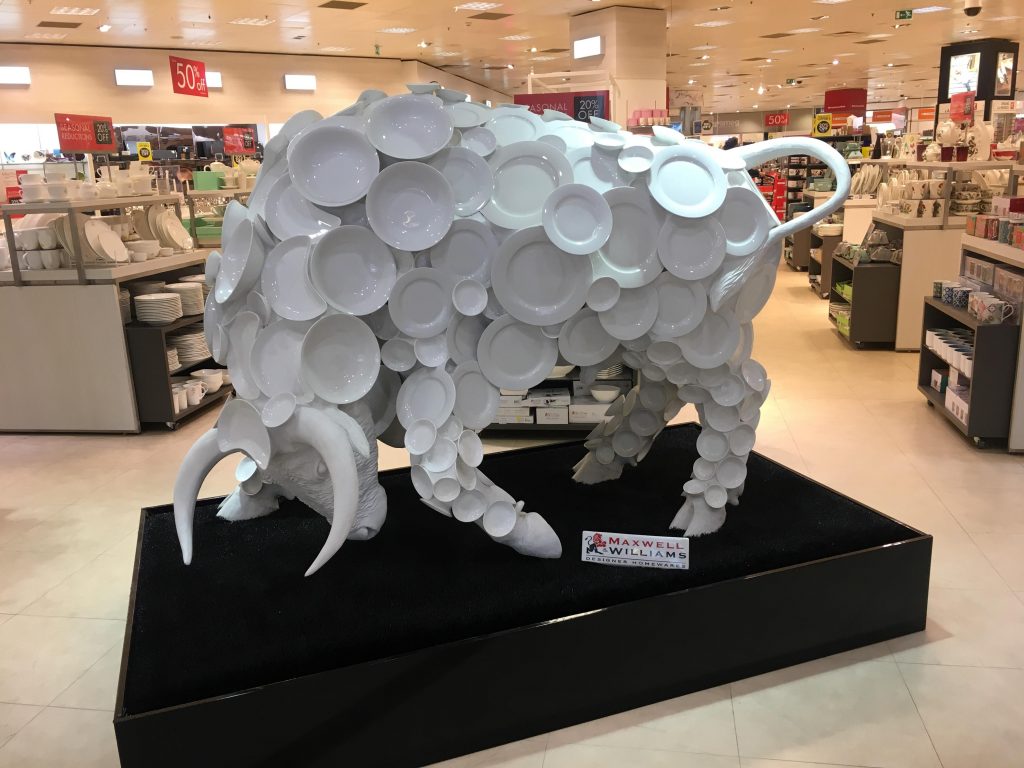
Have you ever heard of the bull in a china shop metaphor?
The china shop is the house, and the oversized HVAC is the bull.
—Genry Garcia
Comfort Dynamics, Inc.
Great story, and one I am sure is near and dear to Bryan. I think it would be interesting listening to Genry and Bryan discussing this on a Castbox get together.
The HVAC School site, podcast, and tech tips are
made possible by generous support from
Cookie Consent
We use essential cookies to keep HVAC School working. With your permission, we also use optional cookies for analytics, marketing, and embedded content. Choose Accept All, Reject All, or Preferences. You can change your choice at any time using Cookie Settings.
Cookie Preferences
Essential cookies are always active. Optional cookies stay off until you choose to enable them. You can change or withdraw your consent at any time using Cookie Settings.
Essential cookies enable basic functions and are necessary for the proper function of the website.
Name
Description
Duration
Cookie Preferences
This cookie is used to store the user's cookie consent preferences.
30 days
These cookies are needed for adding comments on this website.
Name
Description
Duration
comment_author
Used to track the user across multiple sessions.
Session
comment_author_email
Used to track the user across multiple sessions.
Session
comment_author_url
Used to track the user across multiple sessions.
Session
These cookies are used for managing login functionality on this website.
Name
Description
Duration
wordpress_logged_in
Used to store logged-in users.
Persistent
wordpress_sec
Used to track the user across multiple sessions.
15 days
wordpress_test_cookie
Used to determine if cookies are enabled.
Session
Statistics cookies collect information anonymously. This information helps us understand how visitors use our website.
Google Analytics is a powerful tool that tracks and analyzes website traffic for informed marketing decisions.
Contains information related to marketing campaigns of the user. These are shared with Google AdWords / Google Ads when the Google Ads and Google Analytics accounts are linked together.
90 days
__utma
ID used to identify users and sessions
2 years after last activity
__utmt
Used to monitor number of Google Analytics server requests
10 minutes
__utmb
Used to distinguish new sessions and visits. This cookie is set when the GA.js javascript library is loaded and there is no existing __utmb cookie. The cookie is updated every time data is sent to the Google Analytics server.
30 minutes after last activity
__utmc
Used only with old Urchin versions of Google Analytics and not with GA.js. Was used to distinguish between new sessions and visits at the end of a session.
End of session (browser)
__utmz
Contains information about the traffic source or campaign that directed user to the website. The cookie is set when the GA.js javascript is loaded and updated when data is sent to the Google Anaytics server
6 months after last activity
__utmv
Contains custom information set by the web developer via the _setCustomVar method in Google Analytics. This cookie is updated every time new data is sent to the Google Analytics server.
2 years after last activity
__utmx
Used to determine whether a user is included in an A / B or Multivariate test.
18 months
_ga
ID used to identify users
2 years
_gali
Used by Google Analytics to determine which links on a page are being clicked
30 seconds
_ga_
ID used to identify users
2 years
_gid
ID used to identify users for 24 hours after last activity
24 hours
_gat
Used to monitor number of Google Analytics server requests when using Google Tag Manager
1 minute
Jetpack's built-in visitor analytics. It records page views, referring sites, search terms, and outbound link clicks, and also carries the shared visitor-tracking library used by Jetpack Instant Search and WooCommerce Analytics.
Registers a unique ID on mobile devices to enable tracking based on geographical GPS location.
1 day
VISITOR_INFO1_LIVE
Tries to estimate the users' bandwidth on pages with integrated YouTube videos. Also used for marketing
179 days
PREF
This cookie stores your preferences and other information, in particular preferred language, how many search results you wish to be shown on your page, and whether or not you wish to have Google’s SafeSearch filter turned on.
10 years from set/ update
YSC
Registers a unique ID to keep statistics of what videos from YouTube the user has seen.
Session
DEVICE_INFO
Used to detect if the visitor has accepted the marketing category in the cookie banner. This cookie is necessary for GDPR-compliance of the website.
179 days
LOGIN_INFO
This cookie is used to play YouTube videos embedded on the website.
Comments
Great story, and one I am sure is near and dear to Bryan. I think it would be interesting listening to Genry and Bryan discussing this on a Castbox get together.
Thanks gentlemen!
Report comment
Great story, and one I am sure is near and dear to Bryan. I think it would be interesting listening to Genry and Bryan discussing this on a Castbox get together.
Thanks gentlemen!
Report comment
I agree that an oversized unit is a major bull. Way to much beef.
jake – https://www.peoriahvacrepair.com
Report comment
I agree that an oversized unit is a major bull. Way to much beef.
jake – https://www.peoriahvacrepair.com
Report comment
To leave a comment, you need to log in.
Log In