
Tech Tips

I was listening to someone talk about air relative humidity the other day while looking at a psychrometric chart, and he commented that the chart ends down at freezing (32°F) because “all the water freezes out of the air at that point.” I think I made this Jed Clampett face: The psychrometric chart is designed […]
Read more

This article was written by my buddy and Canadian Supertech Tim Tanguay. Thanks, Tim! This P/E chart shows R410a at 100°F saturated condensing temp, 10°F SC, 40°F saturated suction temp, 20°F SH at the compressor. The green highlighted thumb shape is the saturation zone. Everything that occurs in the saturation zone is a latent (change […]
Read more
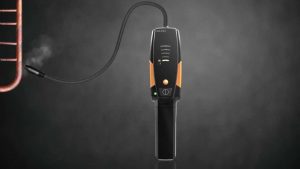
I hear many techs complain about the finicky and ineffective nature of electronic leak detection—so much so that some claim that it is a waste of time altogether. We recently located a leak inside the fins of a ductless evaporator coil—pinpointed to an exact spot—using an electronic leak detector. For demonstration purposes, we took that […]
Read more

Now is the part where we get specific about start capacitors and inrush. If you haven't read the first three parts, please do so before reading this one, or it may not make sense. (You can find Part #1, Part #2, and Part #3 at these links.) I'm going to come out and say it […]
Read more

Before we get into the parts that will ruffle some feathers, let's talk a bit about what a “Start” capacitor is and what it does. First, let's review that both start and run capacitors connect between the leg of power opposite of compressor common and the start winding. Even though it seems like a run capacitor […]
Read more
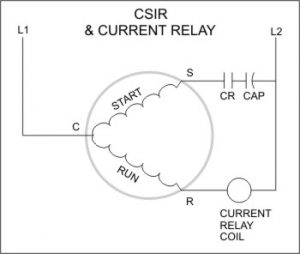
Thought Experiment #3 – The Start Winding Has No “Inrush” with a run capacitor only The name “start winding” is an antiquated term for the single-phase residential industry. It came from the days when CSIR (capacitor start, induction run) motors were still used commonly. In a CSIR motor, the start relay removes the start winding […]
Read more
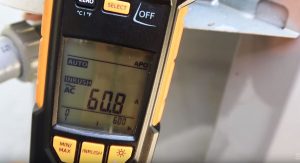
This series of articles is one of those that will bug a lot of people because it will go against a lot of what you've been told about compressors, start capacitors, and inrush current. For that reason, I want you to work through a few thought experiments first and maybe even stop and try it […]
Read more

This tip was created by Jason Pinzak and originally posted on the HVAC Technician's Facebook group. It is reposted here with permission from Jason. Thanks! Contactors are useful in commercial and industrial applications, particularly for controlling large lighting loads and motors. One of their hallmarks is reliability. However, like any other device, they are not […]
Read more

I get emails from time to time with questions that stem from the articles or the podcast. This was a great question, but I was not the best person to answer it. I reached out to Jeff Neiman, our resident HVAC School chiller tech, and he answered it. Here is the question: Hello Bryan, Thanks […]
Read more