
Tech Tips

Sometimes I beat around the bush too much in these tech tips, so let's get down to the nitty-gritty! (As Nacho Libre would say.) Humidity inside a home should be maintained between 30% and 60% relative humidity. I like to shoot for 50% in humid climates when possible (and by possible, I mean financially feasible […]
Read more

For years, I've worked with and around people who view work, problems, and goals differently than I do. I've often told my wife that I have an issue managing and leading administrators, salespeople, and other inside staff. Why? It's because I just don't communicate in a way they seem to like. It's been 20 years […]
Read more

Often in commercial HVAC and refrigeration, you'll come across a sight glass/moisture indicator on the liquid line. (Oil sight glasses also exist, but those are different from what I'm talking about today.) Sight Glass The sight glass portion is simple; it's just there to show if the liquid line has a full line of liquid […]
Read more
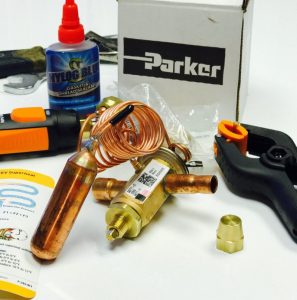
As we discussed in an earlier podcast, a TXV maintains a specified and constant superheat at the evaporator coil outlet. It does this through a balance of forces between the bulb pressure (opening force), equalizer pressure (closing force), and spring pressure (closing force). We can actually adjust the spring pressure on some valves. But why […]
Read more
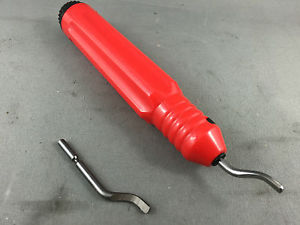
Deburring copper tubing (often called reaming) is the practice of running a blade around the inside of tubing after you cut it to remove the burr edge from the inside. It's an important practice and should be performed whenever possible. Deburring reduces turbulence inside the lines, as burrs can cause turbulence. HOWEVER… YOU MUST MAKE […]
Read more

Most techs know that you shouldn't fill a recovery tank more than 80% with liquid-based refrigerant. Many know that the WC rating stands for “water capacity.” So, you need to adjust for the density of the actual refrigerant rather than just using 80% of WC. I hope most of you know that the TW marking […]
Read more

Sometimes, you may have to replace a fancy thermostat with a simple one. It may be because the customer got fed up with all the options, or maybe the basic stat is the only thing on your truck. No matter the reason, you need to make sure the new thermostat can do the old one's […]
Read more

First, here's a quick summary of the role of oil in the refrigerant circuit: The compressor requires oil for the lubrication of the moving parts in the compressor. We would keep 100% of the oil in the compressor if we could. However, that is generally unrealistic. So, we need to utilize oils and oil strategies […]
Read more
It was an awkward conversation, bringing a technician nearly twice my age into my office for a talk. “I'm good at fixing units. I'm not some fancy-talking sales tech,” the technician half-mumbled as I sat looking at him. “The customer complained that you made them feel uncomfortable, you were unfriendly, and you tracked dirt in […]
Read more