
Tech Tips

This is a subject that even many commercial guys don’t have to consider. For the majority of equipment, even refrigeration equipment, all that is required for proper oil return is to size the suction line properly, trap the suction line as needed, and allow for proper slope towards the compressor. Then we get into larger […]
Read more

Another follow-up article by Michael Housh… Enjoy! In this article, I thought I would show a pump curve and match it up with our system head-loss curve that we created in the last article, but before I do that, I thought I would talk a little bit more about the system head-loss curve and why […]
Read more
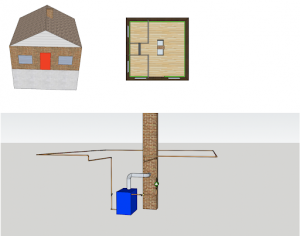
Here is another excellent article from Michael Housh, owner of Housh Home Energy and a regular contributor to HVAC School. Thanks, Michael! I thought I would go through a simple example of sizing a hydronic circulator for an application. This is a made-up scenario, but I sketched out a 20’ x 20’ square home with […]
Read more
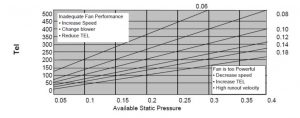
This article is written by one of the smartest guys I know online, Neil Comparetto. Thanks, Neil! Recently, I posted a question in the HVAC School Group on Facebook that went like this: “When designing a residential duct system, what friction rate do you use?” As of writing this, only one answer was correct according […]
Read more
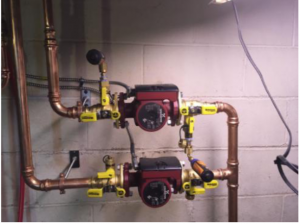
This article was written by Michael Housh, owner of Housh Home Energy and a regular contributor to HVAC School. Thanks, Michael! This is another article in trying to relate the air side of HVAC with the water side. In this article, I’m going to talk about how to determine pump flow (GPM) based on the […]
Read more
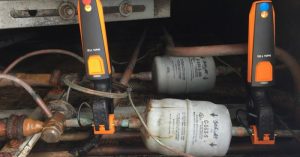
In my recent classes with my employees at Kalos, we've been going over finding target pressures and temperatures for an air conditioning system. The goal has been to get techs to have “target” readings in mind before they start connecting tools. This step is an important part of being able to “check a system without […]
Read more
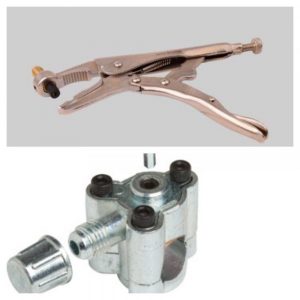
There are many appliances with compression refrigeration circuits that do not have ports installed for testing, recovery, charging, and evacuation. These can include window units, PTACs, fountains, refrigerators, and much more. This fact presents a challenge any time you suspect or know there is a refrigerant circuit issue. How can you diagnose and repair when […]
Read more
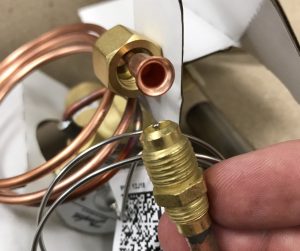
The most common diagnosis with expansion valves is failed closed or restricted, resulting in underfeeding of the evaporator. The symptoms are low suction, normal subcooling, and high superheat when a TXV fails “shut,” but there are some other issues to watch for that can actually result in overfeeding the coil. Schrader in the Port The […]
Read more
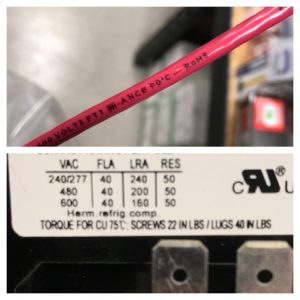
When you are checking a unit of any kind, you should be keeping your eyes open for signs of arcing and melting at all of your wire connections and contact points. We find issues with melting terminals on contactors and in disconnects regularly. Still, We rarely think about the relationship between circuit ampacity, wire size, […]
Read more