
Tech Tips

Yeah? Well, how do you know? What should they be? What are the outdoor and return air temperatures? What SEER rating is the equipment? These are the questions I ask every single time a technician says the phrase, “But the pressures look good for [insert refrigerant of choice here].” When they can’t answer the questions […]
Read more

Over the last 30 years, there has been a big move away from conventionally framed roof structures towards engineered structures— specifically engineered trusses and load-bearing engineered beams like micro laminated and even steel. I have been in so many attics where the engineered roofing or other load-bearing structures have been cut to accommodate equipment, wires, […]
Read more

This article is an updated version of another HVAC School article on oversized equipment. This edition is a joint effort by Genry Garcia of Comfort Dynamics, Inc. and Kaleb Saleeby. Both of them are regular contributors to HVAC School, and we are grateful for their contributions. Thanks, guys! The symptoms and consequences of oversized heating […]
Read more

As an A/C tech, I can sometimes get the terms “defrost termination” and “defrost fail-safe” mixed up because they sound pretty similar. Before we cover these terms, let's set the basic defrost groundwork for refrigeration (coolers and freezers). Defrost is accomplished in one of a few ways; these first two only apply to “coolers” where […]
Read more

When I was a green tech, I was really big into showing up all the other techs by doing THE BEST cleaning I possibly could. One of my favorite things to do was to clean the condenser until it was SPOTLESS inside and out. The only issue was that I really liked using that brown […]
Read more

Voltage drop is one of those topics we often mention but seldom think about in-depth. From a very basic standpoint, we need to know whether or not the rated voltage is being delivered to the device or appliance while under full load, which is as simple as running the equipment and measuring the voltage at […]
Read more
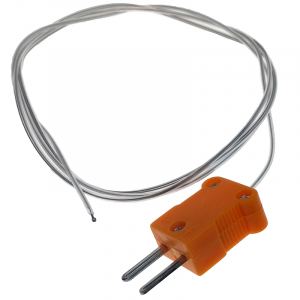
In HVAC, we work with thermocouples for temperature measurement all the time, but we may not understand the difference between a thermocouple and other types of temperature measurement sensors. A thermocouple is just two different types of metal connected at a “junction” that generates a small voltage with a temperature change. Older furnaces would often […]
Read more

You probably didn’t expect to find the word “autodidact” on an HVAC education site. You’d probably expect to see it in an SAT prep book or a list of words to say five times fast. What does that word have to do with HVAC? Well, autodidacts are some of the best techs in our trade. […]
Read more

I get questions all the time about performing “load calculations” and “rules of thumb” or how to do it properly. This article isn't about load calculation, but the only good answer is to find a quality ACCA-approved Manual J software and get used to using it. You may have heard from others in the field […]
Read more