BACK
 Sizing Return Grilles
 Under Pressure
 Refrigerant Recovery Practices
 Common Causes of Compressor Failure
 Training: Processes or Apprentices?
 Sales: Techniques or Values?
 Troubleshooting with DTD
 Improving Humidity Control on the Cheap
 Equivalent Length Merry-Go-Round
 Molecular Transformator – Short #217
 Surge Protection Basics w/ DITEK
 Q&A – Am I Toxic For Caring? – Short #216
 App Based HVAC Learning
 Q&A – Apps for Doing Proper Loads – Short #215
 Jim Bergmann & MQ Update from NCI Summit
 Q&A – System Won’t Dehumidify? – Short #214
 What Is Up With Blower Amps & Watts w/ Steve Rogers
 Q&A – Sizing Heat Pumps for Heat Load – Short #213
#hvac
Tech Tips:
A few weeks ago, I spent several days redoing a duct system and replacing a furnace for a friend. I had static pressure readings from before the system was replaced, and with the new furnace that I had picked out, I had created a static pressure budget and felt confident I could significantly lower the […]
Read more
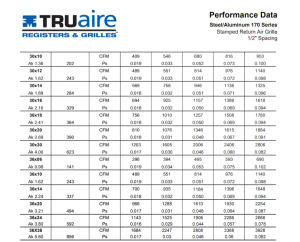
A few weeks ago, I was hired to consult on a multi-family new construction project. The building was already framed, and the ducts were roughed in. The owner of the building was concerned with the quality of the ductwork. He noticed that the HVAC company was not following the mechanical engineer's plans. This was my […]
Read more
Recovery is the removal of refrigerant from a system. From there, you can either store it and send it in for recycling or reintroduce it back into the same system. Here are some top tips: Make sure your tank is empty and evacuated to 300 microns if you plan to return the refrigerant to the […]
Read more
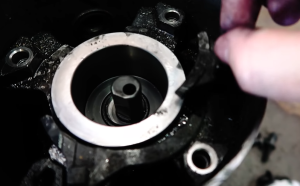
This article was written by Don Gillis, the technical training manager at Chemours. Thanks, Don! Refrigerant compressors are essential components of air conditioning and refrigeration systems, as we all know. They work by compressing refrigerant vapor, which then flows through the system and changes state as pressure and temperature conditions rise and fall. Unfortunately, these […]
Read more
“It is only through the enforced standardization of methods, enforced adoption of the best implements and working conditions, and enforced cooperation that this faster work can be assured. And the duty of enforcing the adoption of standards and enforcing this cooperation rests with management alone.” —Frederick Taylor “The objective of education is not to fit […]
Read more
“The very substance of our existing which has made us leaders in technique, stands as a barrier to any thinking which might be able to comprehend technique from beyond its own dynamism.” -George Grant The odd quote above takes some time to understand but has been rattling around in my brain for weeks now. George […]
Read more
The temperature of the refrigerant in the evaporator coil can really help us with diagnostics, but we need to know the targets we’re aiming for if we want to get the most out of it as a troubleshooting tool. If we take the return air temperature and subtract 35 degrees from that number, we get […]
Read more
This tech tip was submitted by Steve Rogers, the current president of The Energy Conservatory (TEC). Steve has been on the podcast several times in the past and is a valued contributor to HVAC School. Thanks, Steve! As summer approaches, HVAC technicians all over the US are preparing for those difficult conversations with occupants about […]
Read more
I recently read a tech tip by Matt Bruner about using the Manual D process. In the article, he designed a duct system for a small job using a ducted mini-split. One thing I noticed about his design was that the supply and return duct velocity was fairly low compared to the arbitrary 900-feet-per-minute supply […]
Read more
Videos:






Podcasts:
In this short podcast episode, Bryan talks about the CPS Molecular Transformator and what it does. The Molecular Transformator is a version of a tube-in-shell heat exchanger, which is a method of exchanging heat from one fluid medium to another fluid medium. Tubes containing a fluid pass through a shell containing water or glycol, […]
Read more
In this enlightening episode, we sit down with Mike, a 20-year veteran from DITEK, a leading American manufacturer of surge protection devices based in Largo, Florida. The conversation begins with a brief discussion about recent hurricane impacts in the Tampa Bay area, where DITEK maintains its 65,000-square-foot manufacturing facility. Mike shares how the company, […]
Read more
Bryan answers a listener-submitted question: “Am I toxic for caring?” He gives advice on how to maintain professional relationships while still maintaining very high standards of quality for your own work. Having high standards is great, but it can be frustrating when you perceive coworkers as having lower standards than you. A poor-quality end […]
Read more
Ruchir Shah joins the podcast to share his journey into HVAC education technology and the founding of SkillCat, a comprehensive training platform for skilled trades. As a five-time entrepreneur in educational technology, Ruchir's path to HVAC was influenced by his earlier work studying the BP oil spill and developing training solutions for oil and […]
Read more
In this short Q&A podcast, Bryan answers a listener-submitted question about apps for doing proper loads. Fred specifically asks about apps or charts that can help an HVAC contractor determine the insulation value of a home without assuming numbers or drilling into walls during load calculations. Load calculations account for all the ways that […]
Read more
Bryan sits down with Jim Bergmann at the NCI Summit in Asheville, North Carolina, to discuss the latest developments in HVAC technology, training, and industry trends. The discussion delves into the evolution of MeasureQuick 3.0, highlighting the shift back to a more technician-centric approach. Jim explains how they've redesigned the software to put gauges […]
Read more
In this short podcast episode, Bryan answers a listener-submitted question about an HVAC system that won't dehumidify. This question was submitted by a homeowner with a Carrier heat pump with an attic air handler that cools but won't dehumidify on the hottest days of summer. One of the past companies that serviced the system […]
Read more
Bryan Orr and Steve Rogers dive deep into measuring power consumption in HVAC blower motors, particularly focusing on the differences between PSC (Permanent Split Capacitor) and ECM (Electronically Commutated Motor) technologies. The discussion stems from a question raised at an educators' conference about the accuracy of clamp-on meters in measuring blower motor watt draw, […]
Read more
In this short Q&A podcast, Bryan answers a listener-submitted question about sizing heat pumps for heat load in heating mode, something that we haven't talked much about in the past due to the greater need for cooling in our market. In most cases across the country, a heat pump's heating loads will be greater […]
Read more