
Metering Devices & Valves

This is a quick tip from the “Expansion Valves – What Does and Doesn't Matter?” livestream on our YouTube channel featuring Joe Shearer, Matthew Taylor, and Corey Cruz. You can watch it on our website HERE. Equalizers get their name because they provide a closing force to equalize against the bulb pressure (an opening force). […]
Read more
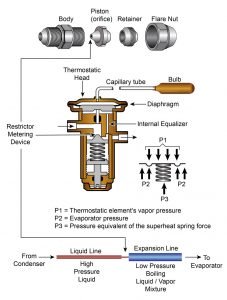
The piston (fixed orifice) and TXV (thermostatic expansion valve) are the two most common metering devices in use today, though some modern systems utilize an electronically-controlled metering device called an EEV (electronic expansion valve). It should be noted that there are other types of fixed-orifice metering devices, like capillary tubes; however, their use is not […]
Read more
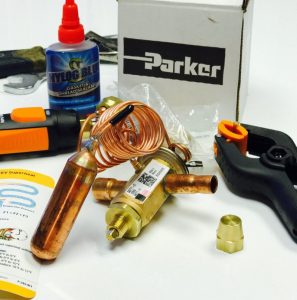
As we discussed in an earlier podcast, a TXV maintains a specified and constant superheat at the evaporator coil outlet. It does this through a balance of forces between the bulb pressure (opening force), equalizer pressure (closing force), and spring pressure (closing force). We can actually adjust the spring pressure on some valves. But why […]
Read more
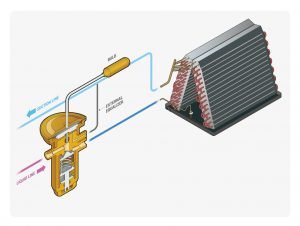
When mounting a TXV bulb or checking bulb placement, there are a few important considerations (listed in order of importance): Mount the bulb on the suction line. Flapping in the breeze is no good. Mount it TIGHTLY with a proper metallic strap (usually copper, brass, or stainless steel)—not with zip ties or tape. Position it on […]
Read more

We had a class with our refrigeration techs, and the topic of leaking and bypassing service “angle” valves and ball valves came up. One of the techs pointed out that most valves recommend loosening the top nut on ball valves and the packing nut on angle valves before turning the stem for maximum longevity of […]
Read more

We’ll never run out of content to discuss as long as thermostatic expansion valves exist. Deal with it. Today, we’re going to focus on the powerheads of TXVs. This article will focus on what the powerheads do, how they work, and some basic troubleshooting procedures involving TXV powerheads. What is a powerhead, and where […]
Read more

This tech tip video comes from my friend Andrew Greaves of AK HVAC and HVAC Comedy on Youtube and the HVAC Vehicle Layouts group on Facebook. Many residential techs get confused when they see these multi-position valves in larger equipment, and Andrew does a great job of demonstrating the basics in this video. In the […]
Read more

I just noticed this portion of the Carrier air handler sticker for the first time the other day. I'm like most techs; it's easy for us to ignore the great info posted right in front of us on the data tag. That's because so many of the notices contain info we are used to seeing. […]
Read more
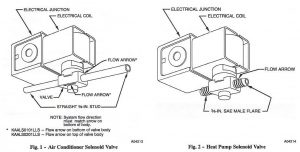
Pump down solenoid valves are commonplace for any refrigeration technician. They are energized with the compressor still running, shutting off flow in the liquid line so that the refrigerant is pumped into the condenser and receiver. The compressor will then shut off once a low-pressure switch opens the circuit when the pressure falls below a […]
Read more