
BACK
 Set Inverter Technology Up for Success in Humid Climates
 Why Airplanes Fog Up Before Takeoff
 Why the Sauna Feels Hotter When You Throw Water on the Rocks
 It’s All Relative… Humidity
 Not All CFM Are Created Equal
 Equipment Sizing and Airflow in Different Markets
 Improving Humidity Control on the Cheap
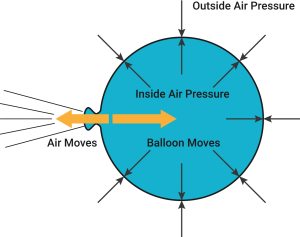 Does Mass or Volume Move Heat?
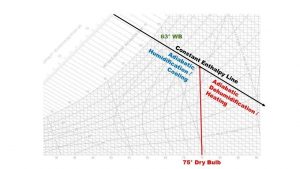 The Impact of Adding or Removing Water From Air
 Humidity, Airflow, and Refrigeration
 VRF, Ductless and Humidity Control w/ Roman
 Psychrometrics and the Magic Line – Short #265
 Leaky Ducts = Sweaty Houses – Short #256
 ERVs – What You Need To Know w/ Dr. Bailes
 Santa Fe Talks Dehumidification at AHR 2025
 Q&A – Condensating Vents – Short #208
#humidity
Tech Tips:
This tech tip about humidity control, particularly as it relates to VRF systems and others that use inverter technology, is a companion piece to a podcast episode with Roman Baugh. You can listen to that podcast episode HERE. Those of you who work in humid climates and install or repair ductless systems are probably well […]
Read more
Every once in a while, especially on humid days, you’ll sit on an airplane waiting for takeoff and see fog pouring from the ceiling vents like a low-budget concert. Someone always panics and asks if something’s on fire. It’s not smoke—it’s condensation. You’re looking at thermodynamics and psychrometrics in action. So, why does it happen, […]
Read more
I admit it, I'm a sauna guy now. The ones at the gym are pretty gross, so I got a small one at home because I guess I’ve missed sitting in attics or something. If you’ve ever sat in a traditional sauna, you know the drill: the heat’s already intense, and then you or someone […]
Read more
Florida’s got a lot of great qualities: some pretty neat wildlife, beaches all around, and theme parks. On the flip side, Florida also has hurricanes and a lot of humidity. As much of a pain as it might be for residents and contractors alike, humidity is one of my favorite topics. We see relative humidity (RH) […]
Read more
We’re in the business of moving heat, but we have to move air to accomplish that. We use CFM (cubic feet per minute) to quantify the air we move over the indoor coil, and it helps to imagine hundreds of 1’x1’x1’ boxes of air moving over that coil each minute. (After all, 400 CFM is […]
Read more
This tech tip was heavily informed by Ed Janowiak’s past symposium presentations. You can watch his presentation about setting proper airflow HERE. You can also now purchase your tickets for the 6th Annual HVACR Training Symposium HERE. HVAC School was founded by a Floridian—representing Climate Zone 2, to be exact. So, it’s no surprise that […]
Read more
This tech tip was submitted by Steve Rogers, the current president of The Energy Conservatory (TEC). Steve has been on the podcast several times in the past and is a valued contributor to HVAC School. Thanks, Steve! As summer approaches, HVAC technicians all over the US are preparing for those difficult conversations with occupants about […]
Read more
I once heard someone say, and have since repeated many times that BTU's ride on the back of Cubic Feet of Air or CFM. As I've learned more I've come to the conclusion that the weight or mass of the air passing over the evaporator coil is far more important to understand both in terms […]
Read more
Air conditioning was about humidity control from the very start. Willis Carrier's very first air conditioning system was all about controlling the humidity with the side effect that it also could reduce the sensible temperature. Theaters caught on that this newfangled contraption could lead to big summer numbers when they installed it to keep patrons […]
Read more
Videos:






Podcasts:
In this episode of the HVAC School podcast, Bryan and Nathan dive deep into the challenges of humidity control in grocery stores and other refrigerated environments. While the conversation takes several entertaining detours (including discussions about morning radio shows, Indian weddings with elephants, and imaginary lava-heated homes), the core content provides valuable insights for […]
Read more
In this comprehensive episode, Bryan and Roman dive deep into one of the most challenging topics in modern HVAC: making VRF (Variable Refrigerant Flow) and ductless systems perform effectively in humid climates like Florida. The conversation tackles a common misconception that inverter-driven equipment automatically handles humidity well simply because it can “turn down.” Roman […]
Read more
In this short podcast episode, Bryan talks about psychrometrics and the magic line inside a messy-looking chart. The psychrometric chart is a key tool for understanding the relationship between air and water. “Psychrometric” comes from the Greek roots for “cold” and “measurement.” As such, a tool called the psychrometer (with paired wet-bulb and dry-bulb […]
Read more
In this short podcast episode, Bryan explains how leaky ducts can lead to sweaty, uncomfortable houses. Moisture issues are common all across humid and “green-grass” climates in the United States. Hot, unconditioned attics and crawl spaces also often have high dew points, which can cause moisture problems in those spaces. Plants also release moisture, […]
Read more
In this episode of the HVAC School podcast, host Bryan sits down with building science expert Allison Bailes to dive deep into the world of Energy Recovery Ventilators (ERVs). The conversation explores the critical role of ventilation in modern homes, highlighting how ERVs have become an essential component of maintaining indoor air quality and […]
Read more
In this insightful discussion at AHR 2025 in Orlando, Bryan connects with Nikki Krueger from Santa Fe dehumidifiers, exploring the evolution and importance of whole-house dehumidification in modern HVAC systems. Nikki, who has spent 20 years in the indoor air quality industry, shares her journey from a public relations background to becoming deeply involved […]
Read more
In this short Q&A podcast episode, Bryan answers Kenton's question about how to stop vents from condensating, especially when sealing and insulation don't do the trick. When approaching a condensation problem, we have to consider the source of moisture and where the condensation is happening. Moisture that builds up on top of the vent […]
Read more