
Controls, Thermostats & Boards

In residential air handler/fan coils, it is common to use a high-voltage interlock between the blower and the electric heat strips to ensure that the blower comes on whenever the heat is on. The problem is that it CANNOT work the other way around, where the heat comes on with the blower. Electric heat strips […]
Read more

If a furnace runs for years and years while tripping the limit switch but satisfies the thermostat, will it ever be noticed? The answer is most likely “no,” but it will depend on whether the furnace utilizes soft or hard lockouts when the limit switch trips. So, what is a soft lockout vs. a hard […]
Read more

This tech tip recaps the livestream by the same name, featuring HVAC School contributors Matt Bruner and Adam Mufich, as well as special guest Steve Cook from Hisense. You can watch that livestream on our YouTube channel HERE. We also owe special thanks to Roman Baugh, who added some extra information on the topic. Communicating […]
Read more
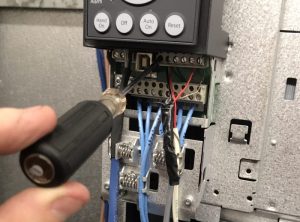
Back in the “good old days,” controls were all analog and mechanical; that simply means they acted in a directly connected and variable manner based on a change in force. Both pneumatic (air pressure) and hydraulic (fluid pressure) systems are examples of mechanical or analog controls. When the pressure increases or decreases on a particular […]
Read more
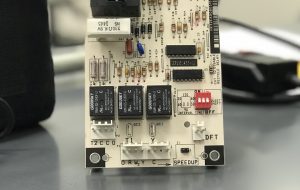
If you are used to simple, straight-cool split systems, you know that the low voltage to the outdoor unit is usually VERY simple. In many cases, there's just a Y (contactor power) and a C (common) connected to the outdoor unit. When the condensing unit controls are strictly two-wire low voltage, there is no continuous […]
Read more

Sometimes, you may have to replace a fancy thermostat with a simple one. It may be because the customer got fed up with all the options, or maybe the basic stat is the only thing on your truck. No matter the reason, you need to make sure the new thermostat can do the old one's […]
Read more

I was talking about dry contacts with one of my techs, and he looked at me like I had three heads—and one of them was on fire. So, I figured it would be good to cover the difference between wet and dry contacts in a tech tip. Basically, “dry” contacts are switches with no shared […]
Read more
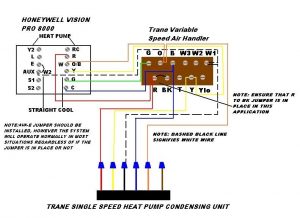
I got this question via email (edited slightly for length): Some things I've done because I've been taught to do them yet I don't know why I do them. One of those things is putting a jumper between w1/e and w2. Sometimes, in the case of a Goodman for example, I've been taught to combine […]
Read more
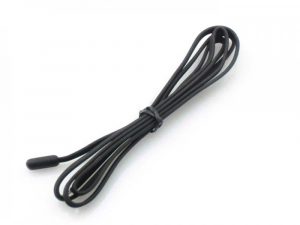
There was a question in the Facebook group a few days ago about averaging sensors. There are two common configurations/methods used for averaging. The first is simply a setting in a thermostat or control where it reads separate sensors, and then the thermostat itself averages out the readings using its software. For example, if the […]
Read more