
Tech Tips
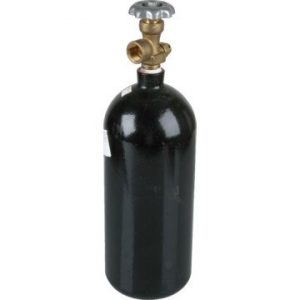
Flowing nitrogen while brazing and pressurizing with nitrogen are great practices. Putting nitrogen in with the refrigerant? Not so much. Nitrogen is a “non-condensable” gas because it cannot be condensed (under normal conditions). However, nitrogen is just one of the non-condensables. First, let's talk about what a non-condensable gas is. Any gas that does […]
Read more

First off, if you've never heard the term “beer can cold,” you are either not in the trade, or you have been living a pretty sheltered existence. I started as a tech apprentice when I was 17 years old, and on my first day in the truck, my trainer grabbed the suction line of a […]
Read more

Photo by Stephen Rardon I hear it all the time. Someone will talk about undesired condensation on an air handler cabinet, on a supply air duct, in a ventilation duct, or on a vent like the one above. In reply, someone will inevitably say, “Condensation occurs where hot meets cold.” Early on in my career, […]
Read more
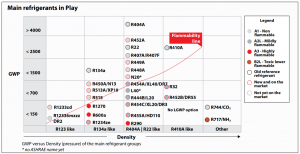
Graphic Courtesy of Danfoss On 8/8/17, the United States court of appeals struck down an EPA phaseout of HFC refrigerants under the Clean Air Act on the basis that the Clean Air Act only gave the EPA the right to regulate ozone-depleting substances. However, many of us figured that the decision was likely to be […]
Read more

Spring and fall are the seasons where all service technicians get turned into janitors. Some techs see this as a chore and don’t particularly enjoy the routines of checklist maintenance. However, it is important to remember that the “shoulder seasons” provide an opportunity for us to perform vital maintenance on systems in order to keep […]
Read more
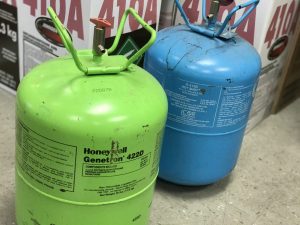
Over the years, I have heard technicians say that refrigerant can wear out or “lose its blend” by sitting in a tank. Refrigerant does not wear out or “lose its blend”… at least not like that. What can and does happen is called “fractionation.” Refrigerant blends are composed of a mix of refrigerants with different […]
Read more
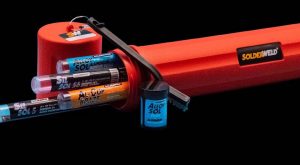
When brazing and soldering, we have a few things we need to accomplish to make a proper connection: We can't overheat the joint until it overheats the base metal or the flux where applicable. We must bring the entire joint above the melting temperature of the brazing alloy. Draw the alloy deep into the joint. […]
Read more
We all learned how to read the tonnage off of a model number within a few weeks of beginning in the trade. What you may (or may not) have learned is that just because something has an 036 in the model number, that does NOT mean it actually produces 36,000 BTU/hr. It doesn't reach the […]
Read more

The topic of static pressure comes up frequently in HVAC, and it’s sometimes presented as a test that can be all-knowing and insightful about what is happening with regard to airflow in a system. To use static pressure responsibly, we need to understand what it really is and what it means for an HVAC system. […]
Read more