
Building Science & Load Calculation

Think of it like this: It's a cold, wet, windy day. You can take an umbrella to protect you from the water alone, but that won't deal with the cold (temperature) or the wind (air convection). You can add in a light windbreaker, which will help keep the wind (convection) off. But if you also […]
Read more

How do we decide what to spend our time and attention on as technicians? What is truly important and what isn’t? At least here in Texas, the answer changes seasonally. When it’s 100 degrees outside, your priorities shift from long conversations about people’s pets to conveying necessary information about system problems so we can get […]
Read more
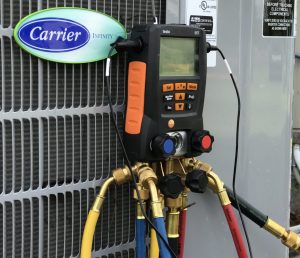
We all learned how to read the tonnage off of a model number within a few weeks of beginning in the trade. What you may (or may not) have learned is that just because something has an 036 in the model number, that does NOT mean it actually produces 36,000 BTU/hr. It doesn't reach the […]
Read more

This article is an updated version of another HVAC School article on oversized equipment. This edition is a joint effort by Genry Garcia of Comfort Dynamics, Inc. and Kaleb Saleeby. Both of them are regular contributors to HVAC School, and we are grateful for their contributions. Thanks, guys! The symptoms and consequences of oversized heating […]
Read more

I get questions all the time about performing “load calculations” and “rules of thumb” or how to do it properly. This article isn't about load calculation, but the only good answer is to find a quality ACCA-approved Manual J software and get used to using it. You may have heard from others in the field […]
Read more

Our industry puts a lot of emphasis on the “AC” (air conditioning) part of HVAC. We specialize in maintaining and servicing a wide variety of simple to complex air distribution systems. But we’re really in the business of comfort—human comfort and health, to be precise. So, just how much does the human body rely on […]
Read more

This article was submitted by Genry Garcia of Comfort Dynamics, Inc. It is the second part of his series on zonal pressure diagnostics. Thanks, Genry! In Part 1 of this series, we outlined the basic understanding of ZPD—what it means and what it does. Most importantly, we showed how an effort to simplify a fairly […]
Read more
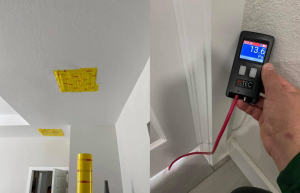
This article was submitted by Genry Garcia of Comfort Dynamics, Inc. It is the first part of his series on zonal pressure diagnostics. Thanks, Genry! Zonal pressure diagnostics have been around for a while. Here is a brief description of ZPD from the website redcalc.com: Formerly known as the “Blasnik methods” in a nod to […]
Read more

Let's get through all of the jargon and get to the point as quickly as possible. These ratings are a calculation of how much energy you have to put into a system to get a BTU of heating or cooling out. Simple. But the problem is that each piece of cooling or heat pump equipment […]
Read more