
Gas Heating & Hydronics

This tech tip recaps the livestream by the same name, featuring HVAC School contributors Matt Bruner and Adam Mufich and special guest Ty Branaman. You can watch that livestream on our YouTube channel HERE and visit Ty’s at https://www.youtube.com/@love2hvac. While 80% gas furnaces are relatively commonplace in the Southeastern United States, where HVAC School is […]
Read more
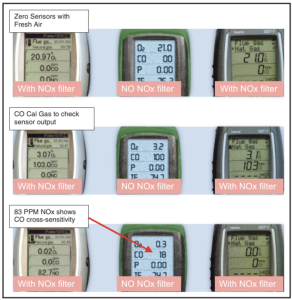
This tech tip reviews the live stream by the same name aired on November 1st, 2023. You can watch the full live stream HERE. We want to give special thanks to the guests: Jim Bergmann, Jim Davis, Tony Gonzalez, Louise Kellar, Bill Spohn, and Tyler Nelson! Gas furnaces (or any combustion equipment) create a controlled […]
Read more
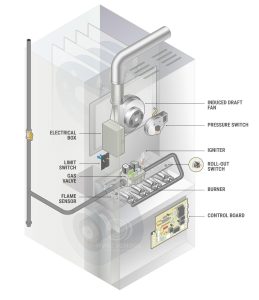
It’s that time of year again—the furnace service calls are peaking. It’s a good idea to crack open Jason Obrzut’s book, Gas Heating: Furnaces, Boilers, Controls, Components, and listen to the many public podcasts and presentations by experts like Jim Bergmann. At HVAC School, we’re fortunate to have had some of the industry’s greatest minds […]
Read more
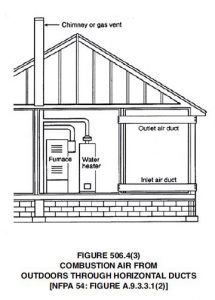
To maintain combustion (burning), you need three things: fuel, heat, and oxygen. If you have all three in the proper proportion, you can maintain a continuous state of combustion. Remove one (or reduce one sufficiently), and the triangle of combustion can collapse. In a common natural gas (NG) furnace, the heat is the igniter, the […]
Read more
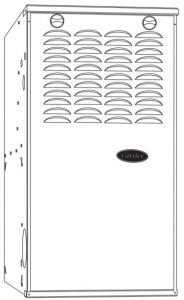
Every gas furnace data plate/tag has a specification for the temperature rise through that furnace. It is shown in a range like 50-80° or 45-75°. Those first two numbers are the lowest recommended temperature rise; the highest allowed temperature rise through the furnace is usually a 30° difference. When possible, we want to get the rise […]
Read more

This gas furnace maintenance procedure in this article was developed by Michael Housh. Michael is the owner of Housh Home Energy in Ohio. He regularly works on natural gas equipment and is an active contributor to the HVAC School Facebook group. Thanks, Michael! Gas-fired equipment has a different set of components than your typical straight-cool […]
Read more
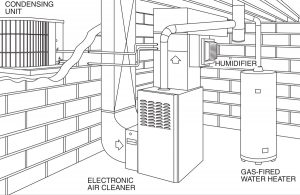
All fuel-burning appliances require oxygen to burn. They require sufficient oxygen to burn clean and safely, without soot and CO (carbon monoxide). I live and work in Florida, where most of our fuel-burning appliances are 80% efficient with open combustion. (You can learn more about the basics of combustion on a podcast with Benoit Mongeau.) […]
Read more

There are two camps I've run into regarding cracked heat exchanger diagnosis. There are those who look for it everywhere and those who dismiss it and never look. I will start by saying that everything I write here is my own opinion and experience. Because this is such a hot-button topic, don't take my word […]
Read more

Proving flame is an important part of the gas firing sequence. Without proof of flame, you risk dumping unspent gas into the heat exchanger, resulting in an explosion. There are many ways to “prove flame,” but we are focusing on the flame sensing rod (flame rectification) method here. Here are the facts: Flame sensing rods, […]
Read more