
BACK
 Lockout/Tagout Basics
 Crankcase Heaters and Single-Pole Contactors
 An Electric Heat Mistake
 Strip Control Wires Properly
 Grounding and Bonding Myths
 Start Capacitor & Inrush, Facts & Myths – Part #4
 Commercial Contactor Considerations
 Multimeter Categories
 You’re Grounded
#electrical
Tech Tips:
DISCLAIMER: HVAC School is NOT an official OSHA safety training resource! Although we provide safety tips in good faith, our website is not a substitute for safety training from an authorized OSHA training source. Locking out and tagging equipment is one of the most basic safety procedures in general industry and maintenance work, especially in […]
Read more
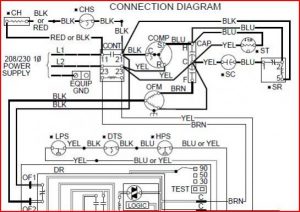
We keep two-pole, 40-amp 24v coil contactors on all of our vans. They are versatile and reliable, and you can replace most residential A/C contactors with them. There are a few things to watch for, though, especially when you have a crankcase heater. Many brands power the crankcase heater constantly and shut it on and […]
Read more
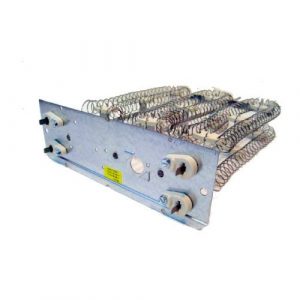
I started working as a tech when I was 17 years old, fresh out of trade school. My first winter out on my own, I went to a service call in an older part of Orlando, a part of town I had never worked in before. It was an especially cold winter that year, and […]
Read more
Erich Vinson is a tech from Colorado and one of the most entertaining people I interact with online. He wrote this quick tech tip on stripping back the outer jacket properly on control wires, and it happens to also be something I preach. Thanks, Erich. In the first picture (above), you can see what happens […]
Read more
Grounding is an area of many myths and legends in both the electrical and HVAC fields. This is a short article, and we will briefly cover only a few common myths. For a more detailed explanation, I advise subscribing to Mike Holt's YouTube Channel HERE. Myth – Current Goes to Ground Actually, current (electrons) will […]
Read more
Now is the part where we get specific about start capacitors and inrush. If you haven't read the first three parts, please do so before reading this one, or it may not make sense. (You can find Part #1, Part #2, and Part #3 at these links.) I'm going to come out and say it […]
Read more
This tip was created by Jason Pinzak and originally posted on the HVAC Technician's Facebook group. It is reposted here with permission from Jason. Thanks! Contactors are useful in commercial and industrial applications, particularly for controlling large lighting loads and motors. One of their hallmarks is reliability. However, like any other device, they are not […]
Read more
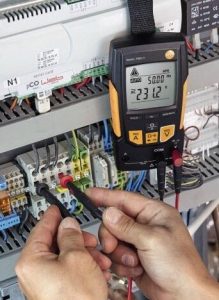
Testo 760 Category IV Multimeter I was standing at a booth at the HVAC Excellence Educators conference, and an instructor walks up, grabs a meter, and asks me, “What's the difference between a category 3 and a category 4 meter?” Well, I really wasn't sure, but I knew that the category 4 meter is rated […]
Read more
One of the most common questions we get from techs is about using a voltmeter to diagnose a high voltage circuit. It's especially tricky when a tech is used to working on a low-voltage or 120V circuit, where there is a clear “hot” side of the circuit and a clear “grounded” side of the circuit. […]
Read more