
BACK
 High-Pressure vs. Low-Pressure Shell Scrolls: A Deeper Dive
 HVAC/R Refrigerant Cycle Basics
 Why Discharge Line Temperature is a Useful Reading
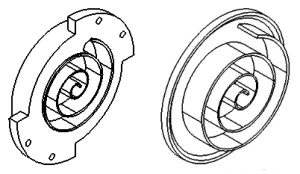 Scroll Compressor Pump Down, Megohm Test & Fusite Terminals
 Common Causes of Compressor Failure
 Hit Your Spots
 Compressors and Pumps
 Compressor Performance Analysis
 Ever Hear of Copper Plating Inside the Compressor?
 Circuit Board Diagnosis Basics
 Cutting Compressors, iManifold, and Thermal Imaging w/ Ulises Palacios
 The Basic Refrigeration Circuit
 Diagnosing & Replacing a Compressor
#compressor
Tech Tips:
I want to share something that came up in a recent discussion with Roman Baugh about VRF systems, and it made me realize I might have had a blind spot regarding scroll compressor designs. We were talking specifics, and he brought up high-pressure shell compressors. My immediate thought was, “Hold on, aren't scrolls low-pressure shell […]
Read more
This is a basic overview of the HVAC/R refrigerant cycle (and refrigeration circuit) and how it works. It isn't a COMPLETE description by any means, but it is designed to assist a new technician or HVAC/R apprentice in understanding the fundamentals. First, let's address some areas of possible confusion: 1. The word “condenser” can mean […]
Read more
For this tech tip on discharge line temperature, I’d like to give special thanks to Roman Baugh for the section about compressor superheat. It’s not something we talk about very often outside of chiller and commercial refrigeration applications, but it definitely has value in the HVAC world as well. Thanks, Roman! Since I started in […]
Read more
This tip will be like an episode of Columbo; we will start with the what and who and then get to the why. Don't pump down a scroll into a vacuum. Don't run a scroll in a vacuum. Don't run a high voltage megohmmeter or Hi-pot test on a scroll (As a general rule, don't […]
Read more
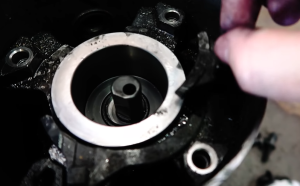
This article was written by Don Gillis, the technical training manager at Chemours. Thanks, Don! Refrigerant compressors are essential components of air conditioning and refrigeration systems, as we all know. They work by compressing refrigerant vapor, which then flows through the system and changes state as pressure and temperature conditions rise and fall. Unfortunately, these […]
Read more
When I was younger, I used to play and watch golf quite often. My father enjoys golf, and he would take me with him on many of his Saturday morning rounds. As a kid, it was all about DISTANCE. All I cared about was how far I could whack the ball with a driver—ESPECIALLY when […]
Read more
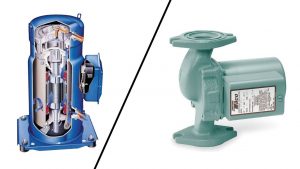
Let's go with dictionary definitions of each one first. pump noun 1. A mechanical device using suction or pressure to raise or move liquids, compress gases, or force air into inflatable objects such as tires. compressor noun 1. an instrument or device for compressing something. Both compressors and pumps move fluids, and a fluid: Yields or […]
Read more
This article is written by a regular contributor, experienced rack refrigeration tech, and RSES CM Jeremy Smith. Thanks, Jeremy. Also, there is a podcast out about what kills compressors HERE. A technique that you can use to diagnose compressor problems and help differentiate them from other possible issues is compressor performance analysis. Manufacturers do extensive […]
Read more
First off, I want to thank Ulises Palacios for taking these photos. He is in the habit of cutting open the compressors he replaces to see why they failed (when possible). I think that's pretty boss. So, why would the compressor have copper plating on the inside? They certainly aren't manufactured that way. The short […]
Read more
Videos:




Podcasts:
In this unedited episode of HVAC School, Bryan and Nathan talk about some basic rules for circuit board diagnosis. So, circuit boards are boards with circuits in them. They come in two types. The traditional printed variety contains switches, relays, and resistors. The other type contains silicon chips and uses logic and processing inside the […]
Read more
In this episode of HVAC School, Bryan talks with Ulises Palacios about some cool technology. Ulises has become a technology expert through his many years of working with new tools. He has recently been involved in testing new technologies, and he has worked with Jim Bergmann. Cutting open a compressor is one of the most […]
Read more
In this episode of HVAC School, we discuss the entire basic refrigerant/compression refrigeration circuit. We are in the business of moving heat. Heat refers to motion in the molecules. Temperature is the average velocity of those molecules. Heat needs a temperature differential to move. So, HVAC systems absorb heat when the refrigerant is colder than […]
Read more
In this podcast episode, Bryan goes over best practices for diagnosing and replacing an A/C or refrigeration compressor. When testing for a shorted compressor, make sure the compressor is isolated from all of its circuitry. You would see low ohms to ground in a shorted compressor. Do NOT measure from winding to winding or terminal […]
Read more